
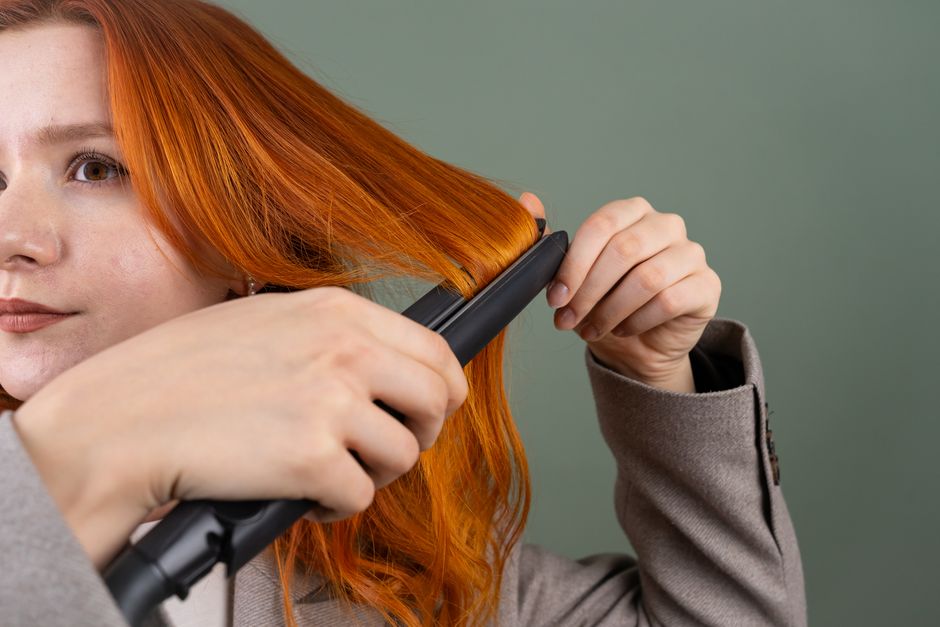
Heat does not make hair grow faster. No well-controlled human study has shown that warming the scalp increases hair growth, and the idea that heat “stimulates” follicles into producing more hair is not supported by clinical evidence. What heat can do is improve how a topical treatment penetrates the skin and make hair easier to style — two very different things from growing new hair.
The confusion is understandable. Heat feels like it should do something. It opens pores, boosts blood flow, and makes the scalp tingle. But feeling an effect and growing hair are not the same. Below is what the science actually shows, where heat helps in limited ways, and where it can quietly damage the hair you already have.
Does Heat Help Hair Growth What Science Says
The short answer is no. There is no clinical evidence that applying heat to the scalp increases the number of hairs, the speed of growth, or the thickness of strands.
Hair growth is controlled by the hair follicle, a tiny organ beneath the skin that cycles through growth, rest, and shedding phases. That cycle is driven mainly by genetics, hormones, age, and overall health. Surface temperature does not meaningfully change it. A warm scalp is not a signal to the follicle to build more hair.
Some marketing leans on the idea that heat “increases circulation” and that better blood flow means better growth. Blood flow does matter for follicle health — hair follicles need oxygen and nutrients delivered by blood. But there is no good evidence that externally warming the scalp increases circulation enough to change hair growth, and even if it did, increased blood flow alone has not been shown to regrow hair in controlled studies. The logic sounds reasonable. The human evidence is missing.
This is a good place to separate mechanism from outcome. A treatment can have a plausible biological mechanism and still fail to produce a clinical benefit. Heat is a clear example: the reasoning is intuitive, but intuition is not proof.
Does Heat Increase Blood Flow to the Scalp Enough to Matter?
Warmth does cause blood vessels near the skin to widen. That is a real, well-established response — it is part of how the body regulates temperature. So applying heat to the scalp can temporarily increase blood flow in the skin.
The question is whether that temporary change does anything for hair. It has not been shown to. The increase is brief, it affects the skin more than the deep follicle, and no controlled trial has demonstrated that warming the scalp produces measurable hair growth. A short-lived bump in surface blood flow is not the same as a sustained change in follicle activity.
If blood flow were the key to hair growth, you would expect people with naturally greater scalp circulation to have noticeably thicker hair. That pattern has not been established. The relationship between circulation and hair growth is real but more subtle than “more blood flow equals more hair.”
Can Heat Help Hair Treatments Work Better?
This is where heat has a legitimate, evidence-based role — but it is about helping a product absorb, not about growing hair on its own.
Warmth and moisture can increase skin permeability, which is why some topical treatments are applied under a warm towel or cap. The idea is that a softened, slightly warmed scalp may allow a medicated product to penetrate better. This is a reasonable use of heat as a delivery aid.
Be careful about how far that goes. Improved absorption of a product does not mean the product itself is proven, and it does not mean heat is doing the work. Minoxidil, the topical treatment with the strongest evidence base for certain types of hair loss, is generally applied to a dry scalp and does not require heat to be effective. Adding heat is not part of standard instructions and is not needed.
If you are using a prescribed or over-the-counter hair treatment, follow the product’s directions. Do not assume that adding heat improves results. In some cases it can increase irritation.
When Does Heat Actually Harm Hair?
Heat is far more reliable at damaging hair than at growing it. This is one of the clearest findings in hair science, and it is worth taking seriously.
Hair is made mostly of a protein called keratin. Repeated exposure to high heat changes the structure of the hair shaft, making it brittle and prone to breakage. The damage is cumulative. A single hot tool session may not show, but regular use over months adds up.
The main culprits are:
- Flat irons and curling wands — these reach high temperatures and sit directly against the hair.
- Hot blow dryers held close to the hair — sustained heat on one section causes damage.
- Repeated hot-oil or hot-towel treatments — the heat itself is not the benefit; the oil or moisture is.
Breakage from heat damage can look like thinning, which leads some people to reach for more treatments — including more heat. That can make the problem worse. If your hair is breaking rather than shedding from the root, the cause is often mechanical or heat-related damage to the shaft, not a follicle problem.
Lowering the temperature, limiting how often you use hot tools, and using a heat protectant are sensible steps. Heat protectants reduce damage; they do not make high heat risk-free.
What Actually Has Evidence for Hair Growth?
If heat is not the answer, it helps to know what has real support. The evidence varies a lot by treatment, and it is worth being honest about which is which.
Stronger evidence:
- Minoxidil — a topical treatment with substantial clinical trial support for androgenetic hair loss (pattern hair loss). It requires ongoing use; hair loss typically resumes if you stop.
- Finasteride — a prescription oral medication with strong evidence for pattern hair loss in men. It requires a prescription and has known side effects that should be discussed with a clinician.
Some evidence, often for specific conditions:
- Low-level laser therapy — some studies suggest modest benefit for pattern hair loss, though results vary and the quality of devices differs widely.
- Treating an underlying cause — thyroid problems, iron deficiency, and other conditions can contribute to hair loss. Correcting the cause can help, which is why a medical evaluation matters.
Limited or unproven:
- Most “scalp stimulating” devices and heat-based gadgets marketed for growth.
- Many supplements, unless a genuine deficiency is identified.
Hair loss has many causes, and they are not treated the same way. Pattern hair loss, telogen effluvium (temporary shedding after stress or illness), alopecia areata (an autoimmune condition), and hair breakage can all look similar from the outside but need different approaches. A clinician can help tell them apart. This is one area where self-diagnosis often goes wrong.
Does a Warm Scalp Massage Help Hair Growth?
Massage is sometimes bundled with heat, and it is worth separating the two. Some small studies suggest that scalp massage may have modest effects, but the evidence is limited and not strong enough to call it an established treatment.
The warmth you feel during a massage is not the active ingredient. If massage helps at all, the mechanical movement is the more likely reason, not the temperature. There is no clinical evidence that the heat component of a warm massage drives hair growth.
A gentle scalp massage is generally low-risk and pleasant. Just do not expect it to regrow hair, and avoid aggressive rubbing that can tug and break strands.
The Bottom Line on Heat and Hair
Heat does not grow hair. The claim rests on biological reasoning, not clinical evidence, and the studies that would support it do not exist. Where heat has a real role — helping a topical product absorb, or making hair easier to style — that role is about delivery and convenience, not growth.
Meanwhile, heat is a well-documented cause of hair damage when used at high temperatures or too often. If your goal is healthier hair, the more reliable steps are gentler styling, treating any underlying medical cause, and using treatments that have actual trial evidence behind them. Be skeptical of any product that promises growth through warmth alone.
Frequently Asked Questions
Does heat help hair grow faster?
No. There is no clinical evidence that applying heat to the scalp increases hair growth speed, thickness, or count. Hair growth is controlled by genetics, hormones, and follicle biology, not surface temperature.
Does a hot oil treatment make hair grow?
No. Hot oil treatments can add moisture and shine to the hair shaft, but they do not stimulate growth from the follicle. Any benefit comes from the oil and moisture, not the heat.
Can heat damage cause hair loss?
Yes, in a sense. High or repeated heat damages the hair shaft and causes breakage, which can look like thinning even though the follicle is unaffected. Limiting hot tool use and lowering the temperature reduces this risk.
Is low-level laser therapy the same as heat treatment?
No. Low-level laser therapy uses specific light wavelengths, not heat, and some studies suggest modest benefit for pattern hair loss. It is a different approach from warming the scalp.
