
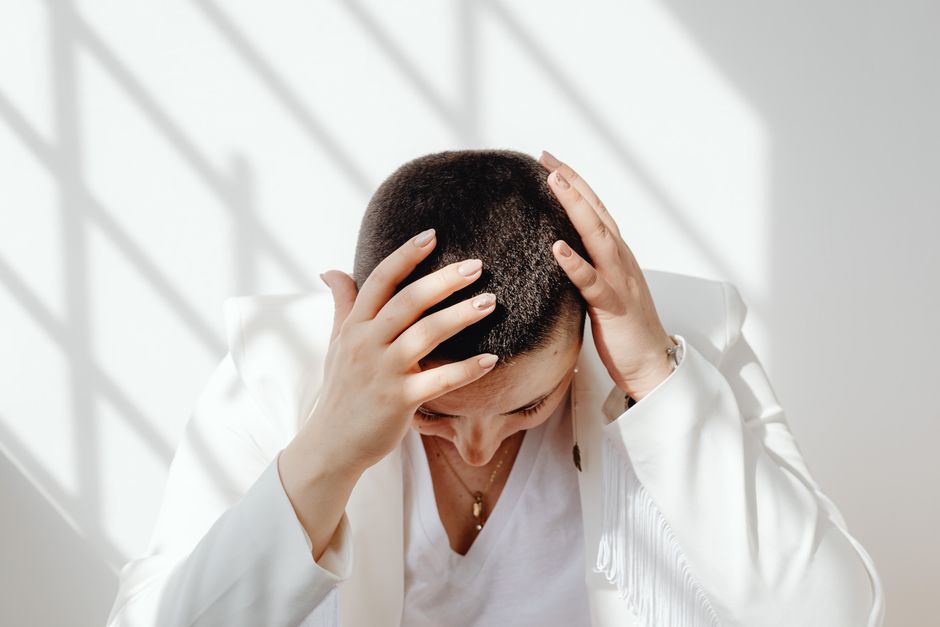
Yes, hair lost to stress usually grows back. The key word is usually. Most stress-related shedding is temporary, and hair returns once the trigger fades and the growth cycle resets. But regrowth is not instant, it is not guaranteed in every case, and the type of stress-related hair loss matters a great deal.
Stress can push hair into shedding through a well-understood mechanism. It can also, less commonly, drive a person to pull hair out. Those are different problems with different outcomes. Understanding which one you are dealing with tells you what to expect.
How Does Stress Actually Cause Hair Loss?
Stress shifts hair follicles into the resting phase of their growth cycle. This is the mechanism behind most stress-related shedding, and it is well established.
Every hair follicle cycles through three main phases. Anagen is the growth phase, when hair actively lengthens. Catagen is a short transition. Telogen is a resting phase, after which the hair falls out and a new one begins. At any given time, most hairs on your scalp are in anagen, which is why you are not bald.
Physical or emotional stress can push a large number of follicles into telogen at once. This is called telogen effluvium. Because the resting phase lasts roughly two to three months, the shedding typically appears weeks after the stressful event, not the next day. That delay is one reason people often do not connect the dots.
The trigger does not have to be psychological. Physical stress counts too. High fever, surgery, significant weight loss, childbirth, and severe illness are all recognized triggers. The body registers them as stress, and the hair cycle responds.
Will Hair Loss from Stress Regrow on Its Own?
In most cases of telogen effluvium, yes. Hair regrows without treatment once the trigger resolves.
The follicles are not damaged. They are paused. When the stress passes, the cycle resets and new hairs enter the growth phase. Density typically recovers over several months. This is the reassuring part, and it rests on solid clinical understanding of how the hair cycle works.
The important condition is that the trigger has to actually resolve. If the stressor continues, shedding can persist or recur. If a person is still under chronic strain, or still recovering from an illness, the cycle may keep resetting before full recovery happens.
There is a less obvious point worth knowing. Telogen effluvium often looks worse before it looks better, and the regrowth phase can produce shorter, finer hairs at first. Some people mistake this early regrowth for continued thinning. It is usually the opposite.
How Long Does It Take for Stress-Related Hair to Grow Back?
Expect months, not weeks. Full recovery from telogen effluvium generally takes several months to a year, and sometimes longer.
The timeline follows the biology. Shedding tends to peak a few months after the trigger. Regrowth begins as new hairs enter anagen, but hair grows slowly, roughly half an inch per month on average. Noticeable cosmetic improvement usually lags well behind the start of regrowth.
This is where patience matters and where timelines are genuinely hard to predict. The exact pace depends on how long the trigger lasted, how much hair was shed, your age, and your overall health. No one can give you a precise date. Anyone who promises regrowth in a set number of weeks is guessing.
What Else Can Look Like Stress-Related Hair Loss?
Not all hair loss is telogen effluvium, and some causes do not reverse on their own. This distinction matters more than almost anything else in this article.
Several conditions can produce thinning that people attribute to stress. Getting the cause right changes the outcome.
- Androgenetic alopecia (pattern hair loss) is driven by genetics and hormones, not primarily by stress. It is progressive and does not fully reverse without treatment.
- Alopecia areata is an autoimmune condition causing patchy loss. It can be triggered or worsened around stressful periods, but it is a distinct disease with its own treatment path.
- Thyroid disorders and iron deficiency can cause diffuse shedding that mimics telogen effluvium and requires medical evaluation.
- Trichotillomania is a hair-pulling disorder sometimes linked to stress. It causes breakage and loss that will not resolve unless the pulling stops.
If shedding is patchy, accompanied by scalp symptoms, or continues without an identifiable trigger, that points away from simple stress shedding and toward a condition that needs a clinician’s assessment.
What Helps Hair Grow Back After Stress-Related Shedding?
The most effective step is removing the trigger. Everything else is secondary to that.
If the stress was a one-time event, such as an illness or surgery, the body often recovers on its own. If it was ongoing, addressing the source of stress is the foundation. That might mean sleep, workload, or support for anxiety or depression. This is not soft advice. Chronic stress keeps the cycle from resetting.
General health supports hair growth because hair is metabolically demanding. Adequate protein, iron, zinc, and overall nutrition matter. So does treating any underlying condition a clinician identifies, such as a thyroid problem or low iron. Correcting a genuine deficiency can help; taking supplements you do not need generally does not.
Be cautious with products marketed for stress-related hair regrowth. Many make claims that no study has confirmed for this specific type of shedding, largely because telogen effluvium often resolves on its own, which makes it hard to prove a product caused the recovery. Some clinicians recommend minoxidil in selected cases, but that is a clinical decision, not a general recommendation, and it is not a substitute for fixing the trigger.
When Should You See a Doctor About Hair Loss?
See a clinician if the loss is patchy, rapidly worsening, or accompanied by scalp itching, redness, or scaling. Those features suggest something other than simple stress shedding.
Also seek evaluation if shedding continues for many months without an obvious trigger, or if you notice other symptoms such as fatigue, unusual weight change, or feeling cold. Those can point to thyroid or nutritional issues that need testing, not guesswork.
For women, hair loss around childbirth is common and generally temporary, but persistent or severe loss still deserves a conversation with a clinician. The same applies to anyone who is unsure what is driving the shedding. A diagnosis is not a formality. It determines whether you wait, treat, or investigate further.
Frequently Asked Questions
Does hair loss from stress grow back?
In most cases, yes. Hair lost to stress-related shedding typically regrows once the trigger resolves, though it takes several months.
How long does stress hair loss last?
Shedding often peaks a few months after the stressful event and gradually settles as the hair cycle resets. Full recovery commonly takes several months to a year.
Can stress cause permanent hair loss?
Stress-related shedding itself is usually temporary and does not permanently damage follicles. Permanent or progressive loss usually points to a different cause, such as genetic pattern hair loss.
Should I take supplements for stress-related hair loss?
Only if a clinician finds a genuine deficiency, such as low iron. There is no strong evidence that supplements help stress-related shedding in people with normal nutrient levels.
