
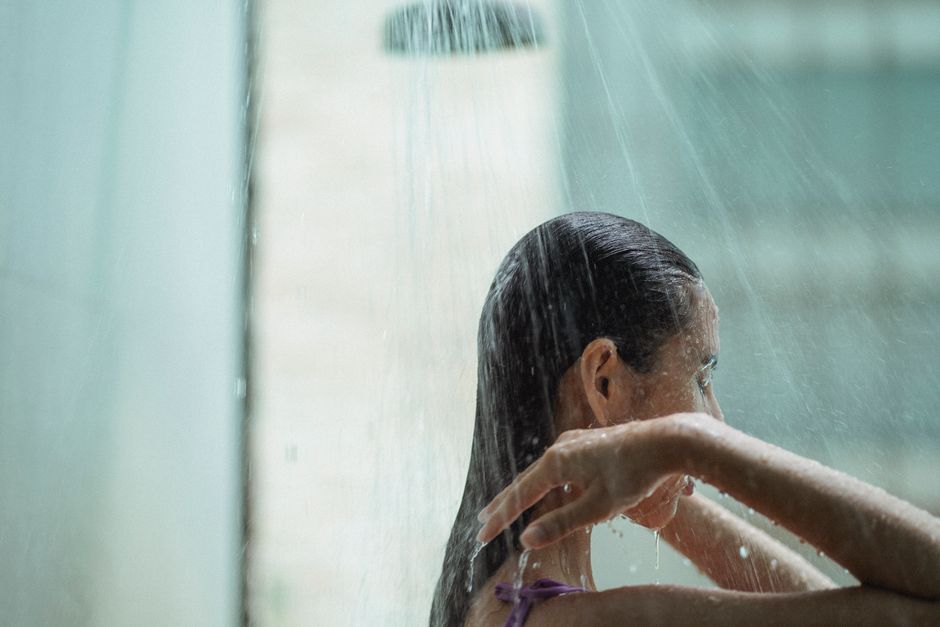
Yes, hair absorbs water. The outer layer of each strand, called the cuticle, is made of overlapping scales that lift slightly when wet, letting water into the fiber. Inside, the cortex soaks up moisture and the strand swells — human hair can expand noticeably in diameter when it takes on water, and it holds that water for a while before drying out.
That much is well established. What gets oversold online is the idea that soaking your hair is a simple on-off switch for hydration. The reality is more interesting and more useful: how much water hair takes in depends on its structure, its chemistry, and how damaged it is.
How Does Hair Actually Absorb Water?
Hair is mostly a protein called keratin, built in three layers. The cuticle is the tough outer shell of flat, overlapping cells. The cortex is the thick middle where most of the protein and the natural pigment live. The medulla is a soft core that many fine hairs barely have at all.
Water gets in mainly through the cuticle. On healthy hair, those overlapping scales lie fairly flat and repel water to some degree — this is why a fresh, undamaged strand can feel water-resistant at first. But the cuticle is not a perfect seal. Water molecules are small, and given time they work their way between the scales and into the cortex.
Once inside, water binds to chemical groups along the keratin proteins. The fiber swells. This swelling is real and measurable, and it puts physical stress on the strand. When hair dries, it shrinks back. Repeated wet-and-dry cycles are one reason hair can become fragile over time.
There is a detail most people miss: hair is not just absorbing water from the outside. It also pulls moisture from the air. In humid conditions, hair takes in water vapor from the atmosphere. This is why hair behaves differently on a rainy day than in dry winter air.
Why Does Wet Hair Stretch and Feel Different?
Water changes hair’s mechanical properties, not just its appearance. Wet hair is more elastic and stretches further before breaking than dry hair. It also becomes softer and more pliable.
This happens because the water disrupts some of the chemical bonds holding the keratin proteins together. Those bonds normally keep the fiber stiff. When water gets between them, the proteins can slide and shift more easily. The strand becomes flexible.
That flexibility cuts both ways. Wet hair stretches more before it snaps, but it is also more vulnerable to damage from handling. Brushing wet hair forcefully, or pulling on it while it is swollen and softened, can stretch and stress the fiber in ways dry hair resists. This is why many stylists suggest handling wet hair gently — a practical point that aligns with how the fiber behaves, even though the specific damage thresholds are not precisely pinned down in large studies.
What Affects How Much Water Hair Absorbs?
Not all hair absorbs water equally. Several factors change how porous a strand is.
- Damage: Cuticle damage from heat, bleaching, coloring, or rough handling opens gaps that let water in faster and in greater amounts. Porous, damaged hair takes on water quickly.
- Hair texture and curl pattern: Curly and coily hair tends to be more porous on average, partly because of how the cuticle is structured and partly because of cumulative wear along the curves of the strand.
- Chemical treatments: Relaxers, perms, and lightening agents alter the protein structure and the cuticle, which changes water uptake.
- Humidity and temperature: Hair absorbs more water vapor from humid air. Warm water also tends to penetrate faster than cold.
- Natural oils: Sebum, the oil your scalp produces, coats the strand and slows water entry. This is part of why freshly washed, stripped hair can feel like it takes on water differently.
Porosity is the word used for how readily hair lets water in and out. High-porosity hair absorbs water fast and loses it fast. Low-porosity hair resists water and holds onto it. Porosity is a real property of the fiber, though the at-home “float test” some people use to guess their porosity is not a reliable measurement — it is a rough guess at best.
Does Wet Hair Break More Easily?
Wet hair is more fragile, and the reason is structural. When the strand swells with water, the cuticle scales lift slightly. Lifted scales are more likely to catch, chip, or peel away during combing or friction.
The cortex is also softer when wet. The bonds that give dry hair its strength are partly disrupted by water, so the fiber tolerates less force before it deforms. Combine softened protein with raised scales and you have a strand that is more prone to stretching and snapping under the same tug that dry hair would survive.
This is why gentle detangling on damp — not soaking wet — hair, using a wide-tooth comb and working from the ends up, is common advice. It follows directly from how the fiber behaves. The general principle is well supported by the material science of hair; the exact force at which damage occurs varies too much between people to state as a fixed number.
Does Absorbing Water Actually Hydrate Hair?
Here is where marketing and science part ways. Water does enter the hair shaft, but “hydrated hair” in the cosmetic sense is not the same as hair that has soaked up water and kept it.
Hair is dead tissue. It cannot pump water in or regulate its own moisture the way living skin can. Any water it absorbs will evaporate again as it dries. So a product that “adds moisture” is really doing one of a few things: helping water stay in the fiber a little longer, smoothing the cuticle so the surface feels softer, or coating the strand with ingredients that reduce water loss.
Humectants — ingredients that attract and hold water — can pull moisture from the air or from deeper in the fiber toward the surface. Glycerin and similar ingredients are common examples. Whether this translates into lasting benefit depends heavily on the surrounding humidity and the rest of the formula. In very dry air, some humectants can pull moisture the other way, out of the hair. The evidence on how much this matters in real-world use is limited, and results vary by climate and hair type.
What is clear: you cannot permanently “fill” hair with water. It is a porous material that takes in and releases moisture continuously. Managing that exchange — rather than trying to win it — is the realistic goal.
Should You Soak Your Hair in Water?
Soaking hair in water is not harmful in itself, and water is the main ingredient in most conditioning routines. A thorough rinse helps lift away dirt and product, and damp hair accepts many conditioning ingredients more evenly than bone-dry hair.
But long soaks do not “deep hydrate” hair in any permanent way, and prolonged wetness has downsides. Hair that stays wet for hours is more fragile and more prone to friction damage. For most people, a normal wash-and-condition routine is enough. There is no established clinical guidance recommending extended water soaks as a treatment for dry or damaged hair.
If your goal is to reduce water loss and improve how hair feels, the more reliable levers are gentler handling, less heat, and conditioning ingredients that smooth the cuticle. Those address the structure rather than trying to flood it.
What About Oils and Water Together?
Oils and water do not mix, and that matters for hair. A layer of oil on the strand can slow water from entering and slow it from leaving. Some people apply oil to damp hair for exactly this reason — to trap moisture in as the hair dries.
This is a reasonable strategy in principle, and many people find it helps. But the evidence that oil sealing produces a lasting change in hair’s internal moisture is thin. Oils mostly sit on the surface. They can make hair feel softer and look shinier by smoothing the cuticle, and they can reduce friction. Those are real effects. Whether they meaningfully change the water content inside the fiber over time is less certain.
One practical note: applying heavy oil to already-wet, swollen hair and then brushing can increase friction and breakage. Light application and gentle handling matter more than the oil itself.
Frequently Asked Questions
Does hair absorb water when you wash it?
Yes. Water enters through the cuticle and into the cortex, causing the strand to swell. Most of that water evaporates as the hair dries.
How long does hair stay wet after absorbing water?
It depends on thickness, porosity, and air conditions, and there is no single standard time. Dense, low-porosity hair generally holds water longer than fine, porous hair.
Can damaged hair absorb too much water?
Damaged hair with a compromised cuticle does take on water faster and in greater amounts. That rapid swelling and drying can make fragile hair more prone to breakage.
Does water permanently hydrate hair?
No. Hair is dead tissue and cannot retain water permanently. It continuously takes in and releases moisture, so any hydration is temporary.
