
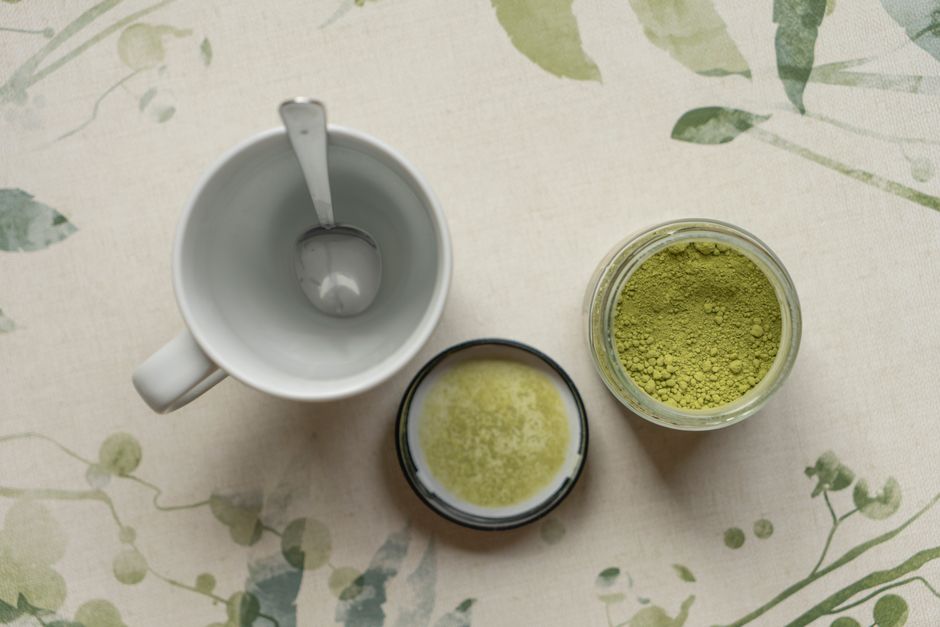
Yes, green tea contains caffeine. A standard 8-ounce cup of brewed green tea has between 20 and 45 milligrams of caffeine. That is significantly less than black tea, which has 40 to 70 milligrams, and far less than coffee, which ranges from 80 to 100 milligrams per cup. The exact amount depends on the specific tea, how it was grown, and how you brew it.
How Much Caffeine Is in Green Tea Compared to Other Drinks?
The caffeine content in green tea varies more than most people realize. A cup of matcha, which is powdered green tea, contains about 70 milligrams of caffeine per serving. That is closer to a cup of black tea. Standard bagged green tea usually lands around 30 milligrams per cup. Loose leaf green tea falls in a similar range.
For comparison, an 8-ounce cup of coffee from a drip machine has about 95 milligrams of caffeine. A shot of espresso has 63 milligrams. A 12-ounce can of cola has 34 milligrams. Green tea sits right in the middle of the caffeine spectrum. It is not caffeine-free, but it is also not a high-caffeine drink.
What Affects the Caffeine Level in Green Tea?
Several factors determine how much caffeine ends up in your cup. The tea plant variety matters. Camellia sinensis var. sinensis, the Chinese variety, generally has less caffeine than Camellia sinensis var. assamica, the Indian variety. Younger leaves and buds contain more caffeine than older leaves. This is why high-quality green teas made from young leaf tips can have more caffeine than lower-grade teas.
Brewing time and water temperature also change the caffeine content significantly. Steeping green tea for one minute extracts less caffeine than steeping for three minutes. Hotter water extracts more caffeine quickly. The standard recommendation for green tea is water around 175°F, not boiling. Boiling water can make green tea bitter and extract more caffeine.
Some people believe that lighter colored green teas have less caffeine. This is not true. The color of the brewed tea does not predict caffeine content. A pale yellow cup can have the same caffeine as a deeper green cup.
Does Green Tea Affect Your Body Differently Than Coffee?
Many people report that green tea gives them a calmer, more focused energy compared to coffee. This is not just a feeling. Research suggests that the combination of caffeine and an amino acid called L-theanine in green tea changes how the body processes the stimulant. L-theanine promotes relaxation without drowsiness. It also increases alpha brain waves, which are linked to a state of relaxed alertness.
A study published in the journal Nutrients found that the combination of L-theanine and caffeine improved attention and reaction time more than caffeine alone. Participants also reported feeling less jittery. The caffeine in green tea is also absorbed more slowly because it binds to antioxidants called catechins. This means the energy boost comes on more gradually and lasts longer without a sharp crash.
This does not mean green tea is always better than coffee. For someone who needs a quick, strong jolt of energy, coffee is more effective. But for sustained focus without the edge, green tea has a real advantage.





Does Decaffeinated Green Tea Still Have Caffeine?
Yes. Decaffeinated green tea still contains some caffeine. The decaffeination process removes most of it, but not all. A cup of decaf green tea typically has 2 to 5 milligrams of caffeine. That is a small amount, but it is not zero. If you are extremely sensitive to caffeine or need to avoid it for medical reasons, decaf green tea may still cause a reaction.
There are two common decaffeination methods. The first uses a chemical solvent like ethyl acetate or methylene chloride. The second uses carbon dioxide in a pressurized process. Both methods remove about 97% of the caffeine. The CO2 method is often marketed as more natural, but both produce a similar final product in terms of caffeine content.
If you want a truly caffeine-free hot drink that tastes similar to green tea, consider herbal teas like chamomile, peppermint, or rooibos. These are not made from the Camellia sinensis plant at all and contain no caffeine naturally.
How Does Caffeine in Green Tea Compare to Other Sources?
| Beverage | Caffeine per 8 oz |
|---|---|
| Drip coffee | 95 mg |
| Espresso (1 oz) | 63 mg |
| Black tea | 40-70 mg |
| Matcha green tea | 70 mg |
| Brewed green tea (bag) | 20-45 mg |
| Decaf green tea | 2-5 mg |
| Cola (12 oz) | 34 mg |
| Dark chocolate (1 oz) | 12 mg |
This table shows the wide range within green tea itself. Matcha is the highest. Standard bagged green tea is the lowest among non-decaf options. Knowing which type you are drinking helps you estimate your intake more accurately.
Can You Drink Green Tea at Night Without Affecting Sleep?
For most people, drinking a cup of green tea close to bedtime will affect sleep quality. Even the lower end of the caffeine range, around 20 milligrams, is enough to delay sleep onset in sensitive individuals. Caffeine has a half-life of about 5 hours in the average adult. This means that if you drink a cup at 6 PM, half the caffeine is still in your system at 11 PM.
Some people claim they can drink green tea at night and sleep fine. This is likely because they have built up a tolerance to caffeine or because their body metabolizes it faster. Genetics play a large role in how quickly your liver processes caffeine. The CYP1A2 gene controls this. About 10% of the population are slow metabolizers and will feel the effects of caffeine much longer.
If you want to drink green tea in the evening, look for a decaf version. Or switch to an herbal tea that naturally contains no caffeine. Drinking green tea earlier in the day, before 2 PM, is a safe guideline for most people who want to avoid sleep disruption.
What Are the Health Benefits of the Caffeine in Green Tea?
The caffeine in green tea contributes to several health benefits, but it is not the only active compound. Research published in the American Journal of Clinical Nutrition found that regular green tea consumption is associated with a lower risk of cardiovascular disease. The combination of caffeine and catechins appears to improve blood vessel function and reduce inflammation.
Caffeine itself is a well-studied performance enhancer. It improves alertness, reaction time, and short-term memory. The dose in green tea, about 30 to 50 milligrams per cup, is enough to produce these effects without the side effects of higher doses. One study from the University of Illinois found that green tea extract improved working memory in participants who drank it before cognitive tasks.
The antioxidants in green tea, particularly epigallocatechin gallate (EGCG), also play a role. EGCG has been shown to protect brain cells from oxidative stress. This is separate from the caffeine effect. The combination of caffeine and EGCG may be why green tea is consistently linked to better brain health in observational studies.
Common Misconceptions About Green Tea and Caffeine
A common myth is that green tea is naturally caffeine-free. It is not. All teas made from the Camellia sinensis plant contain caffeine. The only truly caffeine-free teas are herbal infusions made from other plants. Another myth is that green tea has no caffeine because it is “healthier” than coffee. Healthfulness and caffeine content are not related.
Some people believe that drinking green tea on an empty stomach causes more caffeine absorption. There is no evidence for this. Food does slow caffeine absorption, but the difference is small. The bigger factor is how much you drink and how fast.
A third misconception is that organic green tea has less caffeine. Organic certification has nothing to do with caffeine content. It refers to how the tea is grown and processed. An organic green tea can have the same caffeine level as a conventionally grown one.
Frequently Asked Questions
Does green tea have more caffeine than black tea?
No. Black tea typically has more caffeine than green tea. An 8-ounce cup of black tea contains 40 to 70 milligrams, while green tea has 20 to 45 milligrams.
Can I drink green tea if I am sensitive to caffeine?
It depends on your sensitivity level. A cup of green tea has 20 to 45 milligrams of caffeine. If you react to small amounts, try decaf green tea or an herbal alternative.
Does matcha have more caffeine than regular green tea?
Yes. Matcha is powdered green tea and contains about 70 milligrams of caffeine per serving. That is roughly twice the amount of standard brewed green tea.
Is it safe to drink green tea every day?
Yes. Drinking 2 to 3 cups of green tea daily is safe for most adults. The caffeine content is moderate and the health benefits are well documented.
