
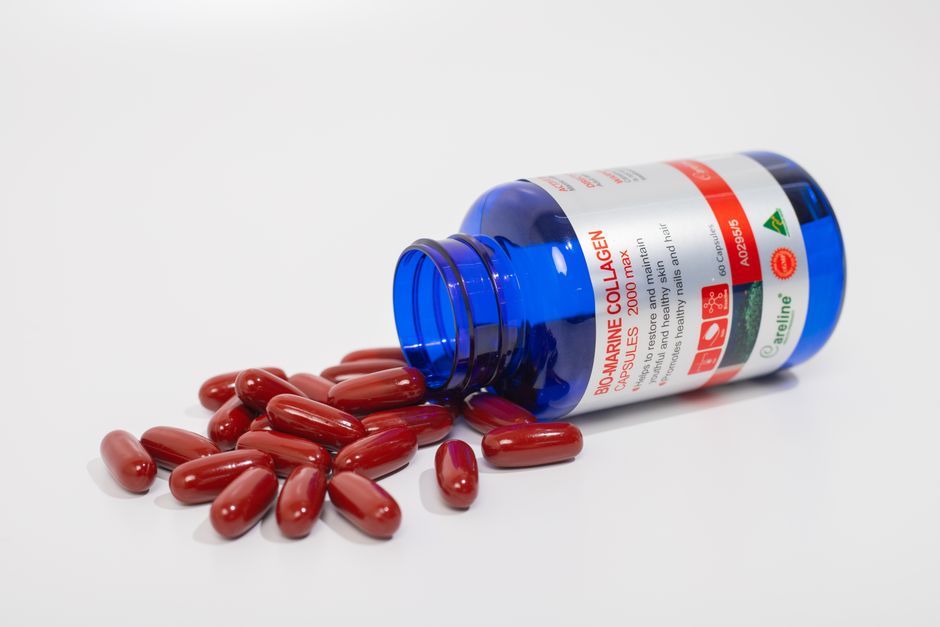
Yes, gelatin contains collagen — but not the kind you might expect. Gelatin is what collagen becomes after it is heated and broken down. It is a partially hydrolyzed form of collagen, made mostly from animal skin and bones. So the real question is not whether gelatin contains collagen. It is whether gelatin delivers the same benefits people take collagen supplements for. The answer is more complicated than most supplement marketing suggests.
Does Gelatin Contain Collagen?
Gelatin is collagen, just altered. Both are proteins built from the same amino acids. The difference is structure.
Native collagen is a tightly wound triple helix — three protein strands twisted together like a rope. That structure is what gives collagen its strength in skin, tendons, and cartilage. When you heat collagen in water, the helix unwinds and the strands separate into shorter, tangled pieces. That process is called hydrolysis, and the result is gelatin.
So gelatin and collagen are chemically related but physically different. Collagen is the intact, insoluble fiber. Gelatin is the cooked, soluble version. Both contain the same amino acid building blocks, including glycine, proline, and hydroxyproline. Those three make up a large share of collagen’s structure.
One clarification worth making: “collagen” on a supplement label usually means collagen peptides, also called hydrolyzed collagen. These are collagen strands broken down even further than gelatin — into smaller fragments that dissolve easily in cold water. Gelatin, collagen peptides, and native collagen are three points on the same spectrum.
What Is the Difference Between Gelatin and Collagen Peptides?
The main difference is how far the protein has been broken down. That affects how it behaves in food and, to some degree, how your body handles it.
Gelatin forms a gel when it cools. That is why it sets into jelly, gummy candies, and marshmallows. Collagen peptides do not gel. They stay liquid in cold water, which makes them easy to stir into coffee or smoothies. This is a processing difference, not a nutritional one.
Your digestive system breaks both down into amino acids and small peptides before absorption. So in terms of raw amino acid supply, gelatin and collagen peptides are very similar. The body does not absorb “collagen” as a whole protein — it absorbs the pieces and reassembles what it needs.
Where they may differ is in how quickly and completely they are absorbed. Smaller peptides from collagen hydrolysate are generally absorbed faster than the larger fragments in gelatin. Whether that translates into meaningfully different health outcomes is not well established. Most of the clinical research on collagen supplements has used collagen peptides or collagen hydrolysate, not plain gelatin. That matters when you are weighing evidence.
What Nutrients Does Gelatin Actually Provide?
Gelatin is a protein, but not a complete one. It is missing or very low in several essential amino acids, especially tryptophan. That means it cannot support muscle building or meet protein needs on its own the way a complete protein can.
What gelatin does provide is a concentrated source of glycine and proline. Glycine is the smallest amino acid and is used throughout the body in connective tissue, and it also acts as a neurotransmitter. Proline and hydroxyproline are central to collagen structure.
Gelatin also contains no fat, no fiber, and very little in the way of vitamins or minerals. It is essentially purified protein. The USDA nutrient database lists gelatin as roughly 85 to 90 percent protein by dry weight, depending on the type. It is not a significant source of any vitamin.
This is where a lot of confusion starts. People assume that eating collagen-rich food automatically rebuilds collagen in their skin or joints. That is not how it works. Your body breaks the protein down and then decides where the amino acids go — and it does not prioritize skin or joints over other tissues.




Does Eating Gelatin Build Collagen in Your Body?
Not directly. Eating gelatin supplies amino acids, but your body does not take that gelatin and patch it into your skin or cartilage. It breaks it down first.
The idea behind collagen supplements is different. Some research suggests that specific collagen peptides may signal the body to produce more collagen, or may support skin hydration and elasticity. Some studies have reported improvements in skin elasticity and joint comfort with collagen peptide supplementation. But the evidence is mixed, many studies are small or industry-funded, and results vary.
It is important to separate two claims. The first — that gelatin contains collagen and supplies collagen-building amino acids — is solid and well established. The second — that eating gelatin or collagen reliably improves skin, joints, or nails — is far less certain. The evidence here is limited and inconsistent.
What is well established is that your body can make collagen on its own, provided you have enough protein, vitamin C, and other nutrients. Vitamin C is required for the enzymes that stabilize collagen structure. A varied diet with adequate protein generally supports normal collagen production without any supplement.
Is Gelatin a Good Source of Collagen for Skin and Joints?
Gelatin is a reasonable source of collagen-building amino acids, but it is not the form most studied for skin and joint benefits. If you are specifically interested in collagen supplementation, the research base is stronger for collagen peptides than for plain gelatin.
Most clinical trials on collagen and skin have used hydrolyzed collagen peptides, often in daily doses around 2.5 to 10 grams. Some trials on joint comfort have used similar amounts. These doses come from specific studies, not from a universal guideline, and the results have not been consistent across trials. No clinical guidelines currently recommend a standard collagen dose for skin or joint health.
Gelatin has been studied too, but less often for these outcomes. Some older research looked at gelatin for joint pain, with mixed results. It is fair to say the evidence for gelatin specifically is thinner than for collagen peptides.
There is also a practical point. Gelatin is a food ingredient, not a standardized supplement. The amount of collagen protein in a serving of jelly or gummy candy varies widely, and those products often contain large amounts of sugar. Using dessert as a collagen supplement is not a reliable strategy.
How Do Gelatin, Collagen Peptides, and Bone Broth Compare?
These three are often marketed as if they are interchangeable. They are not identical, though they overlap.
| Source | What It Is | Gels When Cooled? | Evidence for Skin/Joint Benefits |
|---|---|---|---|
| Gelatin | Partially hydrolyzed collagen | Yes | Limited, less studied |
| Collagen peptides | Further hydrolyzed collagen | No | Most studied, mixed results |
| Bone broth | Simmered bones and connective tissue | Sometimes, if gelatin remains | Very limited; collagen content varies |
Bone broth deserves a note. Its collagen content depends heavily on how it is made and which bones are used. Some analyses have found far less protein than marketing implies. It is a food, not a standardized supplement, and its collagen content is not consistent from batch to batch.
The honest summary: all three can supply collagen-derived amino acids. Only collagen peptides have a meaningful body of clinical research behind them, and even that research is mixed.
Who Should Be Cautious About Gelatin?
Gelatin is generally recognized as safe as a food ingredient by regulatory bodies. Most people tolerate it without issue. But there are real considerations.
Gelatin is animal-derived, usually from pork or beef. That makes it unsuitable for vegetarians, vegans, and some religious diets. Kosher and halal status depends on the source and processing. Fish gelatin exists as an alternative but is less common.
People with allergies to the source animal should avoid it. And because gelatin is an incomplete protein, it should not be relied on as a primary protein source, especially for children, older adults, or anyone with higher protein needs.
For pregnant women, infants, and children, no clinical guidelines exist for collagen or gelatin supplementation. Whole foods and adequate overall protein are the standard approach. Anyone with a medical condition or on medication should talk to a clinician before adding supplements.
One more point on safety claims: the absence of harm in food use does not confirm benefit as a supplement. Those are separate questions, and the supplement evidence is weaker than the food-safety record.
Frequently Asked Questions
Is gelatin the same as collagen?
Gelatin is a broken-down form of collagen, made when collagen is heated in water. They share the same amino acids but differ in structure.
Does gelatin powder contain collagen?
Yes, gelatin powder is made from collagen and contains collagen-derived protein. It is not intact collagen, but a partially hydrolyzed version.
Can I use gelatin instead of collagen peptides?
You can, but the research on skin and joint benefits is stronger for collagen peptides. Gelatin supplies similar amino acids but has been studied less for those outcomes.
Is gelatin good for your skin?
The evidence is limited and mixed. Some studies suggest collagen peptides may support skin elasticity, but plain gelatin has not been well studied for this, and no guidelines recommend it.
