
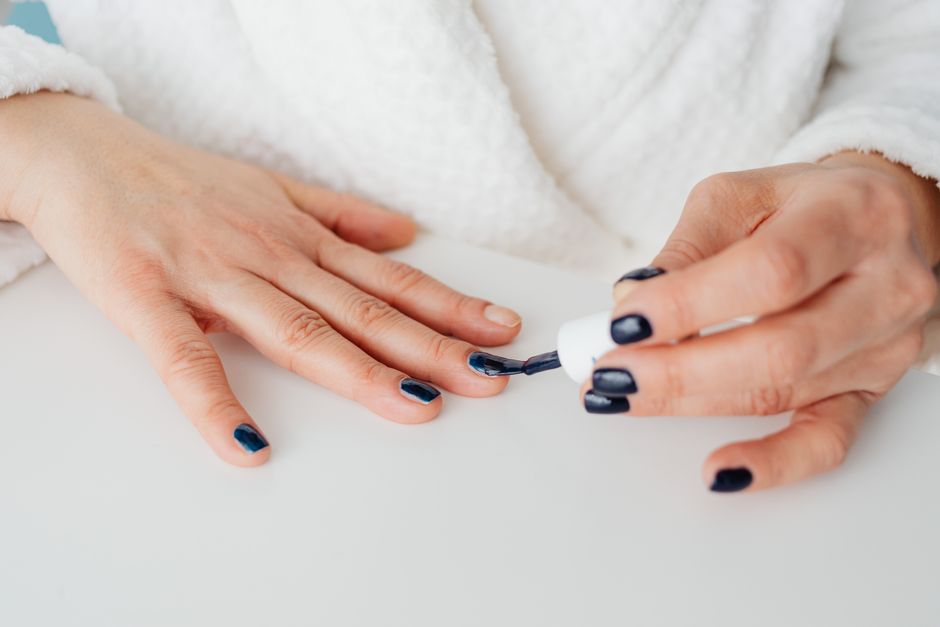
Gel nail polish does not contain metal, and wearing it will not cause you harm during an MRI. The pigments and polymers used in gel polish are not magnetic, so they will not be pulled or heated by the MRI machine. However, there is one important exception to be aware of: some nail art, charms, or specific metallic top coats can contain actual metal, and those require a different conversation with your radiology team.
Does Gel Nail Polish Have Metal In It Mri Safety
Standard gel nail polish is made from a mixture of acrylic monomers, photoinitiators, and color pigments. None of these ingredients are metallic. The color comes from organic pigments or mineral-based compounds like iron oxide, which is not the same as metallic iron. Iron oxide is a stable compound and is not magnetic.
The confusion happens because some people assume any mineral or metal-sounding ingredient is dangerous in an MRI. That is not accurate. The MRI machine uses a powerful magnetic field that only affects ferromagnetic materials — things that contain iron, nickel, or cobalt in their pure or alloy forms. Gel polish does not contain these in any meaningful amount.
That said, the FDA and radiology organizations do not require patients to remove gel polish for standard MRIs. Many imaging centers will let you keep it on. Some centers may still ask you to remove it, but that is usually a precautionary policy rather than a proven risk.
What Ingredients in Gel Polish Could Cause Problems?
The real risk with nail products and MRI is not the polish itself. It is the additives. Some nail products contain actual metal particles for decorative effects. These include:
- Metallic glitter with real aluminum or silver flakes
- Chrome powders that use metal oxide coatings
- Nail charms, studs, or jewelry applied over the polish
- Magnetic polishes that contain actual iron powder
Magnetic nail polish is a real product. It contains tiny iron particles that align when you hold a magnet over the wet polish to create patterns. This polish absolutely contains metal and should be removed before an MRI. The iron particles are small, but the MRI magnet is extremely strong. Even tiny ferromagnetic particles can heat up or move, and in sensitive areas like the face or chest, that matters.
Chrome powders are more complicated. Many contain aluminum or other metal particles suspended in a carrier. The amount is small, but the risk is not zero. If you wear chrome nails, tell your MRI technologist before the scan.
What Happens If You Wear Gel Polish During an MRI?
In most cases, nothing happens. The MRI machine scans the area you need scanned, and the gel polish on your fingers or toes does not interfere with the image quality unless the scan is of your hands or feet. Even then, the polish itself usually does not distort the image significantly.
The bigger concern for hand and foot scans is not the polish. It is the thickness of the product. Thick layers of gel or acrylic can create a signal artifact — a blur or distortion in the image. This happens because the material is dense and interferes with the radiofrequency pulses the MRI uses. If your scan is of your hand or wrist, the technologist may ask you to remove the polish to get a cleaner image.
For scans of other body parts, like your brain, spine, or abdomen, gel polish on your fingers is irrelevant. It will not affect the scan or your safety.





Should You Remove Gel Polish Before an MRI?
The safest answer is to ask your imaging center before your appointment. Policies vary. Some centers require all nail polish removed. Others only care about metallic products. A few have no policy at all.
If you are having a scan of your hand, wrist, or foot, removal is the best choice. It eliminates both the safety question and the image quality question. If you are having a scan elsewhere on your body, you can likely keep the polish on, provided it contains no metal.
Here is the practical issue: you may not know for sure whether your polish contains metal. Many brands do not list ingredients clearly. Chrome powders and magnetic polishes are the obvious culprits, but some glitter polishes also contain metal. If you are not certain, remove the polish. It is not worth the risk or the delay.
What About Acrylic Nails and Gel Extensions?
Acrylic nails and gel extensions are made from the same family of materials as gel polish. The powder and liquid used for acrylics are polymers. The gel used for extensions is a resin. Neither contains metal in the base formula.
However, acrylic and gel extensions are more likely to have decorative elements. Rhinestones, metal foils, and 3D charms are common. These are the parts that can cause problems in an MRI. The base nail itself is not the issue.
Some older acrylic formulas contained trace amounts of metals as contaminants or stabilizers. Modern products from reputable brands do not. But there is no way to verify this from the salon chair. If you have acrylics and need an MRI, tell the technologist. They can decide based on your specific scan.
What Does the Evidence Actually Show?
Research on nail polish and MRI safety is limited. There are no large clinical trials on this topic. The evidence comes from case reports and basic physics.
The physics is clear: MRI magnets only interact with ferromagnetic materials. Gel polish is not ferromagnetic. The radiofrequency pulses can heat certain materials, but only if they are conductive and metallic. Standard gel polish is neither.
Case reports have documented problems with metallic nail products during MRI. These are rare and usually involve decorative elements or magnetic polishes. The FDA has not issued a specific warning about gel polish and MRI. The American College of Radiology does not list nail polish as a contraindication.
Some imaging centers have reported artifacts in hand scans caused by thick nail product. This is a practical concern, not a safety one. It means the image may need to be repeated, which costs time and money.
How to Prepare for an MRI If You Wear Gel Polish
Call your imaging center before the appointment. Ask specifically about nail polish and nail art. Do not assume the policy. Write down what they say.
If they say removal is required, remove the polish before you arrive. Do not wait until you get there. Removing gel polish takes time and requires acetone or a drill. You do not want to hold up your appointment.
If they say polish is fine, still check your nails for metal. Look for glitter, chrome finishes, charms, or any product that was applied with a magnet. If you have any of these, remove them or the entire polish.
Bring nail polish remover with you to the appointment just in case. Some centers will provide it, but many will not. Being prepared avoids a wasted trip.
What About Nail Art and MRI Safety?
Nail art is the gray area. A simple gel manicure is almost certainly safe. Nail art with metal elements is not.
If your nail art includes any of the following, remove it before an MRI:
- Metal studs or spikes
- Chrome or mirror finishes
- Glitter that has a metallic sheen
- Any product applied with a magnet
- Jewelry attached to the nail
If your nail art is purely color-based — hand-painted designs, stickers, or decals without metal — it is likely fine. But again, you cannot always tell by looking. When in doubt, remove it.
Frequently Asked Questions
Can I wear gel nail polish during an MRI?
Yes, in most cases standard gel polish is safe because it contains no magnetic metal. Check with your imaging center first, as some have policies requiring removal.
Does magnetic nail polish contain metal?
Yes, magnetic nail polish contains iron particles that align when exposed to a magnet. You must remove it before an MRI.
Can gel polish affect MRI image quality?
Thick gel or acrylic layers can cause image distortion during hand or foot scans. For scans of other body parts, it does not affect image quality.
Should I remove chrome or glitter nails before an MRI?
Yes, chrome and metallic glitter polishes may contain real metal particles. Remove them before your scan to be safe.
