
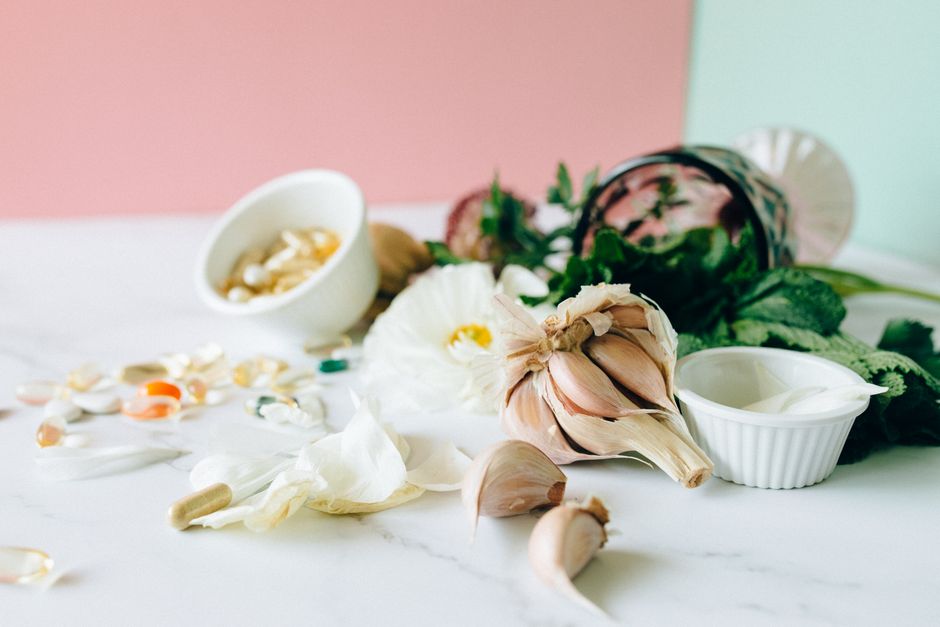
Garlic does not kill household mold. Allicin and other sulfur compounds in crushed garlic show antifungal activity in laboratory studies, but that activity has not translated into a proven method for removing mold from walls, grout, or fabric. Mold cleanup relies on moisture control and physical removal, not on garlic. Using garlic paste or garlic spray on a moldy surface is more likely to add organic material that mold can feed on than to solve the problem.
Does Garlic Kill Mold Types Methods And Limits?
No. Garlic is not a mold killer in any practical household sense. The confusion comes from real science about garlic’s chemistry being stretched far beyond what that science actually shows.
When garlic is chopped or crushed, an enzyme called alliinase converts alliin into allicin. Allicin is unstable and breaks down into a family of sulfur-containing compounds, including diallyl disulfide and ajoene. Several of these compounds have demonstrated antifungal effects against certain molds and yeasts in petri dish and test tube experiments.
That is where the evidence largely stops. A chemical killing mold cells in a lab dish is not the same as that chemical killing mold on a damp bathroom ceiling. The gap between those two things is wide, and it is the gap most garlic-for-mold claims ignore.
What Does the Research Actually Show About Garlic and Mold?
Laboratory research does show antifungal activity from garlic-derived compounds. Studies have tested garlic extracts against species including Aspergillus, Candida, and various dermatophytes — the fungi behind athlete’s foot and similar skin infections. Some of this work found measurable inhibition of fungal growth.
Two limits matter here.
- Most of these studies were done in controlled lab conditions, not on real building surfaces.
- Antifungal activity against a fungus in a dish does not predict what happens on porous drywall, where mold grows into the material rather than sitting on top of it.
There is also a practical chemistry problem. Allicin is unstable. It degrades quickly at room temperature and breaks down further when exposed to heat, air, and light. A garlic solution sitting in a spray bottle is losing potency by the hour. No study has confirmed that a homemade garlic spray retains enough antifungal activity to treat an actual mold colony on a wall.
This is the pattern with many natural antifungal claims. The test tube result is real. The household application is not established.
Why Garlic Is a Poor Choice for Mold on Surfaces
Garlic adds food for mold. That is the central problem.
Mold needs three things to grow: moisture, a food source, and the right temperature. Organic matter is a food source. Garlic paste, garlic water, and garlic oil are all organic matter. Applying them to a damp surface can feed the very problem you are trying to fix.
Garlic oil is especially worth flagging. Oil and water do not mix, and oil-based products can leave a residue that traps moisture against a surface. Moisture is the single most important factor in whether mold grows. Anything that holds water in place works against you.
There is one more issue. Garlic does not penetrate porous materials. Mold on drywall, ceiling tile, or wood often has roots — called hyphae — extending into the material. A surface treatment, garlic or otherwise, cannot reach what is inside. If the mold is into the material, the material usually needs to be removed, not treated.
How Do You Actually Get Rid of Household Mold?
Moisture control is the foundation of every effective mold strategy. Without it, mold returns regardless of what you clean with.
The general approach used in mold remediation follows a consistent order.
- Fix the water source. A leak, a condensation problem, or high indoor humidity will keep producing mold until it is addressed.
- Dry the area. Mold cannot grow without moisture. Drying within a day or two of a water event limits how much mold can establish itself.
- Remove affected porous materials. Drywall, carpet, and ceiling tile that have been wet and moldy often cannot be cleaned and need to be discarded.
- Clean hard surfaces. Non-porous surfaces can be cleaned with detergent and water. Commercial mold cleaners are also available.
- Control indoor humidity. Keeping indoor humidity low is one of the most reliable ways to prevent recurrence.
On cleaning products specifically: bleach is widely used on mold, but it has real limitations. It works on hard, non-porous surfaces. It does not penetrate porous materials, and it can be dangerous when mixed with other cleaners. Some public health guidance has moved toward recommending soap or detergent and water for routine cleanup rather than bleach, partly because bleach does not address the mold’s deeper structure and can be hazardous to breathe in enclosed spaces.
If the mold covers a large area, or if you can smell a musty odor without seeing visible growth, professional remediation is the safer route. Disturbing a large mold colony can release spores into the air.
Is Garlic Safe to Eat If You Have a Mold Allergy?
Yes, for most people. Eating garlic is not the same as inhaling mold spores or living in a moldy home.
Mold allergy symptoms come from inhaling airborne spores or from skin contact, not from eating foods that happen to be antifungal. Garlic itself can cause reactions in some people — garlic allergy exists, and it can cause skin irritation or, rarely, more serious reactions — but that is a garlic issue, not a mold issue.
One separate point worth clarifying: some people confuse “mold on food” with “mold in the air.” Garlic that has gone moldy in the pantry should be discarded like any moldy food. The concern there is the mold on the garlic, not the garlic itself.
Does Eating Garlic Help Your Body Fight Mold?
No. There is no evidence that eating garlic treats or prevents mold-related illness in humans.
This claim usually refers to two different things. One is invasive fungal infections, which occur mainly in people with severely weakened immune systems. The other is mold allergy or mold-related respiratory symptoms in otherwise healthy people. Neither is treated with garlic.
Some laboratory research has looked at whether garlic compounds affect fungi that can infect humans. That research is preliminary and has not produced evidence that eating garlic prevents or treats fungal infections. Invasive fungal infections are serious medical conditions that require specific antifungal medications prescribed by a clinician. Garlic is not a substitute for that treatment.
This is a place where the honest answer is simple: the evidence is not there.
What About Garlic as a Natural Antifungal in General?
Garlic does have documented antifungal properties against some organisms in laboratory settings. That is a real finding. Some research has explored garlic extracts against skin fungi, and a small number of studies have looked at garlic in the context of conditions like athlete’s foot.
The evidence for garlic as a clinical antifungal treatment in humans remains limited. Most of what exists is lab-based or preliminary. This does not mean garlic is useless — it means the human evidence for treating fungal conditions with it is thin, and it is not a replacement for treatments with established effectiveness.
The pattern is worth remembering. A substance showing antifungal activity in a dish tells you something about its chemistry. It does not tell you the substance will work on your wall, your skin, or your lungs. Those are different questions with different evidence requirements.
Does Garlic Kill Black Mold Specifically?
No. Garlic has not been shown to kill Stachybotrys chartarum — commonly called black mold — on building surfaces.
Black mold gets outsized attention, and some of the fear around it exceeds what the evidence supports. But that does not make garlic a solution. Stachybotrys grows on materials that stay wet for extended periods, often cellulose-rich materials like drywall paper and wood. The fix is removing the moisture and, in most cases, removing the affected material. A garlic spray does not address either.
If you suspect black mold, the response is the same as for any mold: find and fix the water source, remove what cannot be dried and cleaned, and consider professional help for large areas.
Is Garlic Ever Worth Trying for Mold?
It is not a mold treatment. There is no scenario where garlic is the right tool for mold on a surface.
If you want to use garlic in cooking, that is a different conversation with its own evidence base. As a mold remedy, the honest position is that the science does not support it, and the practical downsides — added organic matter, trapped moisture, no penetration into porous materials — make it a poor choice even setting the evidence aside.
The reliable approach to mold has not changed. Control moisture. Dry wet areas quickly. Remove what cannot be cleaned. Keep indoor humidity in check. None of that is as appealing as a kitchen remedy, but it is what works.
Frequently Asked Questions
Does garlic kill mold on walls?
No. Garlic has not been shown to kill mold on building surfaces, and applying it can add organic material that mold feeds on. Mold on walls is addressed by fixing the moisture source and removing or cleaning affected material.
Can I use garlic spray to remove mold?
Garlic spray is not an established mold remover and no study has confirmed it works on real surfaces. It can also leave residue that traps moisture, which encourages mold growth.
Is garlic antifungal?
Garlic compounds have shown antifungal activity against some fungi in laboratory studies. That activity has not been shown to translate into an effective treatment for mold in homes or for fungal infections in people.
Does eating garlic help with mold exposure?
No. There is no evidence that eating garlic prevents or treats health effects from mold exposure. Mold-related health concerns are addressed by removing the mold and the moisture feeding it.
