
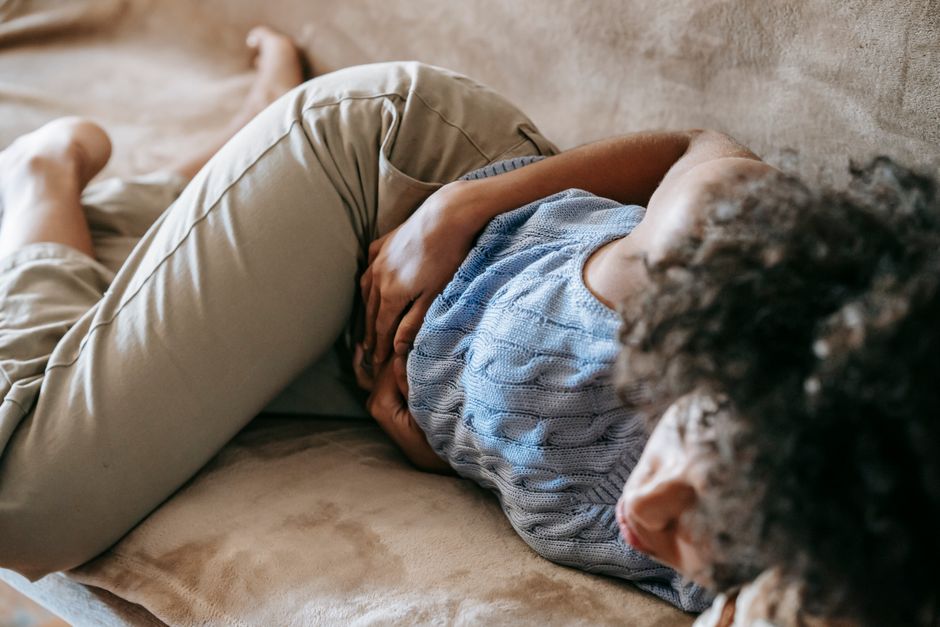
Gallbladder pain does not usually get worse when you breathe. The classic pain of a gallbladder problem is steady, not movement-related. It sits in the upper right part of your belly and often spreads to your right shoulder blade. Breathing normally does not change it much.
That said, a few serious conditions that start near the gallbladder can hurt more when you take a breath. So the honest answer is: not typically, but breathing-related pain in that same area deserves a closer look.
Where Does Gallbladder Pain Actually Show Up?
The gallbladder is a small, pear-shaped sac tucked under your liver on the right side of your upper belly. It stores bile, a fluid your liver makes to help digest fats. When something blocks the flow of bile or irritates the gallbladder wall, you feel it in a predictable spot.
The pain usually lands in the upper right abdomen, just below the ribs. It can also show up in the center of your upper belly. Many people feel it radiate to the right shoulder or the area between the shoulder blades. That shoulder pain is not random — the nerves that serve the gallbladder share pathways with nerves that serve the shoulder, so the brain can mix up the signal.
Gallbladder pain is typically steady and can be severe. It builds over minutes to hours and can last for hours. It is not the kind of pain that comes and goes with each breath. It is also not usually sharp and stabbing in a way that tracks your breathing.
This pattern matters because it helps separate gallbladder pain from pain that comes from the lungs or the lining around them.
Does Gallbladder Pain Hurt When You Breathe?
No, breathing is not a typical trigger for gallbladder pain. The gallbladder sits below the diaphragm, the muscle you use to breathe. When the diaphragm moves, it can press on organs underneath it. But in most gallbladder problems, that pressure does not produce the sharp, breath-linked pain people describe.
When pain genuinely worsens with a deep breath, the cause is usually something else. The most common reasons for breath-related pain in the upper belly include:
- Pneumonia, especially in the lower part of the right lung
- Pleurisy, which is inflammation of the lining around the lungs
- A blood clot in the lung, known as a pulmonary embolism
- Inflammation of the diaphragm or the tissue just under it
- A rib injury or muscle strain in the chest wall
Here is the non-obvious part. The gallbladder and the right lung sit close together. When the lower right lung is inflamed, the pain can feel almost identical to gallbladder pain — same location, same shoulder tip radiation. This is why doctors sometimes check the lungs when someone comes in with what looks like a gallbladder attack. The conditions can imitate each other.
So if your pain clearly spikes when you inhale deeply, do not assume it is your gallbladder. It could be, but the breathing link points more toward the chest or the diaphragm.
What Does a Gallbladder Attack Feel Like?
A gallbladder attack — doctors call it biliary colic — has a recognizable pattern. Knowing it helps you tell gallbladder pain apart from other causes.
The pain is usually steady and severe. It builds up and stays. It most often starts after a fatty meal, often in the evening or at night. It can last anywhere from about 30 minutes to several hours.
Common features include:
- Steady pain in the upper right or upper middle abdomen
- Pain that spreads to the right shoulder or shoulder blade
- Nausea and sometimes vomiting
- Pain that does not shift or change with body position much
What is usually missing: fever and chills. Those suggest infection rather than a simple blockage, and that is a different and more serious problem. If a gallbladder attack comes with fever, yellowing of the eyes or skin, or pain that lasts more than several hours without easing, that is a reason to seek care right away.
One clarification worth making. The term “gallbladder attack” gets used loosely. The pain itself comes from the gallbladder contracting against a blocked outlet, usually by a gallstone. It is not the same as inflammation of the gallbladder, which is a more serious condition that often needs treatment in a hospital.




When Breathing Pain Points to Something Else
If a deep breath reliably makes your pain worse, think beyond the gallbladder. Several conditions cause pain that rises and falls with your breathing, and some are urgent.
Pleurisy is inflammation of the thin lining around the lungs. It causes sharp pain that gets worse when you breathe in, cough, or sneeze. The pain is often worse on one side.
Pneumonia in the lower right lung can cause pain that feels like it is coming from the abdomen. It often comes with fever, cough, and feeling short of breath.
Pulmonary embolism is a blood clot that blocks blood flow in the lung. It can cause sudden shortness of breath and chest pain that worsens with a deep breath. This is a medical emergency.
Some of these conditions are far more dangerous than a routine gallbladder attack. A blood clot in the lung can be life-threatening and needs emergency care. So breath-linked pain should never be brushed off as “just gas” or “just my gallbladder.”
If you have sudden shortness of breath, chest pain, or pain that worsens sharply with breathing, get emergency help. Do not wait to see if it passes.
How Doctors Tell the Difference
Because these conditions can feel similar, doctors rely on more than where the pain is. They look at the whole picture.
Key clues they use:
- Whether the pain changes with breathing, coughing, or movement
- Whether there is fever, cough, or shortness of breath
- Whether the pain came on after a fatty meal
- Whether there is yellowing of the skin or eyes
- Whether the pain spreads to the shoulder or back
Tests help confirm the cause. Blood tests can show signs of infection, liver problems, or a blocked bile duct. An ultrasound is the standard imaging test for gallstones and gallbladder problems. A chest X-ray or CT scan can check the lungs. In some cases, doctors test the blood for markers that rise with a clot in the lung.
The physical exam matters too. A doctor pressing on the upper right belly while you take a deep breath is checking for a specific sign of gallbladder inflammation. This is a classic bedside test, though it is not perfect on its own.
What to Do If You Have This Kind of Pain
The right step depends on how severe the pain is and what comes with it. There is no single rule that fits everyone, so use the pattern of your symptoms as a guide.
Get emergency care right away if you have:
- Sudden shortness of breath
- Chest pain that worsens with breathing
- Fever with severe abdominal pain
- Yellowing of the skin or eyes
- Pain that is severe and not easing
See a doctor soon, but not necessarily in an emergency, if you have repeated bouts of upper right abdominal pain after fatty meals. Recurring attacks are worth evaluating. They often point to gallstones, and a doctor can confirm that with an ultrasound.
Do not try to diagnose yourself based on where the pain is. The overlap between gallbladder, lung, and diaphragm problems is real. A symptom that seems clear-cut can come from an unexpected source.
For mild, brief discomfort with no other symptoms, watching and noting what triggers it is reasonable. But pain that keeps coming back, or that comes with any of the warning signs above, should be checked by a clinician.
Does the Location of Pain Tell You the Cause?
Not on its own. Location is a clue, not a diagnosis. The upper right abdomen is a crowded neighborhood. The gallbladder, liver, right kidney, part of the colon, and the lower right lung all sit in or near that area. Pain from any of them can land in a similar spot.
What sharpens the picture is the pattern. Gallbladder pain is steady, follows fatty meals, and does not track your breathing. Lung and diaphragm pain tends to change with breathing, coughing, or position. Putting the location together with the pattern is how doctors narrow it down.
This is the main reason a single symptom like “it hurts when I breathe” cannot be pinned to one organ. The body does not label its signals. It takes a full history, an exam, and often a test or two to sort out what is going on.
Frequently Asked Questions
Does gallbladder pain hurt when you breathe?
No, gallbladder pain usually does not get worse when you breathe. It is typically steady pain in the upper right abdomen that does not change much with your breathing.
What causes pain that gets worse when you take a deep breath?
Pain that worsens with a deep breath most often comes from the lungs or the lining around them, such as pleurisy or pneumonia. A blood clot in the lung can also cause this and is a medical emergency.
Can gallbladder problems cause shoulder pain?
Yes, gallbladder pain can spread to the right shoulder or the area between the shoulder blades. This happens because the nerves serving the gallbladder share pathways with nerves that serve the shoulder.
When should I worry about upper right abdominal pain?
Seek emergency care if the pain comes with fever, yellowing of the skin or eyes, sudden shortness of breath, or pain that is severe and not easing. Recurring pain after fatty meals should be checked by a doctor.
