
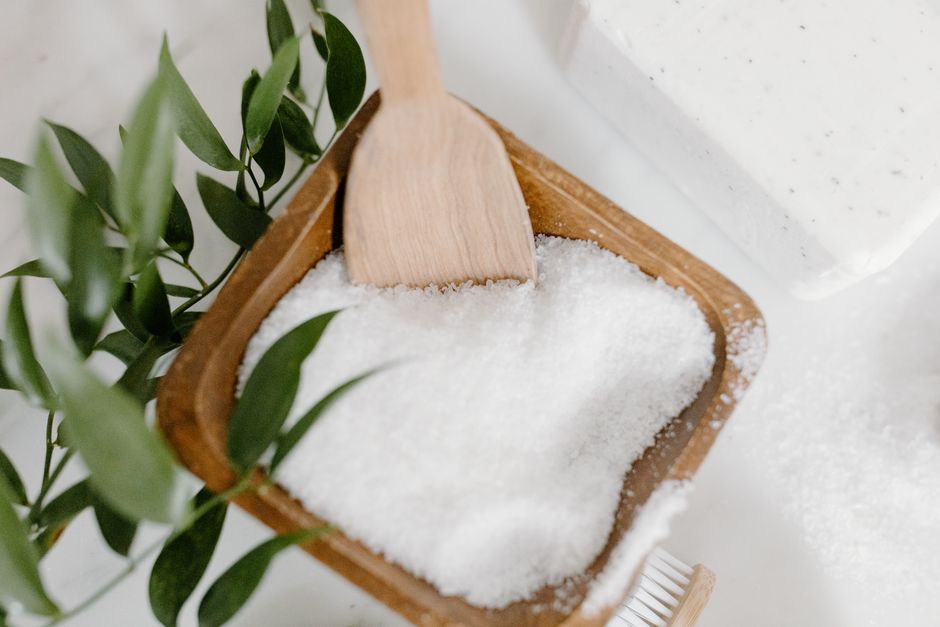
Epsom salt is often mentioned in home remedies for hair, but the honest answer is that no clinical evidence shows it can treat or reverse hair loss. Epsom salt is magnesium sulfate, and while magnesium is essential for overall health, applying it to your scalp does not address the hormonal, genetic, or inflammatory causes behind most hair thinning. It may help with scalp texture or temporary buildup, but it is not a treatment for hair loss.
What Is Epsom Salt and How Is It Used on Hair?
Epsom salt is a mineral compound made of magnesium, sulfur, and oxygen. It dissolves easily in warm water and has been used for decades in baths to soothe sore muscles. Some people also use it as a scalp scrub, mixing it with shampoo or conditioner to remove product buildup and dead skin.
The idea is that magnesium might help the hair follicle. Magnesium does play a role in many bodily functions, including protein synthesis, which is relevant to hair structure. But the skin and scalp do not absorb magnesium from a salt rinse in a way that reliably changes follicle function. There is no established mechanism by which topical Epsom salt would stop hair shedding or stimulate regrowth.
Does Epsom Salt Help Hair Loss The Real Answer
The real answer is no — not in any way that matters for hair loss. Hair loss is most commonly caused by androgenetic alopecia, also known as male or female pattern baldness. This condition is driven by genetics and hormones, specifically the sensitivity of hair follicles to dihydrotestosterone, or DHT. Epsom salt does not interact with DHT, nor does it change the hormonal environment of the scalp.
Other common causes of hair loss include telogen effluvium, which is temporary shedding after stress, illness, or childbirth, and alopecia areata, an autoimmune condition. Epsom salt does not treat autoimmune reactions or correct the nutritional or stress factors that trigger telogen effluvium. If you are losing hair, the first step is identifying the cause. Salt rinses will not do that.
What the Research Actually Shows
There is no published clinical trial that tests Epsom salt as a hair loss treatment. Some research has looked at magnesium levels in people with certain types of hair loss, but the findings are not consistent enough to guide treatment. For example, some studies have found lower magnesium levels in people with telogen effluvium, but this does not mean that applying magnesium to the scalp restores hair.
Oral magnesium supplementation has been studied for other health conditions, but not for hair regrowth. The evidence for topical magnesium in hair care is largely anecdotal. Marketing claims often describe Epsom salt as a way to “detoxify” the scalp or “unclog” follicles. These terms sound scientific but do not correspond to any established medical process. The scalp does not need detoxification, and hair follicles are not pipes that get clogged in a way that salt can clear.

Can Epsom Salt Help With Scalp Conditions That Affect Hair?
Epsom salt might improve the feel of the scalp by removing oil and product residue. This is a cosmetic effect, not a medical one. If you have seborrheic dermatitis, which causes flaking and itching, a salt scrub could help remove scales temporarily. But it is not a treatment for the underlying inflammation, and it can irritate the skin if used too aggressively.
If your scalp is already sensitive, red, or broken, Epsom salt can make things worse. Salt is abrasive. Rubbing it into irritated skin can cause micro-tears and increase inflammation. In that situation, it could actually contribute to hair shedding by damaging the skin around the follicles.
Magnesium Deficiency and Hair Loss: What Is Known
Severe magnesium deficiency is rare in healthy adults. When it does occur, it is usually due to malabsorption, kidney disease, or certain medications. Symptoms include muscle cramps, fatigue, and abnormal heart rhythms. Hair loss is not a primary symptom of magnesium deficiency.
Some people assume that because magnesium is important for health, more of it must be better for hair. That logic does not hold. The body regulates magnesium tightly, and the scalp has no special need for additional magnesium beyond what the rest of the body receives from diet. Foods like nuts, seeds, leafy greens, and whole grains provide magnesium in amounts that meet most people’s needs.
What Actually Works for Hair Loss
If you are experiencing hair loss, the treatments with the strongest evidence are directed at the specific cause. For androgenetic alopecia, two medications are approved by the FDA: minoxidil and finasteride. Minoxidil is applied to the scalp and is available over the counter. Finasteride is an oral prescription medication that blocks the conversion of testosterone to DHT. Both have been studied extensively, and both require ongoing use to maintain results.
For temporary shedding after stress or illness, the hair usually regrows on its own within several months. The key is addressing the underlying stressor, whether that is improving sleep, managing illness, or correcting a nutritional deficiency. Iron deficiency and vitamin D deficiency have both been linked to hair thinning, so a blood test can help rule those out.
Low-level laser therapy and platelet-rich plasma injections have some evidence of benefit, but results vary. No topical salt or mineral rinse has comparable evidence.
Risks and Side Effects of Using Epsom Salt on Hair
Using Epsom salt on the scalp is not dangerous for most people, but it is not risk-free. Overuse can dry out the hair and scalp. Magnesium sulfate has a drying effect, and if you already have dry hair or a flaky scalp, it can worsen those conditions.
If you have open wounds, sunburn, or an active skin infection on your scalp, do not use Epsom salt. The salt can sting and delay healing. People with kidney disease should avoid soaking in Epsom salt baths because the skin can absorb some magnesium, and impaired kidneys may not clear it efficiently. This concern applies more to baths than to scalp rinses, but it is still worth knowing.
How to Use Epsom Salt Safely If You Choose to Try It
If you want to try Epsom salt as a scalp exfoliant, there is no established guideline because no clinical protocol exists. A reasonable approach is to dissolve a small amount in warm water and apply it briefly, then rinse thoroughly. Do not scrub hard. Use it no more than once a week, and stop if your scalp becomes irritated.
Be aware that this is a cosmetic practice, not a medical treatment. It will not stop hair loss, and it should not replace a visit to a dermatologist. If you are losing hair in patches, shedding more than usual, or noticing a receding hairline, a medical evaluation is the appropriate next step.
Frequently Asked Questions
Can Epsom salt regrow hair?
No. No clinical evidence shows that Epsom salt can regrow hair or reverse hair loss. It may remove buildup from the scalp, but it does not affect the causes of hair thinning.
Is Epsom salt good for a dry scalp?
No, it is more likely to dry the scalp further. Epsom salt has a drying effect, so people with dry or sensitive skin should avoid it.
Does magnesium deficiency cause hair loss?
Severe magnesium deficiency is rare, and hair loss is not a primary symptom. If you are concerned about a deficiency, a blood test is the reliable way to check.
What is the most effective treatment for hair loss?
For common pattern hair loss, minoxidil and finasteride have the strongest evidence. For other types of hair loss, the treatment depends on the cause, so a dermatologist should evaluate you first.
