
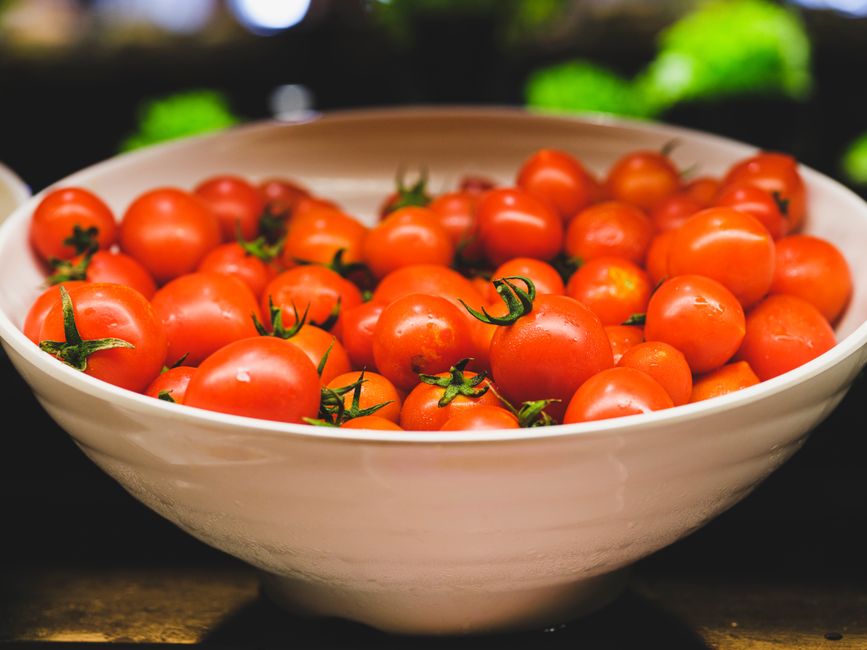
No, eating tomatoes does not cause inflammation in most people. Tomatoes are not inherently inflammatory. They contain lycopene, vitamin C, and other compounds that have been studied for anti-inflammatory effects. For the large majority of people, tomatoes are a normal, healthy part of the diet. The exceptions are specific and worth knowing about, and they involve individual sensitivity rather than a universal problem with the fruit.
Why Do Some People Think Tomatoes Cause Inflammation?
Two separate ideas get mixed together, and untangling them explains most of the confusion.
The first is the nightshade theory. Tomatoes belong to the Solanaceae family, which also includes potatoes, peppers, and eggplant. Some people report that nightshades worsen joint pain or digestive symptoms. This idea circulates widely in online health communities and in some elimination diets. The problem is that it has very little clinical research behind it. No large human trial has confirmed that nightshades cause inflammation in the general population. The evidence is largely anecdotal.
The second is the lectin theory. Tomatoes contain small amounts of a protein called lectin. Some popular diet books have claimed that lectins trigger inflammation and gut damage. The clinical evidence for this in humans eating normal amounts of food is thin. Lectins are found in many plant foods, and cooking reduces their activity. The claim that ordinary tomato consumption causes inflammation through lectins is not supported by strong human data.
There is one real mechanism worth understanding: oral allergy syndrome. Some people who are allergic to grass or birch pollen react to raw tomatoes because the proteins in tomato resemble pollen proteins. This causes itching or tingling in the mouth and throat, usually mild and usually only with raw tomato. It is an allergic reaction, not general inflammation, and it affects a specific group of people. Cooking the tomato often reduces the reaction because heat breaks down the proteins involved.
So the honest position is this: tomatoes are not a general inflammatory food. A subset of people have genuine reactions, either allergic or digestive, and those reactions are real for them. But they do not reflect what happens in most people.
Do Tomatoes Fight Inflammation or Cause It?
The research leans toward anti-inflammatory, not pro-inflammatory. That direction is fairly consistent across laboratory and observational studies, though it is important not to overstate how strong the human evidence is.
Tomatoes are a major dietary source of lycopene, the pigment that gives red tomatoes their color. Lycopene is a carotenoid with antioxidant properties. In laboratory studies, it neutralizes reactive oxygen species, which are molecules that can damage cells and contribute to inflammation. Whether that laboratory activity translates into meaningful anti-inflammatory effects in people eating tomatoes is a different question, and the human evidence is more modest than the lab evidence.
Some observational studies have found that people who eat more tomato products have lower markers of inflammation or lower risk of certain chronic diseases. Observational studies cannot prove cause and effect. People who eat more tomatoes may differ from those who eat fewer in many other ways. So the finding is suggestive, not conclusive.
What is reasonable to say is that tomatoes contain nutrients with plausible anti-inflammatory activity, and that the overall pattern of evidence does not support the idea that they promote inflammation. The strongest claim the data supports is that tomatoes are not harmful in this respect for most people — not that eating them treats or prevents inflammatory disease.
What About Nightshades and Joint Pain?
The claim that nightshades worsen arthritis pain is one of the most common reasons people avoid tomatoes. It is worth addressing directly because the stakes are real for people in chronic pain looking for relief.
There is no solid clinical trial evidence that eliminating nightshades reduces arthritis pain or inflammation. A small number of people report improvement when they cut out nightshades, and those reports deserve respect. But reported improvement after an elimination diet is difficult to interpret. Symptoms fluctuate. Placebo effects are strong in pain conditions. And people often change several things at once, making it impossible to attribute improvement to one food.
Some clinicians do suggest a trial elimination of nightshades for people with joint pain who have not responded to other approaches. That is a reasonable clinical decision made case by case. It is not the same as evidence that nightshades cause inflammation in general. If you try it, the useful approach is to remove nightshades for a set period, track symptoms carefully, then reintroduce them and see whether symptoms return. Without that reintroduction step, you cannot tell whether the food was ever the issue.
One clarification that surprises people: the nightshade family is broad, and reactions attributed to it are often inconsistent. Someone who reacts to tomatoes may have no trouble with potatoes or peppers. That pattern argues against a single family-wide mechanism and points more toward individual sensitivity to a specific food.





Who Should Actually Be Careful With Tomatoes?
For most people, no caution is needed. There are a few groups where attention makes sense.
- People with oral allergy syndrome. If raw tomato causes itching or tingling in the mouth, that is a real reaction. Cooked tomato is often tolerated. Severe reactions are uncommon but possible, and anyone with throat swelling or difficulty breathing should treat it as an emergency.
- People with acid reflux or GERD. Tomatoes are acidic, and acidic foods can worsen symptoms in some people with reflux. This is a symptom issue, not an inflammation issue, and it varies a lot from person to person.
- People with kidney disease. Tomatoes are relatively high in potassium. People with advanced kidney disease are often advised to limit potassium, and a clinician or dietitian should guide that.
- People with a diagnosed tomato allergy. True tomato allergy is uncommon but real. It is different from oral allergy syndrome and should be managed with medical guidance.
None of these situations means tomatoes cause inflammation. They mean tomatoes interact with specific conditions in specific ways.
How Do Tomatoes Fit Into an Anti-Inflammatory Diet?
Tomatoes fit well into dietary patterns that are generally associated with lower inflammation. The Mediterranean diet is the most studied example. It emphasizes vegetables, fruit, legumes, whole grains, olive oil, fish, and nuts. Tomatoes are a staple of that pattern, and the overall pattern — not any single food — is what the evidence supports.
That distinction matters. No single food makes or breaks an inflammatory profile. The research on diet and inflammation consistently points to overall patterns: more vegetables and fruit, more fiber, less processed food, less refined sugar, and less heavily processed meat. Tomatoes are a useful part of that picture because they are nutrient-dense and easy to include.
How you prepare them matters less than most people think, but there is one point worth knowing. Lycopene is better absorbed from cooked tomatoes than raw, because heat breaks down cell walls and makes the compound more available. Cooking with a little fat, such as olive oil, further improves absorption because lycopene is fat-soluble. This does not mean raw tomatoes are inferior — they retain more vitamin C, which heat can reduce. Both forms are worth eating.
The Bottom Line on Tomatoes and Inflammation
Tomatoes do not cause inflammation in most people. The evidence pointing to them as an inflammatory food is weak and largely anecdotal. The evidence for anti-inflammatory nutrients in tomatoes is real but modest, and it does not justify claims that tomatoes treat or prevent inflammatory disease.
If you have a specific reaction to tomatoes — mouth itching, digestive upset, reflux — that reaction is worth taking seriously and discussing with a clinician. If you have joint pain and are considering cutting out nightshades, a structured trial with reintroduction is more informative than avoiding them indefinitely on the basis of a theory. For everyone else, tomatoes are a reasonable and nutritious food that does not need to be feared.
Frequently Asked Questions
Do tomatoes cause inflammation in the body?
No, tomatoes do not cause inflammation in most people. They contain lycopene and vitamin C, which have been studied for antioxidant and anti-inflammatory properties, though the human evidence is modest.
Are tomatoes bad for arthritis?
There is no solid clinical evidence that tomatoes or other nightshades worsen arthritis pain or inflammation. Some people report improvement after eliminating them, but those reports have not been confirmed in controlled trials.
Why do tomatoes bother some people but not others?
Some people have oral allergy syndrome, which causes mouth itching from raw tomatoes due to cross-reactivity with pollen proteins. Others have reflux triggered by the acidity. These are individual reactions, not signs that tomatoes are generally inflammatory.
Should I avoid nightshades if I have joint pain?
Most people do not need to avoid them, since the evidence linking nightshades to joint pain is weak. If you want to test it, remove them for a set period, track symptoms, then reintroduce them to see whether symptoms actually return.
