
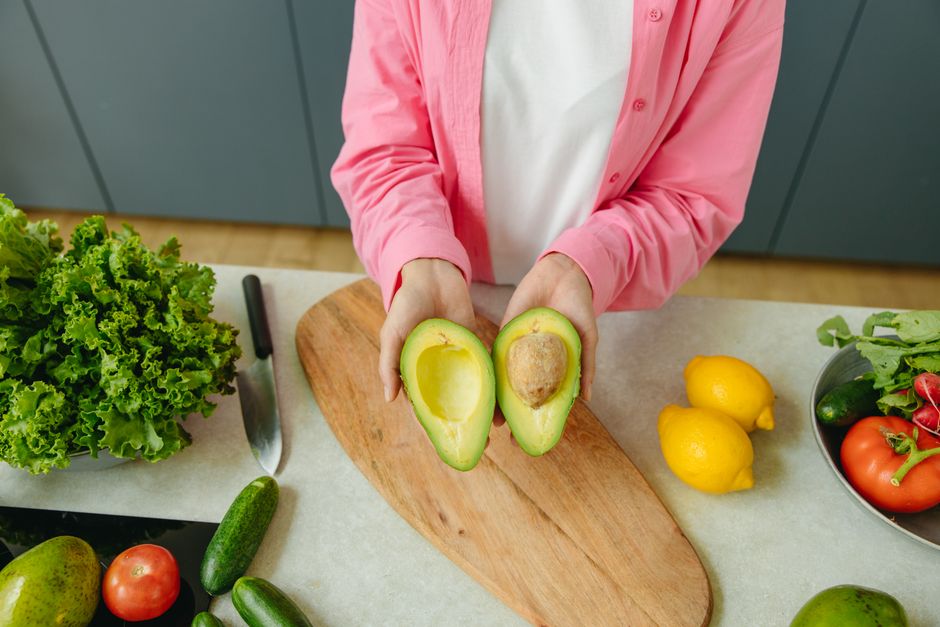
Eating avocado can help you gain weight, but only if it pushes your total calorie intake above what your body burns. A whole avocado adds roughly 240 to 320 calories depending on its size, making it one of the more calorie-dense fruits. On its own, though, avocado does not cause weight gain. The scale moves when calories in consistently exceed calories out.
That distinction matters because avocado is often sold as a “healthy fat” that people assume is somehow exempt from the rules of energy balance. It is not. Fat is fat when it comes to calories, and avocado delivers a lot of them in a small, easy-to-eat package.
How Many Calories Are in an Avocado?
A whole avocado contains roughly 240 to 320 calories, with most of that coming from fat. According to USDA nutritional data, a 100-gram portion of raw avocado provides about 160 calories, 15 grams of fat, 9 grams of carbohydrate, and 7 grams of fiber.
Here is where people get tripped up. The serving size on most nutrition labels is one-fifth of an avocado, which is about 50 calories. That is a thin slice, not what most people actually eat. A typical Hass avocado weighs between 150 and 200 grams, so a whole one lands closer to 240–320 calories.
For someone trying to gain weight, that density is useful. You get a substantial calorie load without feeling stuffed, because fat is calorie-dense relative to its volume. For someone trying to lose weight, the same density works against them if they are not measuring portions.
Avocado Nutrition at a Glance
| Nutrient (per 100g raw) | Amount |
|---|---|
| Calories | ~160 |
| Total fat | ~15 g |
| Carbohydrate | ~9 g |
| Fiber | ~7 g |
| Protein | ~2 g |
| Potassium | ~485 mg |
Notice the protein number. At roughly 2 grams per 100 grams, avocado is not a meaningful protein source. Anyone trying to gain muscle needs to get protein elsewhere. Avocado contributes calories and fat, not the amino acids that build tissue.
Does Eating Avocado Help You Gain Weight?
Yes, if it adds calories on top of what you already eat. No, if it simply replaces other foods with a similar calorie load. This is the entire answer, and everything else is detail.
Weight gain requires a calorie surplus. There is no food that bypasses this. When researchers study avocado and weight, the results tend to be neutral or slightly favorable for weight maintenance rather than gain, because people who add avocado often compensate by eating less of something else. That compensation is the key variable.
If you eat a whole avocado in addition to your normal meals and change nothing else, you have added roughly 250–300 calories to your day. Do that consistently and you will gain weight. If you swap your usual snack for avocado and the calories match, nothing changes.
The fat content also matters for a different reason. Dietary fat is the most calorie-dense macronutrient at about 9 calories per gram, compared with 4 calories per gram for both protein and carbohydrate. That is why a small amount of avocado carries so many calories. It is efficient fuel if gaining is your goal.
Why Calorie Density Matters More Than the Food Itself
Calorie density is the number of calories packed into a given weight or volume of food. Avocado is high on this scale. So are nuts, seeds, olive oil, cheese, and nut butters.
For someone who struggles to eat enough, high-density foods solve a real problem. A person with a small appetite may find it physically hard to eat 3,000 calories of rice and vegetables. The same person can reach that target more easily with calorie-dense additions like avocado. This is why these foods show up in weight-gain plans and in clinical nutrition for people who need to rebuild lost weight.
The reverse is also true. People who want to lose weight often find that cutting calorie-dense foods is easier than cutting volume, because they can still eat a large plate of food. Same principle, opposite direction.
One clarification worth making: avocado is not a “negative calorie” food, and no credible evidence supports the idea that any food burns more calories than it provides. That claim circulates online and it is false.





How to Use Avocado for Healthy Weight Gain
Adding avocado to meals you already eat is the simplest approach. The goal is to increase total calories without making eating feel like a chore.
- Spread a whole mashed avocado on toast instead of a thin layer of butter.
- Add half an avocado to a smoothie. The fat makes it creamier and adds calories without much volume.
- Fold diced avocado into rice, eggs, or a grain bowl.
- Use it in place of mayonnaise in sandwiches, which changes the fat profile but keeps the calorie load similar.
- Pair it with a protein source, since avocado alone will not supply the protein needed for muscle gain.
Weight gain is not only about calories. The quality of what you gain matters. Gaining fat around the abdomen carries metabolic risks that gaining lean mass does not. A weight-gain plan built mostly on avocado, oils, and refined carbohydrates will add pounds, but not necessarily the kind that support health or strength.
Protein intake and resistance training are what shift the gain toward muscle. Avocado plays a supporting role by adding calories and fat, but it is not the driver. Anyone serious about gaining lean weight should treat avocado as one tool among several, not the centerpiece.
Can Avocado Make You Gain Belly Fat?
Any food eaten in excess of your calorie needs can contribute to fat gain, including avocado. Where that fat is stored depends on genetics, hormones, overall diet, activity level, and total energy balance, not on the avocado itself.
There is no evidence that avocado specifically targets belly fat. The idea that certain foods “go to” certain body parts is not supported. Excess calories from any source can be stored as fat, and the distribution pattern is largely individual.
That said, the fat in avocado is mostly monounsaturated fat, which is generally considered a favorable fat type when it replaces saturated fat in the diet. This is a point about heart health and diet quality, not about weight. It does not change the calorie math.
What Does the Research Actually Show?
The evidence on avocado and body weight is mixed and mostly short-term. Some studies suggest that people who eat avocado tend to have better diet quality and higher nutrient intake. Others find no meaningful change in weight when avocado is added to the diet, largely because participants eat less of other foods to compensate.
What the research does not show is that avocado causes weight gain on its own, independent of calories. No study supports that. It also does not show that avocado promotes weight loss, despite frequent marketing claims to that effect.
The honest summary: avocado is a nutritious, calorie-dense food. Whether it helps you gain, lose, or maintain weight depends entirely on how it fits into your overall intake. The food is neutral. The context decides the outcome.
Who Should Be Careful With Avocado?
People watching their calorie intake should measure portions rather than eyeballing them. A “few slices” can easily become half an avocado, and half an avocado is roughly 120–160 calories.
Avocado is also high in potassium. For most people this is beneficial. For people with kidney disease or those taking medications that affect potassium levels, high-potassium foods may need to be limited. This is a conversation to have with a doctor or dietitian, not something to guess at.
Avocado is a common allergen, though reactions are relatively uncommon compared with other food allergies. People with a known allergy should avoid it. Some people with latex allergy also react to avocado because the proteins are similar, a pattern known as latex-fruit syndrome.
Frequently Asked Questions
Does eating avocado help you gain weight?
It can, if it adds calories beyond what your body burns. Avocado does not cause weight gain by itself; the calorie surplus does.
How many calories are in one whole avocado?
A whole Hass avocado contains roughly 240 to 320 calories, depending on its size. Most nutrition labels list a much smaller serving of about one-fifth of an avocado.
Is avocado good for gaining muscle?
Not on its own. Avocado has only about 2 grams of protein per 100 grams, so muscle gain requires adequate protein from other sources plus resistance training.
Can eating avocado make you gain belly fat?
Any food eaten beyond your calorie needs can contribute to fat gain, including avocado. There is no evidence that avocado specifically targets belly fat.
