
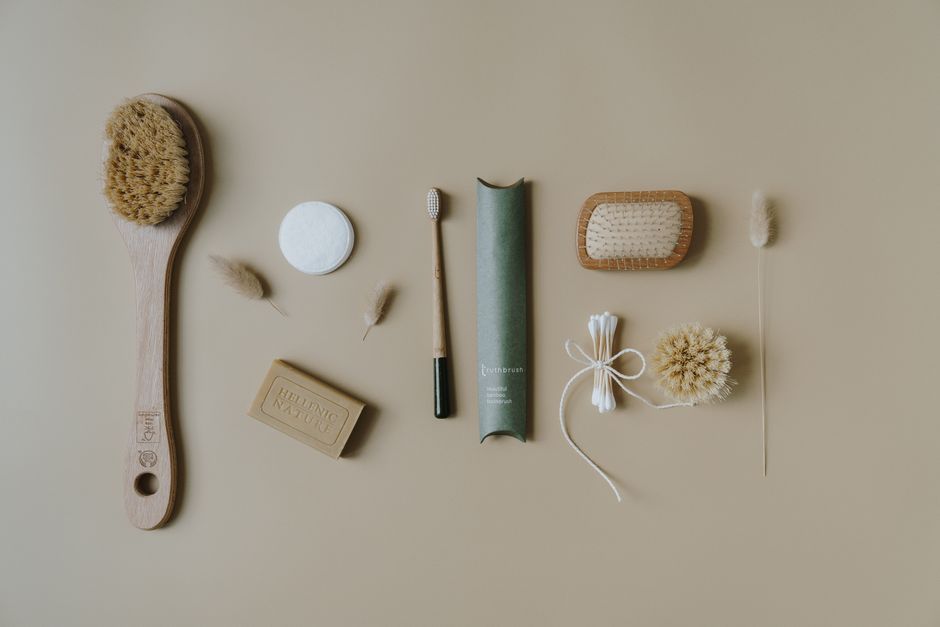
Dry brushing is a popular morning routine that involves dragging a stiff-bristled brush across dry skin before showering. It does not detoxify your body, and no clinical evidence confirms it removes toxins or “lymphatic congestion.” What it can do is temporarily make skin feel smoother and more awake. Most other claims attached to it are marketing, not medicine.
The practice is simple and low-cost, which helps explain its popularity. But simple does not mean harmless for everyone, and the gap between what dry brushing claims and what it actually does is wide. Here is an honest look at the evidence.
What Is Dry Brushing and How Is It Done?
Dry brushing means stroking a firm-bristled brush over bare, dry skin, usually before a shower. People typically work from the feet upward and from the hands toward the heart, using long, light strokes.
The technique is usually described in a few basic steps:
- Start on dry skin, before any water touches it.
- Use light pressure — the bristles should feel stimulating, not painful.
- Brush upward along the limbs, generally toward the torso.
- Keep each area brief. A few passes over each zone is typical.
- Shower afterward to rinse away loosened skin flakes, then apply moisturizer.
The upward direction is often tied to claims about “moving lymph toward the heart.” This is where the marketing and the physiology start to diverge. Lymph does move through vessels toward the chest, but it is driven by muscle contractions, breathing, and one-way valves — not by a brush on the surface of the skin. More on that below.
Does Dry Brushing Work for Detox and Lymphatic Drainage?
No. Dry brushing does not detoxify the body, and there is no clinical evidence that it improves lymphatic drainage. The “detox” framing is the single most common claim attached to dry brushing, and it is not supported by research.
Your body already has dedicated systems for clearing waste. The liver processes and breaks down many substances. The kidneys filter blood and produce urine. The lungs, skin, and digestive tract all play roles too. These systems work continuously without any help from a brush.
The lymphatic system is real and important. It is a network of vessels and nodes that returns fluid to the bloodstream and supports immune function. But lymph is not pumped by the heart the way blood is. It moves when surrounding muscles contract, when you breathe, and through the squeezing action of vessel walls and valves. Gentle surface brushing of the skin is not a meaningful driver of that flow.
Here is a clarification worth knowing: “detox” as used in wellness marketing is not a medical term with a defined meaning. Legitimate medicine does use the word — for example, in treating drug overdose or severe liver failure — but those are specific clinical procedures, not spa routines. When a product claims to “detoxify” through the skin, it is using a vague idea, not a measurable process.
If you want to support your body’s natural waste-clearing systems, the evidence-backed basics are unglamorous: stay hydrated, eat fiber, move your body regularly, and get enough sleep. No brush required.
What Does the Evidence Say About Skin Benefits?
The evidence for skin benefits is thin and mostly anecdotal. Dry brushing can physically exfoliate — the bristles lift away some dead surface skin cells — and that can leave skin feeling smoother for a short time. This is a mechanical effect, similar in principle to using a washcloth or a scrub.
Beyond temporary smoothing, the claims outrun the proof. Some people report firmer-feeling skin or a reduction in the appearance of cellulite. No good clinical evidence supports either. Cellulite is a structural feature of how fat sits beneath the skin, and surface brushing does not change that structure.
Claims about “stimulating circulation” deserve a careful look. Brushing the skin does cause a temporary increase in blood flow to the area — that is why skin can look pink afterward. But a brief, surface-level flush is not the same as a lasting health benefit. The redness fades within minutes.
What about the reported “energizing” effect? Many people say dry brushing wakes them up. A brisk physical routine in the morning can feel invigorating, and there is nothing wrong with that. It is a subjective experience, not a documented physiological treatment.





Is Dry Brushing Safe? Risks and Who Should Avoid It
For most people with healthy skin, dry brushing is low-risk when done gently. The main risk is irritation from pressing too hard or brushing too often.
Potential downsides include:
- Redness, stinging, or soreness from excessive pressure
- Small skin tears or scratches that can become irritated
- Dryness or flaking if skin is not moisturized afterward
- Worsening of existing skin conditions
Some people should skip it or check with a clinician first. That includes anyone with eczema, psoriasis, or other inflammatory skin conditions, since friction can trigger flares. People with very sensitive or easily irritated skin should be cautious. Anyone with a skin infection, open wounds, or a rash should not brush over the affected area.
People with circulation problems, nerve damage, or reduced skin sensation — for example, some people with diabetes — should be especially careful, because they may not feel irritation as it happens. If you have a condition that affects your skin or circulation, ask your clinician before starting.
There is no official recommended frequency for dry brushing, because it is not a regulated or clinically standardized practice. General guidance from those who use it is to start gently and not overdo it. If your skin stings, turns very red, or feels raw, you are brushing too hard or too often.
Dry Brushing vs. Other Exfoliation Methods
Dry brushing is one of several ways to exfoliate. It is not clearly better than the alternatives, and for some skin types it is harsher.
| Method | How It Works | Considerations |
|---|---|---|
| Dry brushing | Firm bristles lift dead skin mechanically | Can irritate; depends heavily on pressure and skin type |
| Wet washcloth or gentle scrub | Physical exfoliation with water and friction | Generally gentler; easier to control pressure |
| Chemical exfoliants (AHA/BHA) | Dissolve the bonds holding dead cells | Can be effective but may irritate; needs sun care |
| No exfoliation | Skin sheds on its own | Skin naturally renews; many people need no extra exfoliation |
Skin renews itself on its own. For many people, regular cleansing and moisturizing are enough, and extra exfoliation is optional. If you enjoy dry brushing and your skin tolerates it, it can be part of a routine. If it leaves you red or irritated, a softer method — or none at all — is a reasonable choice.
Does Dry Brushing Work? The Bottom Line
Dry brushing works as a brief mechanical exfoliant and as a morning ritual some people find pleasant. It does not detoxify the body, does not meaningfully improve lymphatic drainage, and has no solid evidence behind claims about cellulite or lasting skin improvement.
The honest position: it is a low-cost habit that some people enjoy and most healthy-skinned adults can try gently. It is not a treatment for any condition, and it is not a substitute for the basics that genuinely support health — movement, hydration, sleep, and a balanced diet.
If clearer, smoother-feeling skin is your goal, exfoliation of some kind can help temporarily. If “detox” is your goal, no brush will do what your liver and kidneys already do around the clock. Spend your money and effort where the evidence actually lives.
Frequently Asked Questions
Does dry brushing actually detox your body?
No. Your liver, kidneys, and other organs handle waste removal, and no evidence shows that brushing the skin removes toxins. The “detox” claim is marketing, not medicine.
Can dry brushing reduce cellulite?
No good clinical evidence supports this. Cellulite comes from how fat sits beneath the skin, and surface brushing does not change that structure.
How often should you dry brush?
There is no official recommended frequency because dry brushing is not a clinically standardized practice. Start gently and stop if your skin stings or turns very red, which signals you are brushing too hard or too often.
Who should not dry brush?
People with eczema, psoriasis, skin infections, open wounds, or reduced skin sensation should avoid it or ask a clinician first. Anyone with circulation problems or nerve damage should also check before starting.
