
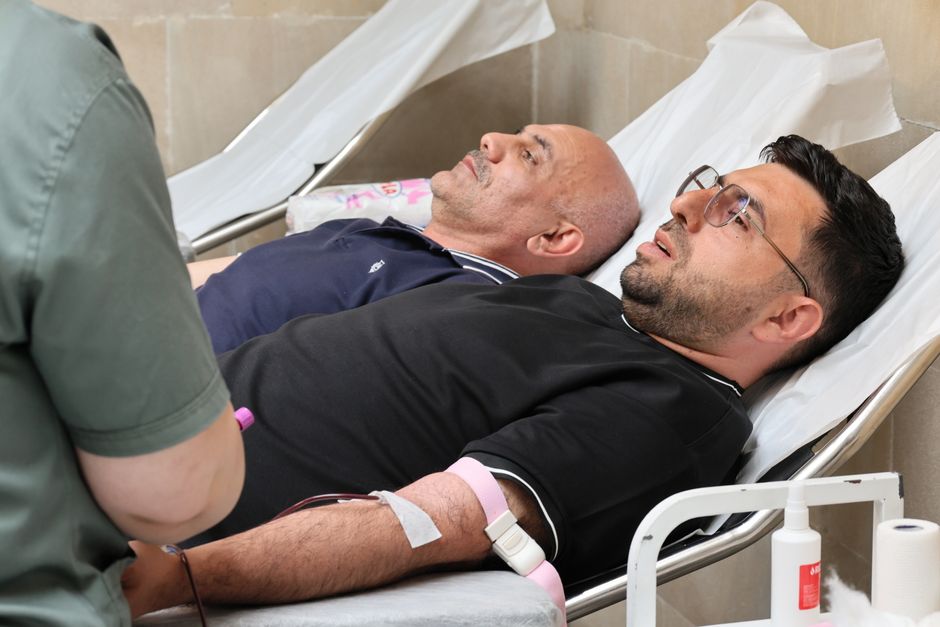
Donating blood does burn calories, but the amount is small. A whole blood donation of about one pint (roughly 450 to 500 milliliters) uses energy as your body replaces the blood you gave. Most estimates put the cost at a few hundred calories over the days and weeks after donation, not during the donation itself. It is not a weight loss method, and no health organization recommends it as one.
Does Donating Blood Burn Calories?
Yes. Your body has to rebuild what it lost, and that rebuilding takes energy.
When you donate whole blood, you lose red blood cells, plasma, and the proteins and iron inside them. Your body responds by making new plasma proteins fairly quickly and producing new red blood cells over a longer stretch. That repair work requires calories. So does replacing the fluid volume.
The energy cost is real but modest. Estimates in the medical literature generally land in the range of a few hundred calories per whole blood donation. The exact number varies by person, by the volume collected, and by how researchers count the work of replacing different blood components.
Here is the part most people get wrong. You do not burn those calories on the donation chair. The calorie cost shows up over the following days and weeks as your body does the rebuilding. That is why the effect on any single day is close to invisible.
How Many Calories Does Donating Blood Actually Burn?
There is no single official number, and anyone who quotes one with total confidence is overselling the precision.
Some estimates suggest a whole blood donation costs the body somewhere in the low hundreds of calories to replace. Others put it higher. The spread exists because researchers measure different things — the energy to make new red blood cells, the energy to replace plasma proteins, or the total metabolic cost of restoring blood volume.
What the evidence does agree on is scale. This is a few hundred calories at most, spread across days. For context, a few hundred calories is roughly the energy in a sandwich or a couple of snacks. It is not a meaningful lever for weight control on its own.
Be cautious with any article that gives you an exact figure down to the calorie. The underlying estimates are approximate, and they were never intended to be used as a diet tool.
Why Does the Body Burn Energy After a Blood Donation?
Your body treats a blood donation as a small loss that needs replacing, and replacement costs energy.
Three main jobs use calories after you give blood:
- Rebuilding red blood cells. Your bone marrow produces new red blood cells to replace the ones donated. This is the largest and slowest part of the process, and it takes weeks.
- Replacing plasma proteins. Your liver makes new proteins like albumin to restore the fluid portion of your blood. This happens faster than red cell replacement.
- Restoring blood volume. Your body pulls fluid back into the bloodstream to bring volume back toward normal, which also involves some metabolic work.
The red blood cell part is the key. Each new red blood cell requires iron and protein, and the marrow runs this production line continuously for weeks after a donation. That sustained background activity is where the calorie cost comes from.
One clarification worth knowing: your body does not simply “burn” the donated blood like fuel. The calories come from the manufacturing work of replacement, not from losing the blood itself.





Can You Lose Weight by Donating Blood?
No. Donating blood is not a weight loss strategy, and treating it as one is a mistake.
The calorie cost is too small and too spread out to produce meaningful weight change. A few hundred calories over several weeks is a rounding error against the thousands of calories your body uses every day just to function. Body weight is governed by long-term energy balance, not by a single donation.
There is a second reason to be careful. Donating blood removes fluid and red blood cells, so the scale may drop right after a donation. That dip is water and blood loss, not fat loss. It reverses as your body restores volume, usually within a short time.
Blood donation centers set eligibility rules for a reason. Frequent donation can lower iron stores and affect your health if you are not careful. Using donation as a weight tool ignores those safeguards and is not supported by any clinical guidance.
What Are the Real Effects of Donating Blood on Your Body?
The meaningful effects of donation are about blood supply and, for the donor, iron and recovery — not calories.
Donating blood helps patients who need transfusions. That is the purpose, and it is a genuine public health benefit. For the donor, the body adapts in ways that are mostly temporary.
What donors commonly notice:
- Iron use. Making new red blood cells draws on your iron stores. Regular donors are often monitored for iron levels, and some centers recommend iron supplementation for frequent donors. Follow your donation center’s guidance rather than guessing.
- Temporary fatigue. Some people feel tired for a day or so. Drinking fluids and eating regularly afterward helps most people recover their energy.
- Volume replacement. Blood volume is restored relatively quickly with fluids, while red blood cells take longer to fully rebuild.
If you are considering donation, the eligibility screening at the blood center is the right place to get personalized answers. Staff assess your health, iron status, and donation history. No article can replace that assessment.
The Bottom Line on Blood Donation and Calories
Donating blood does burn calories, but only a few hundred per donation, spread over days and weeks. That is not enough to matter for weight control, and it is not why anyone should donate.
The honest framing is this: donation is a generous act with a real benefit to others and a small, temporary metabolic cost to you. If you want to manage your weight, focus on what actually moves the needle — consistent eating patterns and regular activity. If you want to donate blood, do it for the reason it exists.
Frequently Asked Questions
Does donating blood burn calories?
Yes, your body uses energy to replace the blood you donated, estimated at a few hundred calories per whole blood donation. The cost is spread over the following days and weeks, not during the donation itself.
How many calories does donating a pint of blood burn?
Estimates generally fall in the low hundreds of calories, though there is no single official figure. The exact amount varies by person and by how researchers count the replacement work.
Can donating blood help you lose weight?
No, the calorie cost is too small and too gradual to produce meaningful weight loss. Any scale drop right after donation reflects lost fluid and blood volume, not fat.
How long does it take to replace blood after donating?
Blood volume is largely restored within a short time with fluids, while red blood cells take several weeks to fully rebuild. Your donation center can give you guidance based on your health and donation history.
