
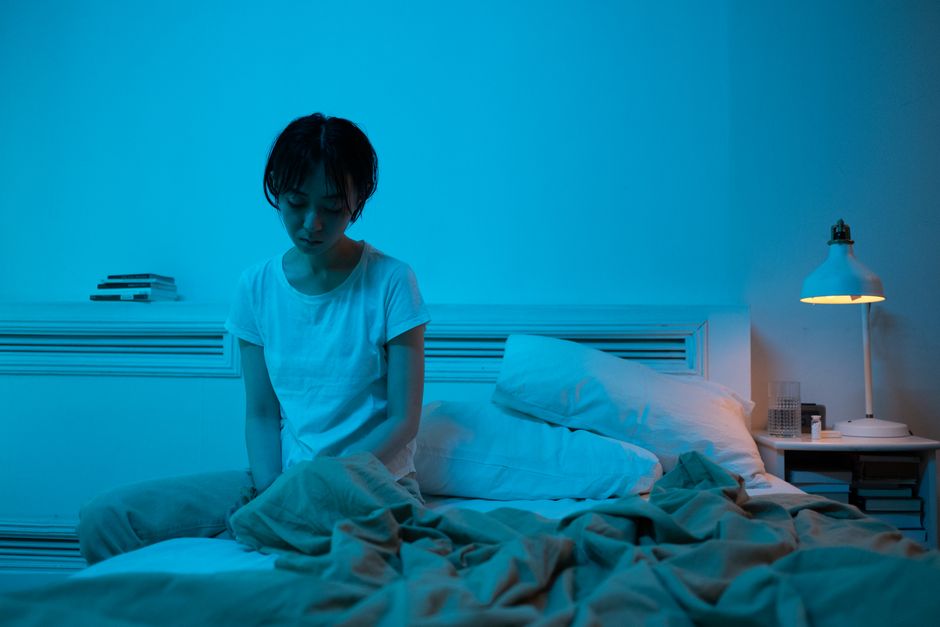
Depression and sleep are deeply connected, and the relationship runs in both directions. Most people with depression have trouble sleeping — either sleeping too little, sleeping too much, or waking repeatedly through the night. Poor sleep can also make depression worse and raise the risk of it returning.
What happens is not simply “feeling tired.” Depression changes the brain systems that control sleep timing, depth, and dreaming. That is why sleep problems in depression often do not fully fix themselves even when a person tries hard to rest.
Does Depression Affect Sleep? Here’s What Happens
Yes. Sleep problems are one of the most common symptoms of depression. Clinical descriptions of major depressive disorder list sleep disturbance as a core feature, and it shows up in the great majority of people who are diagnosed with it.
The effects usually fall into a few patterns:
- Insomnia. Trouble falling asleep, staying asleep, or waking far too early. Early morning waking — being awake at 3 or 4 a.m. and unable to drift back — is a classic sign.
- Hypersomnia. Sleeping much more than usual, yet still feeling exhausted during the day.
- Fragmented sleep. Falling asleep fine, but waking many times and never reaching deep, restorative rest.
- Vivid or disturbing dreams. Some people report more intense dreaming or nightmares during depressive episodes.
Not everyone with depression has the same sleep pattern. Some sleep too little. Some sleep too much. Both are recognized as part of the condition.
Why Does Depression Disrupt Sleep?
Depression affects the brain systems that regulate mood and sleep — and those systems overlap heavily. That overlap helps explain why the two conditions so often travel together.
Several well-established factors are involved:
Stress hormones stay switched on
The body’s stress response system, which runs through the hypothalamic-pituitary-adrenal axis, is often overactive in depression. Cortisol, a key stress hormone, normally follows a daily rhythm — high in the morning, low at night. In depression this rhythm can flatten or shift. When cortisol stays elevated at night, the brain does not get the “wind down” signal it needs to fall and stay asleep.
Brain chemistry changes
Neurotransmitters such as serotonin, norepinephrine, and dopamine help regulate both mood and the sleep-wake cycle. Depression is associated with changes in these signaling systems. Because the same chemicals govern alertness and sleep, disruptions in one area tend to spill into the other.
Sleep architecture shifts
Sleep is not one uniform state. It cycles through lighter stages, deep slow-wave sleep, and REM sleep, when most vivid dreaming happens. Research using sleep studies has found that people with depression often enter REM sleep faster than usual, spend more time in REM, and get less deep slow-wave sleep. These shifts are measurable and fairly consistent across studies, though they are not used alone to diagnose depression.
The body clock drifts
Depression can disturb the circadian rhythm — the internal 24-hour clock that sets when you feel sleepy and when you feel alert. A shifted or weakened body clock makes it harder to fall asleep at a normal hour and harder to wake up feeling rested.
One point worth understanding: this is not a matter of willpower. Someone with depression cannot simply decide to sleep well any more than someone with a fever can decide to cool down. The biology is doing the work underneath.
Can Poor Sleep Cause Depression?
The relationship runs both ways. Insomnia is not only a symptom of depression — it is also a risk factor for developing it.
People with ongoing insomnia who are not depressed have a higher chance of developing depression later. This has been shown in large population studies that followed people over time. The reverse is also true: treating insomnia can improve mood, and in some studies it has reduced the severity of depressive symptoms.
This two-way link matters for treatment. If sleep problems are ignored and only mood is treated, recovery can stall. If sleep is addressed directly, mood often improves alongside it.
There is also a practical warning sign here. When someone’s sleep problems get worse, it can be an early signal that a depressive episode is returning. Tracking sleep can sometimes give a person and their clinician an early heads-up.





How Are Sleep Problems in Depression Treated?
Treatment usually works on both fronts at once — the depression and the sleep problem. Addressing only one tends to leave the other partly unresolved.
Talk therapy
Cognitive behavioral therapy for insomnia, often called CBT-I, is a structured, evidence-based treatment specifically for sleep problems. It is considered a first-line approach for chronic insomnia and has good evidence behind it. For people with both depression and insomnia, CBT-I can improve sleep and mood together. Standard talk therapy for depression may also help sleep over time, but CBT-I targets sleep directly.
Medication
Antidepressants can improve sleep for some people, but the effect depends on the drug. Some antidepressants are more sedating and are sometimes chosen when insomnia is prominent. Others can be activating and may worsen sleep if taken late in the day. This is why timing and choice of medication matter, and why it should be managed by a clinician rather than adjusted alone.
Sleeping pills are sometimes used short-term, but they are generally not a long-term solution for sleep problems tied to depression. They can carry risks of dependence and do not treat the underlying depression.
Daily habits that support sleep
Good sleep habits help, though they are usually not enough on their own when depression is moderate or severe. Still, they support recovery:
- Go to bed and wake up at roughly the same time each day, including weekends.
- Get bright light in the morning to help reset the body clock.
- Limit caffeine in the afternoon and evening.
- Keep the bedroom cool, dark, and quiet.
- Avoid long daytime naps, which can make nighttime sleep harder.
- Get some physical activity during the day, if your health allows.
If you are struggling with both depression and sleep, it is worth telling a doctor or mental health professional about both. They are not separate problems — they are tangled together, and treating them together tends to work better than treating them apart.
When Should You Get Help?
Sleep problems deserve attention when they last for weeks, when they interfere with daily life, or when they come with low mood, loss of interest, or hopelessness. These are signs to speak with a professional, not to push through alone.
Depression is treatable, and sleep problems tied to it often improve with the right care. Reaching out is a reasonable and often effective step. If you ever have thoughts of harming yourself, contact a crisis line or emergency services right away — that kind of support exists for exactly this reason.
Frequently Asked Questions
Does depression make you sleep more or less?
It can do either. Some people with depression sleep far less and wake early, while others sleep much more than usual and still feel exhausted.
Can lack of sleep cause depression?
Ongoing insomnia is a recognized risk factor for developing depression later, so poor sleep can contribute to it over time. The relationship runs in both directions.
Why do I wake up at 3 a.m. with depression?
Early morning waking is a common pattern in depression and is linked to shifts in stress hormones and the body’s sleep-wake rhythm. It is a recognized symptom, not a personal failing.
Does treating insomnia help depression?
Yes, in many cases. Therapy that targets sleep directly, such as CBT-I, has been shown to improve both sleep and mood in people who have both conditions.
