
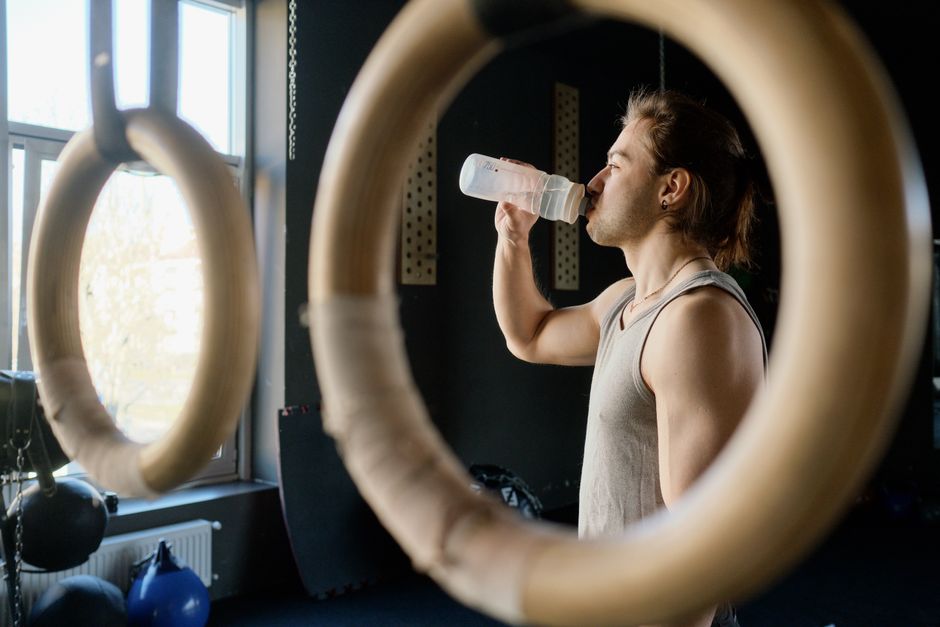
You’re 40 minutes into a run or a long, hot afternoon of yard work when your calf seizes. The muscle knots, hardens, and refuses to let go. Almost everyone around you says the same thing: you’re dehydrated. Drink more water. But when researchers have actually measured hydration and cramping in athletes, the picture looks far less certain. Dehydration is one plausible contributor, but it is not the whole story, and it is not the most strongly supported explanation for most exercise-related cramps.
Does Dehydration Cause Muscle Cramps?
Dehydration can contribute to cramping in some situations, but the evidence does not support it as the main cause of most exercise-associated muscle cramps. The belief is widespread, and it sounds logical. Sweating depletes fluid and electrolytes, so the reasoning goes, and that must be what makes muscles lock up.
When researchers have studied this directly in athletes, the results have been inconsistent. Some studies find that people who cramp are more dehydrated than those who don’t. Others find no meaningful difference in hydration status, sweat loss, or blood electrolyte levels between crampers and non-crampers. That inconsistency is the problem. If dehydration were the primary driver, the pattern should be much clearer than it is.
What the evidence does support is a more layered explanation. Cramps during exercise appear to involve altered neuromuscular control — the nervous system’s signals to the muscle going awry — along with fatigue, and in some cases fluid and electrolyte losses that push an already-irritated muscle over the edge.
What Are Muscle Cramps, Exactly?
A muscle cramp is a sudden, involuntary, sustained contraction of a muscle or a group of muscles. The muscle shortens and cannot relax on its own. It’s usually painful and can last seconds to several minutes.
Cramps most often hit muscles that cross two joints and work hard under load: the calf, the hamstrings, the quadriceps, the feet, and sometimes the hands. They tend to strike during or right after intense activity, or at night while you’re at rest.
The mechanism at the level of the muscle fiber is not fully settled, but the leading explanation involves overactivity of the nerve signals that tell a muscle to contract, combined with a failure of the normal reflex that tells it to relax. That reflex runs through the spinal cord and depends on signals from muscle spindles and tendons. When those signals get disrupted — by fatigue, by changes in the chemical environment around the nerve, or both — the muscle can lock.
This is why cramping is best understood as a nervous system event as much as a muscle event.
Why the Dehydration Theory Is So Popular
The dehydration theory makes intuitive sense, and it has been repeated for so long that it has become the default explanation. It also fits a real observation: cramps are more common in heat, during long efforts, and in people who sweat heavily.
But correlation is not the same as cause. Heat, long efforts, and heavy sweating also bring fatigue, and fatigue is one of the more consistent factors linked to cramping. So the same situation that makes you dehydrated also makes your muscles tired and your nervous system stressed. It’s easy to credit the fluid loss when the fatigue may be doing more of the work.
There is also a practical reason the theory persists. Drinking water and taking electrolytes is simple advice. It’s low-risk, easy to remember, and it feels actionable. That doesn’t make it wrong in every case — it just means the strength of the claim has outrun the strength of the evidence.


What Actually Triggers Exercise-Associated Cramps?
The best-supported factors are muscle fatigue and a history of cramping. People who cramp once during exercise are more likely to cramp again, which points to individual susceptibility rather than a simple fluid deficit.
Several things appear to raise the odds:
- Muscle fatigue. Working a muscle hard, especially when it’s not conditioned for the load, is one of the stronger predictors.
- Poor conditioning. Cramps are more common when you push a muscle beyond what it’s trained for.
- Heat. Hot conditions are associated with more cramping, though the reason may involve fatigue and nerve signaling as much as fluid loss.
- Heavy sweating with large sodium losses. Some people lose unusually high amounts of sodium in their sweat, and this may matter for a subset of crampers.
- Certain medications and medical conditions. Diuretics, some asthma medications, statins, and conditions affecting nerves or electrolytes can be linked to cramping.
The sodium point deserves care. Some research suggests that people who are “salty sweaters” — those whose sweat leaves visible white residue and who lose a lot of sodium — may be more prone to cramps, and that replacing sodium helps them specifically. This is not the same as saying sodium replacement prevents cramps in everyone. The evidence is strongest for that particular group, not the general population.
Does Drinking More Water Prevent Cramps?
Drinking water to stay hydrated is good for many reasons, but the evidence that it specifically prevents exercise cramps is weak. Studies that have compared hydration strategies have generally not shown a reliable reduction in cramping.
That doesn’t mean fluid is irrelevant. Severe dehydration can impair muscle function and overall performance, and in extreme heat it raises the risk of heat illness, which is a genuine medical concern. But for the ordinary cramp that hits during a workout, more water is not a proven fix.
The same caution applies to electrolyte drinks and salt tablets. For most people, they are not clearly better than water at preventing cramps. For people with high sweat sodium losses, sodium replacement may help — but that is a narrower claim than the marketing often implies.
What Might Actually Help With Cramps
Because cramps appear to involve nerve and muscle control, some approaches target that system rather than hydration.
Stretching the cramping muscle is a common and often effective way to break a cramp once it starts. Slowly lengthening the muscle and holding it can interrupt the contraction. This is widely used and generally considered helpful for stopping an active cramp, though it does not necessarily prevent the next one.
Pickle juice has gotten attention as a cramp remedy. Some studies suggest it can shorten a cramp, and the leading explanation is not the fluid or salt but a strong taste signal that may trigger a reflex affecting nerve control. The evidence is interesting but not large or consistent enough to call it a proven treatment. If you try it, understand that the mechanism is debated.
For prevention, the more reliable levers appear to be:
- Building conditioning gradually so muscles aren’t pushed far past their trained capacity.
- Warming up before intense activity.
- Managing fatigue during long or repeated efforts.
- For people with heavy sodium losses, discussing sodium replacement with a clinician or sports professional.
No single step guarantees you won’t cramp. Cramping has multiple inputs, and what helps one person may not help another.
When Cramps Are a Sign of Something Else
Occasional cramps during or after hard activity are common and usually not a sign of disease. But cramps that are frequent, severe, or happen at rest — especially at night — can point to other issues.
Possible contributors include electrolyte imbalances, thyroid problems, nerve conditions, poor circulation, kidney disease, and side effects of medications. Diabetes and peripheral artery disease can also be associated with leg cramps. This is a case where the cause is often not obvious, and more than one condition can produce similar symptoms.
If cramps are persistent, disrupt your sleep, come with weakness, numbness, swelling, or changes in skin color, or don’t improve with basic measures, that’s a reason to see a clinician. It’s not a reason to panic, but it is a reason to get it looked at rather than assume it’s just dehydration.
The Bottom Line on Dehydration and Cramps
Dehydration is a plausible contributor to muscle cramps and may matter more for some people than others. It is not the primary cause of most exercise-related cramps, and the evidence for it is weaker than the popular advice suggests. Muscle fatigue and altered nerve control appear to play a larger role.
Staying hydrated is still worth doing for overall health, performance, and heat safety. Just don’t expect it to be a guaranteed cramp cure. If cramps keep coming back, look at conditioning, fatigue, and sodium loss, and talk to a clinician if the pattern is unusual or persistent.
Frequently Asked Questions
Does dehydration cause muscle cramps?
Dehydration can contribute to cramps in some situations, but the evidence does not support it as the main cause of most exercise-related cramps. Muscle fatigue and altered nerve control appear to play a larger role.
Should I drink more water to stop muscle cramps?
Staying hydrated is good for overall health and heat safety, but studies have not shown that drinking more water reliably prevents exercise cramps. It is not a proven cramp cure on its own.
Do electrolytes or salt tablets prevent cramps?
For most people, electrolyte drinks and salt tablets are not clearly better than water at preventing cramps. They may help people who lose unusually large amounts of sodium in their sweat, but that is a narrower group.
When should I worry about muscle cramps?
Cramps that are frequent, severe, happen at rest, disrupt sleep, or come with weakness, numbness, or swelling should be checked by a clinician. These patterns can point to causes other than dehydration.
