
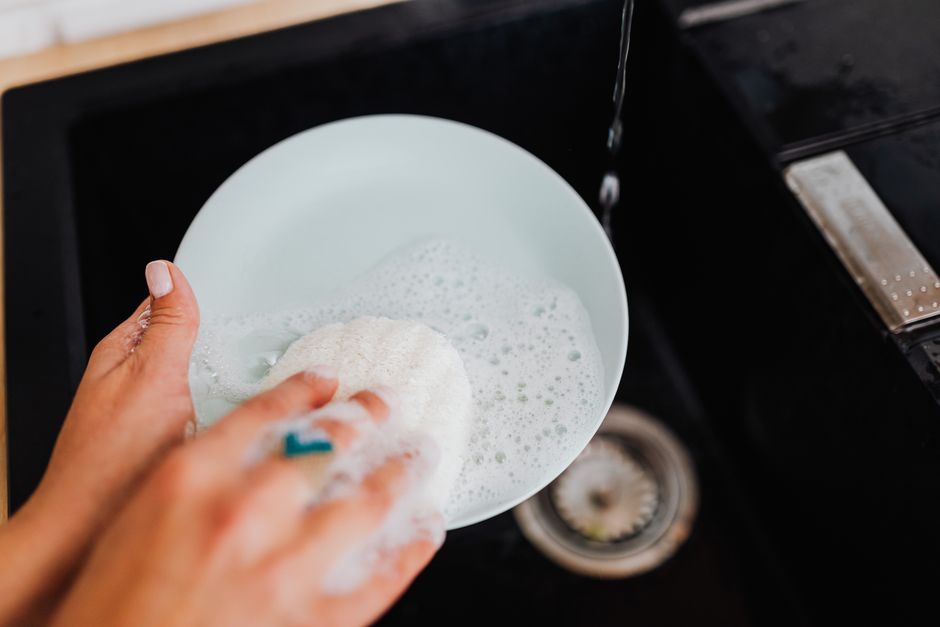
Dawn dish soap does not kill bacteria. It removes them. The soap lifts grease, dirt, and microbes off a surface so water can rinse them away. Any bacteria left behind after washing are mostly gone because they were physically carried off, not because the soap poisoned them.
That distinction matters more than it sounds. It explains why dish soap works well on dishes and countertops but is not a disinfectant, and why handwashing with plain soap is still one of the most effective public health tools we have.
Does Dawn Dish Soap Kill Bacteria Or Just Remove It?
It removes them. Dish soap is a detergent, and detergents are designed to break up oils and grease, not to kill microorganisms.
The molecules in soap have two ends. One end attaches to water. The other attaches to oil and grease. When you scrub, these molecules surround bits of grease, food, and anything clinging to them — including bacteria and viruses — and pull them into the water. When you rinse, they go down the drain.
This is called the surfactant effect, and it is mechanical, not chemical warfare. The bacteria are not destroyed. They are displaced.
Some dish soaps contain small amounts of ingredients that can damage bacterial cell walls, but at the concentrations and contact times used for washing dishes, this is not a reliable killing effect. No major public health body classifies dish soap as a disinfectant.
Why Does Plain Soap Still Work So Well On Hands?
Because removal is enough. Research consistently shows that washing hands with plain soap and water reduces the spread of respiratory and diarrheal illness. The soap does not need to kill pathogens to protect you.
A commonly cited body of research — including work published in the journal Tropical Medicine and Infectious Disease — found that plain soap is roughly as effective as antibacterial soap for most household handwashing. The mechanical action of lathering, rubbing, and rinsing does the heavy lifting.
There is a detail many people miss. How long you wash and how thoroughly you rinse matter more than which soap you use. Friction across all surfaces of the hands — backs, between fingers, under nails — is what dislodges microbes. A quick pass under the faucet with any soap removes far less than a thorough wash.
Health agencies generally recommend scrubbing for about 20 seconds. That is roughly the time it takes to hum the “Happy Birthday” song twice.
What Is The Difference Between Cleaning, Sanitizing, And Disinfecting?
These are three different jobs, and dish soap only does the first one. Confusing them is one of the most common mistakes in home hygiene.
- Cleaning removes dirt, grease, and microbes from a surface. Soap and water do this.
- Sanitizing reduces bacteria on a surface to a level considered safe by public health standards. This requires a product labeled as a sanitizer.
- Disinfecting destroys or inactivates nearly all recognized pathogens on a surface. This requires an EPA-registered disinfectant used exactly as directed.
In the United States, products that claim to kill germs on surfaces are regulated as pesticides by the Environmental Protection Agency. Dish soap is not. It is a cleaning product, and it is not required to meet any germ-killing standard.
This is not a knock against dish soap. Cleaning is the necessary first step before any sanitizer or disinfectant can work. A disinfectant applied to a greasy, dirty surface is far less effective, because soil shields microbes from the active ingredient. You clean first, then you disinfect if disinfection is actually needed.



When Do You Actually Need To Disinfect?
For most household surfaces, routine cleaning with soap and water is enough. Disinfection is reserved for situations where the risk of transmitting disease is meaningfully higher.
Established guidance points to a few clear cases:
- After handling raw meat, poultry, or eggs, or the surfaces and utensils they touched
- When someone in the home is sick with a communicable illness, especially vomiting or diarrhea
- After contact with bodily fluids, blood, or pet waste
- During certain outbreaks, when public health officials specifically recommend it
For everyday countertops, sinks, and dishes, washing with hot soapy water and rinsing well is the standard. Dishes that have been properly washed and air-dried are considered clean for normal use.
One caution worth stating plainly. Never mix bleach with dish soap or any other cleaner. Bleach reacts with other chemicals and can release toxic gases. Use disinfectants only according to their label directions, in a well-ventilated space.
Does Antibacterial Dish Soap Kill Bacteria Better?
The evidence does not show a meaningful advantage for antibacterial dish soap in ordinary household use. For handwashing, some studies suggest plain soap performs about as well as antibacterial soap for preventing illness in everyday settings.
Antibacterial soaps often contain ingredients like triclosan or benzalkonium chloride. In the United States, triclosan was removed from consumer antiseptic wash products by the Food and Drug Administration because manufacturers could not show it was more effective than plain soap and water, and questions were raised about long-term effects. That action applied to hand and body washes, not to all products.
The broader concern is that routine use of antibacterial agents in low concentrations, over long periods, can contribute to antimicrobial resistance. That is a real and well-documented public health issue. For a job that plain soap already does well, the tradeoff is hard to justify.
If you want to reduce germs on a surface beyond cleaning, a product labeled as a disinfectant, used correctly, is the appropriate tool. Antibacterial dish soap sits in an awkward middle ground.
What About Viruses And Other Germs?
Soap and water are effective against many viruses too, and again the mechanism is removal. Enveloped viruses — the group that includes influenza and coronaviruses — have an outer lipid membrane that soap molecules can disrupt. Scrubbing and rinsing carry the rest away.
Some viruses, particularly those without that lipid envelope, are more resistant to soap’s direct action. Even then, thorough washing and rinsing still physically removes them from hands and surfaces.
What dish soap does not do is provide lasting protection. Once you rinse, the effect is gone. There is no residual germ-killing barrier left on the surface. That is another reason it is a cleaner, not a disinfectant.
How Should You Use Dish Soap For Best Results?
Use it generously, use warm water, and rinse thoroughly. Those three steps do most of the work.
For dishes, wash in hot soapy water, scrub all food contact surfaces, and rinse clean. Air-drying is generally preferred over towel-drying because it avoids recontaminating clean dishes with a used towel.
For hands, wet them first, apply soap, lather and scrub all surfaces for about 20 seconds, then rinse under running water and dry with a clean towel. Running water matters — washing in a basin of standing water can leave germs behind.
For countertops, wipe with soapy water, then rinse with a clean damp cloth. If you need to disinfect, follow with an EPA-registered product according to its label.
Keep in mind that dish soap is not a substitute for a disinfectant, and a disinfectant is not a substitute for cleaning. Used in the right order, they do different jobs well.
Frequently Asked Questions
Does Dawn dish soap kill bacteria?
No. Dawn and other dish soaps remove bacteria by lifting them off surfaces so they can be rinsed away. They are not formulated or regulated as disinfectants.
Is dish soap as good as hand sanitizer?
Soap and water are generally preferred over hand sanitizer when they are available, because washing removes dirt, grease, and certain germs that sanitizer cannot. Hand sanitizer is a reasonable backup when soap and water are not accessible.
Can I use dish soap to disinfect countertops?
Dish soap cleans countertops but does not disinfect them. If disinfection is needed, clean first with soap and water, then use an EPA-registered disinfectant according to its label.
Does hot water make dish soap kill bacteria?
Hot water improves cleaning by helping soap dissolve grease, but it does not turn dish soap into a disinfectant. Water hot enough to reliably kill bacteria on contact would scald your hands.
