
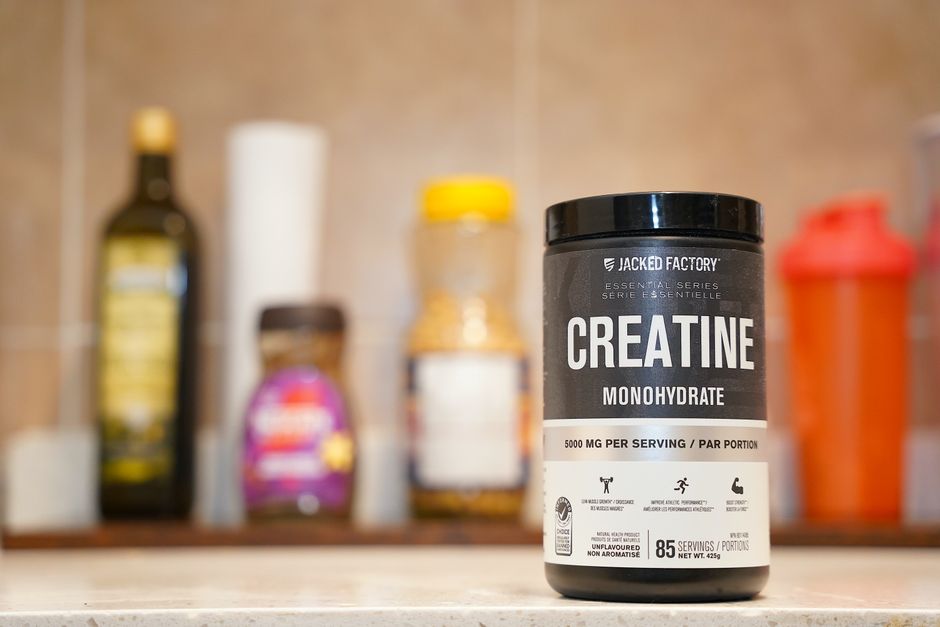
Creatine is one of the most studied sports supplements in the world, and the short answer is yes — it works for what it is designed to do. It reliably increases the amount of short, intense energy your muscles can produce, and that translates into measurable gains in strength and muscle size for many people who train. It is not a fat burner, it is not a hormone, and it will not build muscle on its own. But as a performance and muscle-building aid, the evidence is about as strong as it gets in nutrition science.
What Is Creatine and What Does It Actually Do?
Creatine is a compound your body makes and stores mostly in skeletal muscle. You also get it from food, mainly red meat and fish. Inside muscle, it gets converted into a form called phosphocreatine, which acts as a quick reserve of energy.
When you do something explosive — a heavy squat, a sprint, a jump — your muscles burn through a molecule called ATP for fuel. That ATP runs out in a few seconds. Phosphocreatine steps in and helps rebuild ATP fast, so you can keep producing force for a bit longer. This is the entire reason creatine matters for exercise. It feeds the short, hard efforts, not long endurance work.
Here is something most people get wrong. Creatine is not a stimulant and it is not a drug. It is a nutrient that tops up a system your body already uses every day. Taking more than your muscles can store does not do anything extra. Once your stores are full, the rest leaves in your urine.
Does Creatine Really Increase Strength and Muscle?
Yes. This is the best-supported effect of creatine, and the research behind it is large and consistent. When people supplement with creatine and follow a resistance training program, they tend to gain more strength and more lean mass than people doing the same training without it.
The mechanism is straightforward. More stored phosphocreatine means you can squeeze out a few more quality reps or lift slightly more weight before fatigue sets in. Over weeks and months, that extra training volume adds up. Creatine does not build muscle by itself — it lets you do more work, and the work is what builds muscle.
The size of the effect varies. People who already eat a lot of meat and fish, or who already have high muscle creatine stores, tend to see less benefit. People who eat little or no meat often respond more. Genetics, training experience, and diet all play a role. So “it works” does not mean everyone gains the same amount.
How Much Creatine Should You Take?
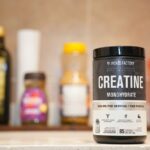
The standard approach backed by decades of research is a daily dose of 3 to 5 grams of creatine monohydrate. That is the amount most studies use for maintenance, and it is the figure that appears across sports nutrition position statements.
Some protocols start with a “loading phase” of about 20 grams per day split into four doses for 5 to 7 days, then drop to 3 to 5 grams daily. Loading fills your muscles faster. Skipping it just means it takes a few weeks to reach the same level. Both roads lead to the same place.
Timing matters less than consistency. Taking it every day — including rest days — keeps your muscle stores topped up. There is no strong evidence that the exact time of day changes the outcome.
Creatine monohydrate is the form with by far the most research behind it. Other forms sold as “better” — creatine ethyl ester, buffered creatine, creatine hydrochloride — do not have the same body of evidence, and some cost far more. There is no reliable data showing they outperform plain monohydrate.

Is Creatine Safe to Take Long Term?
For healthy adults, creatine monohydrate has a strong safety record in the research. Studies following users for months to a few years have not found consistent evidence of harm to the kidneys or liver in people who were healthy to begin with.
The most common side effect is mild stomach discomfort, especially with large single doses. Splitting the dose or taking it with food usually helps. Early claims that creatine causes dehydration or muscle cramps have not held up well in controlled studies. If anything, some evidence points the other way.
One real concern is water weight. Creatine pulls water into muscle cells, so the scale may go up a few pounds in the first weeks. That is intracellular water, not fat, and it is part of how the supplement works.
People with existing kidney disease, liver disease, or those taking medications that affect the kidneys should talk to a clinician before using it. This is not because creatine is known to harm them, but because the safety data in those groups is limited. The same caution applies to pregnancy and breastfeeding — there is not enough evidence to call it safe in those situations, so it should be avoided unless a doctor says otherwise.
Does Creatine Work for Everyone and Every Sport?
No. The benefits are clearest for activities that rely on short bursts of intense effort — sprinting, jumping, heavy lifting, and team sports with repeated high-intensity efforts. For long-distance running, cycling, or other endurance events, the effect on performance is small or absent, because those sports do not depend heavily on the phosphocreatine system.
Response also varies by person. Some people are what researchers call “responders” and see clear gains. Others see little, often because their muscles were already near full. Age matters too — older adults may benefit for both strength and muscle, and some research suggests creatine combined with resistance training can help counter age-related muscle loss, though this is an area where the evidence continues to develop.
What creatine does not do is replace training, protein, sleep, or calories. It is a small lever, not the whole machine. Someone who does not train will not build meaningful muscle from creatine alone.
What Creatine Does Not Do
Creatine is not a fat burner. It does not boost metabolism in any meaningful way, and it will not cause fat loss. Any weight change from creatine is usually water, not fat.
It is not a hormone and does not work like one. Claims that it raises testosterone in a way that drives big muscle gains are not supported. Some early research looked at possible effects on certain hormones, but the findings were not consistent and did not translate into the muscle-building claims often made online.
It is not a stimulant and does not give you energy the way caffeine does. You will not feel “wired” after taking it. In fact, many people notice nothing at all on a day-to-day basis — the benefit shows up in training over time.
And it is not a shortcut around a poor diet or a bad program. If your training and nutrition are off, creatine cannot fix that.
The Bottom Line on Whether Creatine Works
Creatine works for its main purpose. It increases short-burst energy in muscle, which supports more quality training, which in turn supports strength and muscle gains. The evidence for this is strong and has held up for decades.
It is safe for most healthy adults at the standard dose of 3 to 5 grams per day. It is not a fat burner, not a hormone, and not a magic shortcut. The people who get the most from it are those who train hard, eat enough protein, and take it consistently over time.
Frequently Asked Questions
Does creatine really work for building muscle?
Yes, when paired with resistance training. Creatine increases short-burst energy in muscle, which lets you do more quality training, and that extra work supports strength and muscle gains over time.
How long does it take for creatine to work?
With a loading phase of about 20 grams per day for 5 to 7 days, muscle stores fill faster, and many people notice training effects within the first couple of weeks. Without loading, it typically takes a few weeks of daily 3 to 5 gram doses to reach the same level.
Is creatine safe to take every day?
For healthy adults, daily creatine monohydrate at 3 to 5 grams has a strong safety record in research, with stomach discomfort being the most common complaint. People with kidney or liver disease, and those who are pregnant or breastfeeding, should talk to a doctor first because safety data in those groups is limited.
Does creatine burn fat or help with weight loss?
No. Creatine is not a fat burner and does not cause fat loss, and any quick weight gain from it is water drawn into muscle, not fat.
