
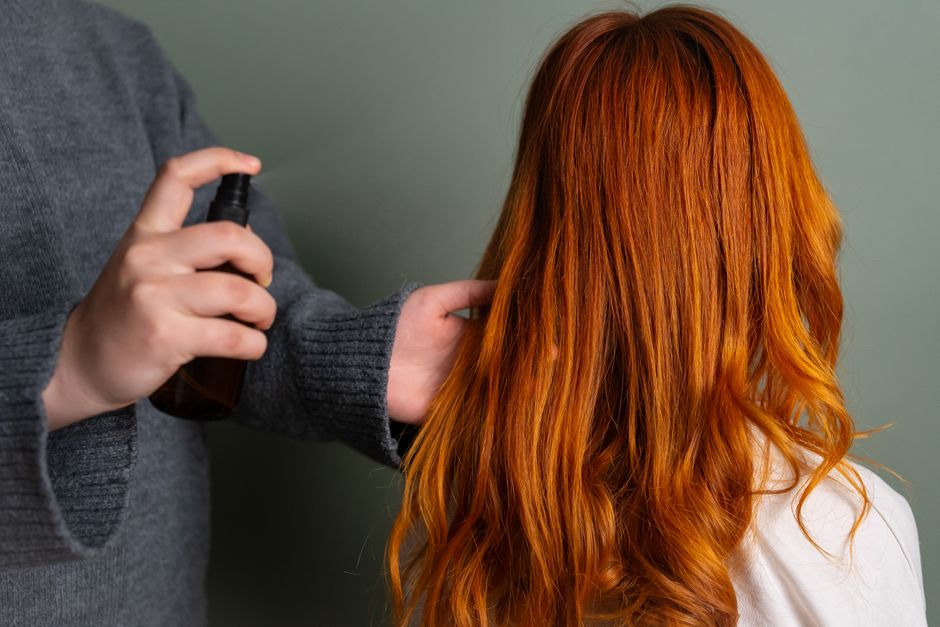
Yes, coloring your hair can damage it. How much damage depends on the type of dye, how often you color, and the condition your hair is already in. Permanent dye causes the most structural change, semi-permanent and temporary dyes cause far less, and the difference comes down to one basic fact: some color products have to break into the hair shaft to work, and breaking in means breaking something.
What Actually Happens Inside a Hair Strand During Coloring
Hair is mostly protein. Each strand has an outer layer of overlapping scales called the cuticle, a middle layer called the cortex, and a soft core called the medulla. The cortex holds the pigment that gives hair its natural color and the chemical bonds that give it strength and shape.
To change hair color permanently, dye has to reach the cortex. That means lifting the cuticle open. Most permanent dyes do this with ammonia or a similar alkaline agent, which swells the cuticle so the dye can pass through. A developer, usually hydrogen peroxide, then strips the natural pigment so the new color can take its place. When the process is done, the cuticle does not fully close back to its original tight state.
That opened cuticle is the source of most hair damage people notice. Rough, raised scales make hair feel dry and look dull. They also let moisture escape and let outside substances in, which is why color-treated hair often behaves differently than it did before. The cortex can also lose protein and lipids during the process, and those losses are not fully reversible.
One detail worth knowing: the damage is not only about the dye. Hydrogen peroxide alone can change hair structure, and it is the developer, not the color, that does much of the oxidative work. This is why even a “gentle” permanent dye still involves some structural change.
Does Coloring Your Hair Damage It More Than Other Hair Treatments?
Permanent color is one of the more aggressive chemical treatments you can do at home. It ranks alongside relaxing and permanent waving for structural impact, though the exact comparison depends on the product and the person’s hair.
Here is how the main categories compare in general terms:
- Permanent dye: Opens the cuticle and removes natural pigment. Highest potential for lasting structural change.
- Demi-permanent dye: Uses a low-volume developer and deposits color without fully lifting the cuticle. Less damaging than permanent, but not damage-free.
- Semi-permanent dye: Deposits color on the surface and outer cuticle with no developer. Minimal structural change.
- Temporary color: Coats the outside of the strand. Essentially no damage to the hair’s internal structure.
- Lightening or bleaching: The most damaging option. It removes pigment from the cortex and can weaken hair significantly, especially with repeated use.
Going lighter is harder on hair than going darker. Lifting pigment requires more peroxide and a stronger alkaline environment than depositing color, so the structural cost is higher. If you are choosing between a shade close to your natural color and a dramatic lift, the gentler option is almost always the one closer to your starting point.
Why Some People’s Hair Handles Color Better Than Others
Two people can use the same box dye and end up with very different results. Hair’s starting condition matters as much as the product.
Fine hair has less cortex to spare, so it tends to show damage faster. Coarse, dense hair often tolerates the same process with less visible change. Hair that is already dry, chemically relaxed, previously bleached, or heat-damaged starts with a compromised cuticle, and adding color on top of that compounds the problem.
Porosity is another factor. Porous hair absorbs chemicals quickly and unevenly, which can mean faster color uptake but also faster damage. If your hair dries quickly after washing or feels rough when you run a finger up a strand, it is likely more porous than average.
Grey hair behaves differently too. It tends to be more resistant to color uptake, which sometimes leads people to leave dye on longer or use stronger formulas. Both choices increase the damage risk.
Can Hair Recover From Color Damage?
Damaged hair cannot heal itself. Hair is not living tissue once it leaves the follicle, so it has no repair mechanism. This is a point that gets blurred in a lot of hair product marketing.
What can happen is that the appearance and feel of hair improves. Conditioning treatments can smooth the cuticle temporarily, fill in gaps with proteins or oils, and make hair feel softer and look shinier. Some bond-building products have shown measurable effects on hair strength in laboratory and small-scale studies, though results in real-world use vary and no product reverses structural damage at the cortex.
The only true reset is new growth. Hair grows from the follicle at the scalp, and that new hair is undamaged until it is treated. If you stop coloring, the damaged sections will eventually be cut off as hair grows out. There is no topical product that restores hair that has already been chemically altered.
This matters for how you think about the trade-off. Coloring is not a one-time cost that hair recovers from. Each application adds to what is already there, especially on the previously treated sections.
How to Lower the Damage From Hair Color
You can reduce damage without giving up color. The biggest gains come from spacing out applications and avoiding the strongest processes.
- Stretch the time between full color applications. Touching up roots only, rather than re-coloring the whole strand, limits repeat exposure on already-treated hair.
- Choose the mildest option that gets the result you want. A demi-permanent or semi-permanent color causes less structural change than a permanent one.
- Avoid overlapping bleach or lightener on hair that has already been lightened.
- Skip coloring over hair that has been relaxed or permed recently.
- Be cautious with at-home bleach kits, which offer less control over strength and timing than a professional assessment.
- Reduce heat styling and tight pulling on color-treated hair, since both add stress to an already compromised cuticle.
Conditioning after coloring helps with feel and manageability. It does not undo the chemistry that already happened. Some clinicians recommend protein treatments for hair that feels stretchy or mushy after coloring, but the evidence for how much this restores structure is limited, and overusing protein can make hair stiff and brittle.
When to Be More Careful
Certain situations raise the stakes. If your scalp is irritated, broken, or recently treated, coloring can worsen the reaction. Patch testing before using any new dye is standard advice because allergic reactions to hair dye ingredients, including a compound called PPD found in many permanent dyes, can be serious and can develop even after years of use without problems.
If you are pregnant or breastfeeding, check with a clinician before coloring. The evidence on hair dye exposure during pregnancy is limited, and guidance varies. No clinical guidelines currently exist that give a clear safe threshold for hair dye use in pregnancy, so this is a case where personal medical advice matters more than general rules.
If your hair is breaking, shedding more than usual, or feels significantly weaker after coloring, that is a sign to pause and let it recover before the next application. Repeated coloring on fragile hair tends to make the problem worse rather than better.
Frequently Asked Questions
Does coloring your hair damage it permanently?
Permanent dye causes structural changes to the hair shaft that hair cannot repair on its own, because hair is not living tissue. New growth from the follicle is undamaged, so the effects last until the treated hair is cut off.
Is semi-permanent hair color less damaging than permanent?
Yes, semi-permanent color causes far less structural change because it does not use a developer to lift the cuticle. It deposits color on the surface and outer layers rather than breaking into the cortex.
Can hair recover from bleach damage?
No, hair cannot repair itself once the cortex is damaged, and bleaching is the most damaging color process. Conditioning can improve how hair feels temporarily, but the only real reset is new growth from the scalp.
How often is it safe to color your hair?
There is no universal safe interval, and it depends on your hair’s condition and the type of dye used. Spacing out applications and touching up roots only instead of re-coloring the full strand reduces cumulative damage.
