
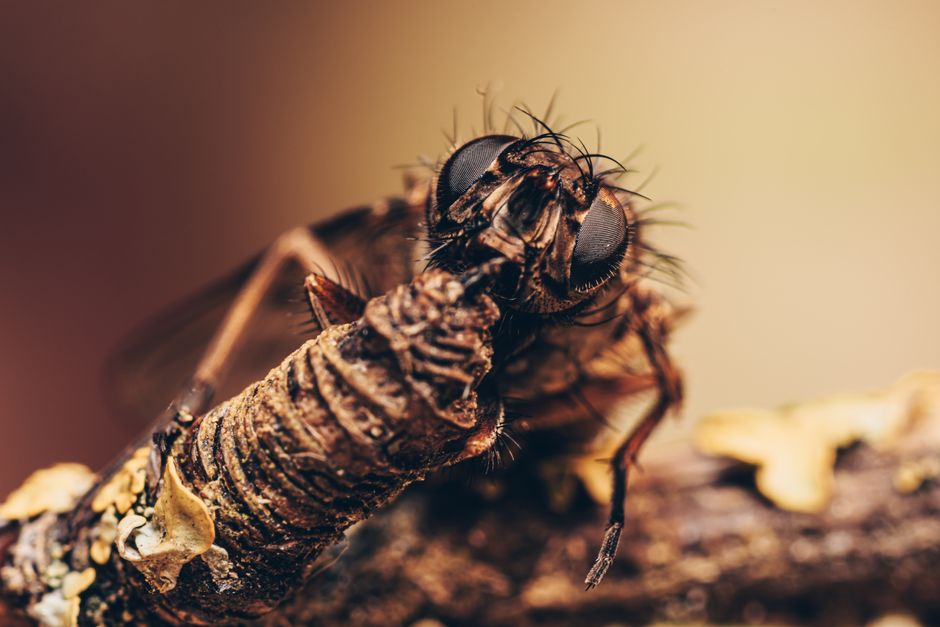
Citronella is one of the most widely sold insect repellents in the world, and most people assume it works against anything that flies and bites. The research tells a more specific story. Citronella oil has shown real repellent activity against mosquitoes in published studies, but the evidence for flies is far thinner. For house flies and fruit flies, some studies show a repellent effect and others show none. For biting flies such as horse flies and stable flies, there is very little human research at all. If you are buying citronella expecting it to clear flies from a patio, the science does not fully back that expectation.
What Is Citronella and Where Does It Come From?
Citronella oil is a plant oil distilled from two species of grass in the genus Cymbopogon. The most common source is Cymbopogon nardus, often called Ceylon citronella, and a related species, Cymbopogon winterianus, known as Java citronella. Both are tall, clumping tropical grasses native to South Asia.
The oil itself is a mix of volatile compounds. The main ones are citronellal, geraniol, and citronellol. These are the molecules responsible for the sharp, lemony smell people associate with citronella candles and sprays. They evaporate quickly into the air, which is why citronella products tend to lose their effect within a short time.
Citronella has a long history of use. It was registered as a plant-based insect repellent in the United States decades ago, and it remains one of the few botanical oils the Environmental Protection Agency recognizes as a minimum-risk pesticide ingredient. That regulatory status means it is considered low risk to human health when used as directed. It does not mean it has been proven to repel every type of insect.
Does Citronella Repel Flies? What Research Says
The honest answer is that citronella repels some flies under some conditions, and the evidence is not strong enough to call it a reliable fly repellent. Most of the research on citronella has been done on mosquitoes, not flies, and results do not always carry over from one insect to another.
Some laboratory studies have found that citronella oil and its main compounds reduce landing and feeding by house flies and fruit flies. Other studies using similar methods have found weak or no effect. This kind of split result usually means the effect is real but modest, and it depends heavily on dose, formulation, and how close the fly is to the source.
For biting flies that actually draw blood, such as horse flies, deer flies, and stable flies, the picture is even less clear. These insects respond to different cues than mosquitoes and have different sensory receptors. There is very little published human research testing citronella against them directly. Anyone who claims citronella is a proven horse fly repellent is going beyond what the data show.
One important distinction: flies and mosquitoes are not interchangeable. A product that works well on one may do little for the other. Citronella’s mosquito data is the strongest part of its reputation, and that reputation has been quietly extended to flies without the same level of testing.
How Does Citronella Actually Work Against Insects?
Citronella does not kill insects on contact. It works by interfering with their ability to find you.
Flying insects navigate using a combination of cues. They detect carbon dioxide from your breath, body heat, moisture, and the lactic acid and other compounds in your sweat. Mosquitoes in particular have odorant receptors tuned to human skin chemicals. When citronella molecules are in the air, they appear to block or overwhelm some of these receptors, making it harder for the insect to lock onto a target.
This is why citronella behaves differently from a chemical like DEET. DEET works largely by disrupting the insect’s ability to detect human odor at close range and has a long track record in controlled trials. Citronella is volatile and short-lived. Its protective window is measured in a much shorter span, and air movement, heat, and sweat all speed up how fast it fades.
That volatility explains a common frustration. A citronella candle or coil releases its compounds into open air, where they disperse almost immediately. The concentration that actually reaches a fly a few feet away may be far below what a lab test uses in a closed container.
Do Citronella Candles, Coils, and Sprays Work the Same Way?
No. The delivery method matters as much as the oil itself, and this is where most consumer disappointment comes from.
Candles and coils release citronella into open air. The problem is that outdoor air moves. Even a light breeze dilutes the oil below the level that showed activity in laboratory tests. Some field studies of citronella candles have found a small reduction in bites compared with plain candles, and some have found no meaningful difference. The smoke itself may do part of the work by masking human scent, which makes it hard to separate the citronella effect from the smoke effect.
Topical sprays and lotions put the oil directly on skin, where it can act at close range. This is the form with the most supporting evidence, mostly for mosquitoes. The catch is duration. Citronella-based skin products generally need to be reapplied more often than DEET-based products to maintain protection.
Wearable devices, patches, and wristbands have performed poorly in testing. A repellent needs to reach the air around your whole body or sit on your skin to matter. A band on your wrist does not create a protective cloud, and studies of these products have generally not shown reliable protection.
Yard sprays and plantings are the weakest category. Growing citronella plants in a pot does not release enough oil to repel insects unless you crush the leaves. Even then, the effect is local and brief.
What the Evidence Does and Does Not Support
It helps to separate what is well established from what is assumed.
- Supported: Citronella oil has demonstrated repellent activity against mosquitoes in multiple studies, though generally for a shorter time than DEET.
- Mixed: Effects against house flies and fruit flies appear in some studies and not others, suggesting a modest and inconsistent effect.
- Not established: Reliable protection against biting flies like horse flies and stable flies. Human data here is very limited.
- Weak: Wearable citronella devices and citronella plants as a means of repelling flies in a real outdoor setting.
The pattern is consistent. Citronella is a real but modest repellent, strongest against mosquitoes, and its performance drops sharply once you move from a controlled test to an open backyard.
What Actually Works Better for Flies?
For biting flies, the most studied repellent is DEET, and it remains the standard against which others are measured. Picaridin is another option with good evidence for mosquitoes and ticks, and it tends to be gentler on skin and gear. For mosquitoes specifically, products containing oil of lemon eucalyptus have shown protection in trials, though this is a different oil from citronella and should not be confused with it.
For house flies and fruit flies around a home or patio, repellents are often the wrong tool. These flies are usually drawn to food waste, standing water, ripe produce, or garbage. Removing the attractant does more than any spray or candle. Screens, fans, and physical barriers are also more dependable than airborne oils.
If you do use citronella, treat it as a short-term, low-strength option rather than a barrier. Reapply often, and do not rely on it alone in an area with a heavy fly population or where fly-borne disease is a concern.
Is Citronella Safe to Use?
Citronella oil is generally recognized as low risk when used as directed on skin or in outdoor products. That said, it is not risk-free.
Skin irritation and allergic reactions can occur, especially with repeated use or on sensitive skin. The oil should not be applied to broken skin, and it should not be swallowed. Citronella products should not be used on infants, and guidance for young children varies, so check with a pediatrician rather than assuming a plant-based product is automatically appropriate. No clinical guidelines currently exist for citronella use in pregnancy or breastfeeding, so anyone in those groups should ask a clinician before using it.
Citronella candles and coils produce smoke, and smoke itself is a respiratory irritant. Burning them indoors or in poorly ventilated spaces is not advisable. Pets can also be sensitive to concentrated essential oils, so keep products away from animals.
Frequently Asked Questions
Does citronella repel flies effectively?
Some studies show citronella reduces fly landing and feeding, but results are mixed and the effect is modest. It is not considered a reliable fly repellent, especially for biting flies.
Do citronella candles keep flies away?
Field studies show little to no meaningful reduction in bites from citronella candles in open air. Any effect is short-lived because the oil disperses quickly in a breeze.
Is citronella as good as DEET for flies?
No. DEET has stronger and longer-lasting evidence for repelling biting insects, while citronella’s protection window is much shorter.
Can I use citronella on my skin to repel flies?
Citronella skin products are generally low risk for adults when used as directed, but they need frequent reapplication. They are not recommended for infants, and guidance for pregnancy is not established.
