

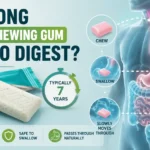
Chewing gum does not digest. Your body cannot break down the gum base, which is the rubbery part that gives gum its texture. The gum passes through your digestive system mostly unchanged and leaves your body in your stool, usually within 24 to 48 hours.
Why Does Chewing Gum Digest Differently From Food?
Your digestive system is powerful. It uses stomach acid and enzymes to break down proteins, fats, and carbohydrates. But gum base is different. It is made from synthetic materials like elastomers, resins, and waxes — the same family of materials used in rubber and plastics.
Your body simply does not have the enzymes needed to break these materials down. Think of it this way: your stomach can dissolve a piece of meat, but it cannot dissolve a rubber band. Gum base is closer to the rubber band than to food.
The other ingredients in gum — sweeteners, flavorings, and softeners — do digest. Your body absorbs those. The sugar or sugar alcohol gets processed like any other carbohydrate. The flavoring breaks down quickly, which is why gum loses its taste after 10 to 15 minutes. The gum base itself, however, stays intact.
What Actually Happens to Gum in Your Body?
After you swallow gum, it enters your stomach. The stomach churns and mixes it with acid, but the gum base resists breakdown. The gum then moves into your small intestine, where nutrients are normally absorbed. Again, the gum base is not absorbed.
Eventually, the gum reaches your large intestine and is passed in your stool. This is the same path any indigestible material takes — like corn kernels or seeds. The gum does not sit in your stomach for years, despite the old myth. It moves through at the same pace as your other digested food.
For most people, swallowed gum passes through completely in one to two days. In rare cases, it can take longer, but this is not the norm.
Is Swallowing Gum Dangerous?
For most people, swallowing a piece of gum is harmless. Your body will pass it without any problems. The risk comes from swallowing a lot of gum at once, or swallowing gum repeatedly over a short period.
Large amounts of gum can clump together in the stomach or intestines. This clump can cause a blockage, which is a medical emergency. This is rare, but it has been documented, mostly in children who swallowed many pieces at once.
Children are at higher risk for two reasons. First, they are smaller, so a gum clump takes up more relative space. Second, they may not understand that gum should be spit out, not swallowed. If a child swallows one piece, there is usually no reason to worry. If a child swallows several pieces in a short time, contact a pediatrician.




Chewing Gum and Digestion: What the Research Shows
Some research suggests that chewing gum after a meal can actually help digestion. The act of chewing stimulates saliva production. Saliva contains enzymes that begin breaking down carbohydrates. More saliva also helps move food through the esophagus more easily.
Some studies indicate that chewing gum after abdominal surgery may help the intestines recover faster. The theory is that chewing mimics eating, which signals the digestive tract to become active. This is called “sham feeding.” The evidence is promising but not definitive. Some clinicians recommend gum for this purpose; others do not.
There is also research on chewing gum and acid reflux. Chewing gum increases saliva, which can help neutralize stomach acid. Some studies suggest this may reduce symptoms of heartburn. The effect is modest and does not replace standard reflux treatment.
Does Chewing Gum Cause Digestive Problems?
Chewing gum itself is not a common cause of digestive problems. But some ingredients in gum can cause issues for certain people.
Sugar-free gum contains sugar alcohols like sorbitol, xylitol, and mannitol. These are poorly absorbed in the small intestine. For some people, especially in large amounts, sugar alcohols draw water into the gut and cause diarrhea or bloating. This is the same reason sugar-free candies often carry a laxative warning.
Swallowing air while chewing gum can also cause bloating and gas. This is usually mild and goes away on its own. If you notice that chewing gum consistently gives you stomach discomfort, the gum is likely the cause.
What Happens If a Child Swallows Gum?
If your child swallows a single piece of gum, do not panic. It will pass through their system like any other indigestible material. Watch for signs of a blockage, which include abdominal pain, vomiting, constipation, or a swollen belly. These symptoms are rare after one piece.
If your child swallows multiple pieces of gum at once, call your pediatrician. The doctor can advise whether monitoring at home is appropriate or whether an evaluation is needed. Do not give laxatives unless a doctor specifically instructs you to.
The bigger concern with children and gum is choking, not digestion. Gum is a choking hazard for young children. Most pediatric organizations recommend waiting until a child is old enough to understand not to swallow gum — usually around age 5 or older.
Chewing Gum Digest: The Bottom Line
Chewing gum does not digest because your body lacks the enzymes to break down the synthetic gum base. It passes through your system intact and exits in your stool within one to two days.
Swallowing one piece of gum is not dangerous for most people. Swallowing many pieces at once can cause a blockage, especially in children. If you or your child swallow a large amount of gum, seek medical advice.
Chewing gum can stimulate saliva and may help with digestion after meals, but it is not a treatment for any digestive condition. If you have ongoing digestive symptoms, talk to a doctor rather than relying on chewing gum as a remedy.
Frequently Asked Questions
How long does it take for swallowed gum to pass?
Swallowed gum typically passes through your digestive system in 24 to 48 hours. This is the same time frame as any other indigestible material.
Can swallowing gum cause a blockage?
Yes, but only in rare cases where large amounts of gum are swallowed at once. A single piece of gum is not likely to cause a blockage in a healthy person.
Is sugar-free gum bad for your stomach?
Sugar-free gum contains sugar alcohols that can cause diarrhea or bloating in some people, especially in large amounts. This is not dangerous but can be uncomfortable.
Does chewing gum help with acid reflux?
Some studies suggest chewing gum increases saliva, which can help neutralize stomach acid and reduce heartburn symptoms. The effect is modest and does not replace standard reflux treatment.
