
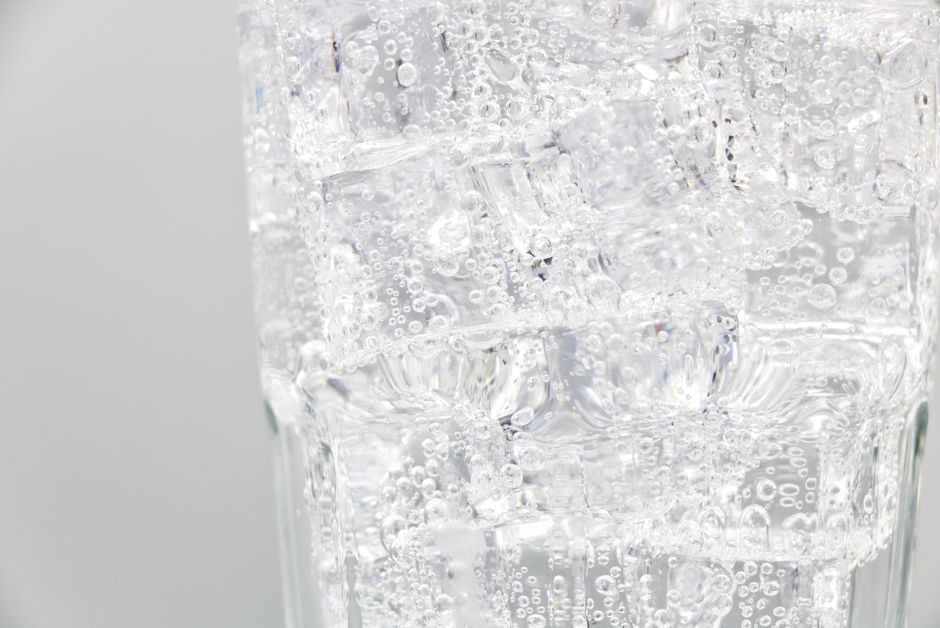
Carbonated water does not neutralize stomach acid. It is mildly acidic itself, and it does not contain the buffering compounds that would cancel out acid in your stomach. If you have heard that fizzy water calms heartburn or “balances” stomach acid, that idea is not supported by how the chemistry actually works.
What carbonated water can do is change pressure inside the stomach and how the stomach empties. That is a different effect from neutralizing acid, and it matters for anyone who drinks sparkling water and notices bloating, fullness, or reflux afterward. Here is what the evidence shows, what it does not, and why the distinction is worth understanding.
What Is Carbonated Water Made Of?
Carbonated water is plain water with dissolved carbon dioxide gas. That is the whole recipe. The fizz comes from CO2 that has been forced into the water under pressure, and it escapes as bubbles once the pressure drops or the water warms up.
When carbon dioxide dissolves in water, a small fraction of it reacts to form carbonic acid. This is basic chemistry, not a marketing claim. The result is that carbonated water is slightly acidic, typically landing somewhere in the range of pH 3 to 4 depending on the brand and how much CO2 it holds. Plain tap or bottled water sits closer to neutral, around pH 7.
So the starting point matters here. A drink that is itself acidic is not a sensible candidate for neutralizing acid. It adds a small amount of acid to whatever is already in your stomach.
Some products add more than CO2. Club soda usually contains added minerals like sodium bicarbonate or potassium bicarbonate. Tonic water contains sugar or sweeteners plus quinine. Flavored sparkling waters may add citric acid, which makes them more acidic than plain carbonated water. These differences are worth checking on the label if you are choosing a drink for a specific reason.
Does Carbonated Water Neutralize Stomach Acid?
No. Carbonated water cannot neutralize stomach acid in any meaningful way, and the arithmetic explains why.
Your stomach maintains a strongly acidic environment, generally in the range of pH 1.5 to 3.5. That is thousands of times more acidic than carbonated water. Adding a mildly acidic liquid to a strongly acidic environment does not move the pH toward neutral. It moves it in the opposite direction, by a negligible amount.
Neutralizing stomach acid requires a base, something that reacts with and consumes acid. That is how antacids work. Common antacids use calcium carbonate, magnesium hydroxide, or sodium bicarbonate to chemically react with stomach acid and reduce its acidity. Carbonated water does not contain these compounds in any effective quantity, with one partial exception worth naming.
Club soda sometimes contains a small amount of sodium bicarbonate. But the quantity is tiny, far below what a therapeutic antacid dose delivers. A few hundred milligrams of bicarbonate diluted in a glass of water is not going to neutralize a stomach full of hydrochloric acid. Calling club soda an antacid would be inaccurate.
There is one more layer to this. Even if carbonated water did raise stomach pH briefly, that is not necessarily what you want. Stomach acid serves real functions. It breaks down food, activates digestive enzymes, and helps kill swallowed bacteria. The stomach also tightly regulates its own acidity, producing more acid when needed. A drink that nudged the pH would be corrected quickly by the stomach itself.
Why Does Carbonated Water Cause Bloating and Burping?
The bubbles are the reason, and the mechanism is mechanical rather than chemical.
When you swallow carbonated water, you swallow dissolved gas along with it. That gas is released in your stomach as the water warms and the pressure changes. Some of it comes back up as a burp. Some of it moves further down the digestive tract. Either way, it adds volume and pressure that plain water does not.
This is why people who are sensitive to fizzy drinks describe bloating, fullness, and pressure after drinking them. It is not the acidity doing this. It is the gas. The same effect happens with any carbonated beverage, including soda and beer.
For most people, this is a mild and temporary sensation. For people with certain digestive conditions, it can be more noticeable. If you have gastroesophageal reflux disease, the added pressure in the stomach may make reflux symptoms worse for some people. If you have irritable bowel syndrome or frequent bloating, carbonation is a common trigger that some clinicians suggest limiting. That is a general clinical observation rather than a rule that applies to everyone.
Here is a detail that often gets missed. The bubbles are not the same as the acid, and the two effects are separate. Someone can find carbonated water irritating because of the gas while its acidity plays essentially no role in their symptoms. That distinction helps explain why two people can react very differently to the same drink.





Does Carbonated Water Help or Hurt Heartburn?
For most people with heartburn, carbonated water is more likely to make things worse than better. The added gas and stomach pressure can push acid upward, which is the opposite of what someone with reflux wants.
That said, the evidence here is not uniform. Some people report that a small amount of sparkling water helps them burp and feel less full, which they experience as relief. Others find it clearly aggravates their symptoms. Individual responses vary, and there is no strong body of clinical evidence showing carbonated water is an effective treatment for heartburn or acid reflux.
What is well established is that heartburn has real triggers and real treatments. Large meals, lying down soon after eating, alcohol, and certain foods are common aggravating factors for many people. If heartburn is frequent or persistent, it is worth discussing with a clinician rather than experimenting with beverages. Frequent reflux can be a sign of gastroesophageal reflux disease, which has its own management approach.
If you are looking for something to drink that is gentle on reflux, plain water is the safer default. It adds no gas and no acid.
Is Carbonated Water Bad for Your Stomach Lining?
This is a common worry, and the evidence does not support it for healthy people.
Some studies have looked at whether carbonated water irritates the stomach lining, and the findings have generally not shown harm in people without existing digestive disease. The stomach lining is built to handle a strongly acidic environment, so a mildly acidic drink is not a meaningful challenge to it.
There is one area where carbonated water gets more attention: bone health. Older research raised the question of whether cola consumption was linked to lower bone mineral density. The concern was largely about cola specifically, and the leading explanations involve caffeine and the displacement of more nutritious drinks like milk rather than the carbonation itself. Carbonated water without caffeine or added sugar is not the same thing as cola, and there is no strong evidence that plain sparkling water harms bone health.
For dental health, the picture is more nuanced. Plain carbonated water appears less harmful to teeth than sugary sodas, largely because it lacks sugar. But flavored sparkling waters with added citric acid are more acidic and may contribute to enamel erosion over time with heavy consumption. That is a reason to read labels if you drink flavored sparkling water daily.
Carbonated Water vs. Other Drinks
The comparison that matters most is not carbonated water against antacids. It is carbonated water against the other things people drink when their stomach feels off. The table below lays out the key differences.
| Drink | Approximate pH | Contains acid-neutralizing compounds? | Adds gas? |
|---|---|---|---|
| Plain water | ~7 (neutral) | No | No |
| Plain carbonated water | ~3 to 4 | No | Yes |
| Club soda | ~3 to 4 | Trace bicarbonate only | Yes |
| Flavored sparkling water | Often more acidic than plain | No | Yes |
| Cola | ~2.5 | No | Yes |
| Antacid (calcium carbonate, etc.) | Varies | Yes, by design | Sometimes |
The pH values are approximate and vary by product. The point of the table is the pattern: carbonated drinks are acidic, not alkaline, and only antacids are formulated to neutralize acid.
What Actually Neutralizes Stomach Acid?
Antacids are the products designed to do this, and they work through straightforward chemistry.
- Calcium carbonate reacts with stomach acid to form calcium chloride, water, and carbon dioxide. That is why some antacids make you burp.
- Magnesium hydroxide neutralizes acid and can have a laxative effect.
- Aluminum hydroxide neutralizes acid and can have a constipating effect, which is why it is often combined with magnesium.
- Sodium bicarbonate neutralizes acid quickly but is high in sodium and not ideal for regular use in some people.
These are medications, not beverages, and they carry their own considerations. They can interact with other drugs, and they are not meant for everyone. If you use antacids frequently, that is a signal to talk with a clinician about what is driving the symptoms rather than self-treating indefinitely.
For longer-term acid suppression, a different class of drugs called proton pump inhibitors works by reducing how much acid the stomach produces, not by neutralizing what is already there. That is a separate mechanism and a separate conversation with a prescriber.
Frequently Asked Questions
Does carbonated water neutralize stomach acid?
No, carbonated water is mildly acidic and does not contain the compounds needed to neutralize stomach acid. It cannot meaningfully change the strongly acidic environment of the stomach.
Is carbonated water bad for acid reflux?
It can make reflux worse for some people because the added gas increases pressure in the stomach. Responses vary, but there is no strong evidence that it helps reflux, and plain water is generally a safer choice.
Can drinking sparkling water cause bloating?
Yes, the dissolved carbon dioxide releases gas in your digestive tract, which can cause bloating, fullness, and burping. This is a mechanical effect of the gas, not the acidity.
What actually neutralizes stomach acid?
Antacids containing calcium carbonate, magnesium hydroxide, aluminum hydroxide, or sodium bicarbonate neutralize stomach acid through chemical reactions. Carbonated water does not contain these in effective amounts.
