
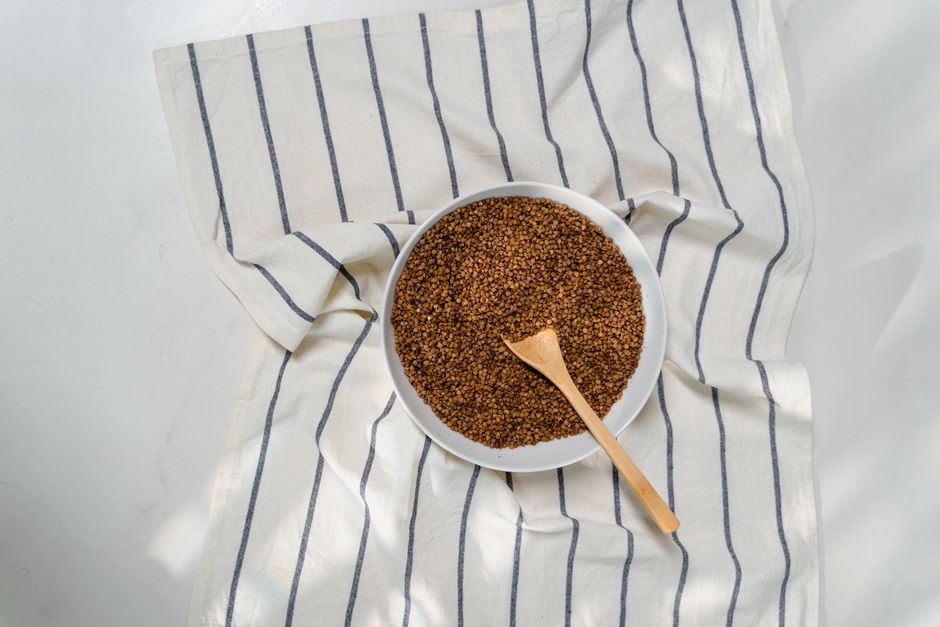
Buckwheat does not contain gluten. Despite the word “wheat” in its name, buckwheat is not a wheat, not a grain, and not related to the grasses that produce wheat, barley, and rye. It is a seed from a flowering plant, and it is naturally gluten-free.
That matters for anyone managing celiac disease or gluten sensitivity, because buckwheat is often used in gluten-free baking and sold as a wheat alternative. The name causes confusion, but the biology is clear: buckwheat belongs to a different plant family entirely.
What Is Buckwheat and Why Does It Have a Misleading Name?
Buckwheat is the seed of a plant called Fagopyrum esculentum, which is related to rhubarb and sorrel, not to wheat. It is often called a pseudocereal because it is used like a grain in cooking even though it is botanically a fruit seed.
The name likely comes from its triangular seeds, which resemble the seeds of the beech tree. In older Germanic languages, the plant was called something close to “beech wheat.” Over time that became buckwheat in English. The “wheat” part describes how it looks and how it is used, not what it is.
Other pseudocereals include quinoa and amaranth. All three are used like grains but come from broadleaf plants rather than grasses. None of them contain gluten, because gluten is a protein found only in certain grass grains.
This distinction is not just academic. People with celiac disease must avoid wheat, barley, and rye completely. A food that looks like a grain and sits next to flour on the shelf can raise reasonable questions. Buckwheat is not one of the grains they need to avoid.
Does Buckwheat Have Gluten? The Straight Answer
No. Buckwheat contains no gluten. It does not contain the gliadin or glutenin proteins that make up gluten in wheat, and it is not botanically capable of producing them.
Gluten is a storage protein complex found in wheat, barley, rye, and their close relatives like spelt, farro, and kamut. These are all grasses in the Triticeae tribe. Buckwheat is not in that group. It cannot make gluten any more than a tomato can make caffeine.
This is why buckwheat flour appears in gluten-free products and why buckwheat noodles are sometimes marketed as a wheat-free option. The seed itself is safe from a gluten standpoint.
There is one important catch that has nothing to do with the plant. Cross-contamination during growing, milling, or packaging can introduce gluten from nearby wheat. A product labeled “wheat-free” is not the same as one labeled “gluten-free.” For someone with celiac disease, that difference matters.
Who Needs to Avoid Gluten and Why Buckwheat Matters to Them
People with celiac disease have an autoimmune reaction to gluten that damages the lining of the small intestine. This is not an allergy or a preference. It is a medical condition that requires strict, lifelong avoidance of wheat, barley, and rye.
Some people have wheat allergy, which is a different immune response, and some have non-celiac gluten sensitivity, a condition that is recognized but less well understood. The evidence for the underlying mechanism of non-celiac gluten sensitivity is still debated, and researchers continue to study whether gluten itself or other components of wheat are responsible for symptoms.
For all of these groups, safe and varied food options matter. Buckwheat offers a way to eat noodles, pancakes, porridge, and baked goods without gluten. It also brings its own nutritional profile, which is worth understanding on its own terms.
Worth noting: some people react to buckwheat itself. Buckwheat allergy exists, though it is uncommon. It has been reported more often in parts of Asia where buckwheat is a staple. A person can be gluten-free and still have a separate reaction to buckwheat. These are unrelated issues.





Is Buckwheat Nutritious? What the Seed Actually Provides
Buckwheat is a solid source of several nutrients. It provides protein, fiber, and a range of minerals. It is also higher in certain antioxidants than many common grains.
According to USDA nutritional data, cooked buckwheat groats provide roughly 5.7 grams of protein and 4.5 grams of fiber per cooked cup. It contains magnesium, manganese, copper, and phosphorus. It is a source of rutin, a flavonoid antioxidant that has been studied for its effects on blood vessel function, though most of that research is early-stage and not conclusive for human health outcomes.
Buckwheat protein has a reasonably good amino acid profile for a plant food, though like most plant proteins it is lower in some essential amino acids than animal sources. It is not a complete protein in the strict sense, but it complements other plant foods well.
One practical detail: buckwheat is naturally gluten-free, but it is not calorie-free or low in carbohydrates. It behaves like a grain nutritionally. For someone replacing wheat flour with buckwheat flour, the swap changes the nutrient profile but does not make the food low-carb.
How to Tell If Buckwheat Products Are Truly Gluten-Free
The plant is gluten-free, but the product on the shelf may not be. This is where reading labels matters more than knowing the botany.
In the United States, a food labeled “gluten-free” must meet a defined standard. The FDA rule requires that gluten-free foods contain less than 20 parts per million of gluten. That threshold is widely used internationally and is considered safe for most people with celiac disease.
A product labeled “wheat-free” has no such requirement. It only means the manufacturer did not add wheat. It says nothing about cross-contamination.
- Look for the words “gluten-free” on the package, not just “wheat-free.”
- Check for a certified gluten-free seal from a recognized third-party certifier.
- Be cautious with bulk bins, where scoops and bins can be shared with wheat products.
- Buckwheat noodles from some manufacturers are blended with wheat flour. Read the ingredient list.
That last point trips people up often. Japanese soba noodles are traditionally made from buckwheat, but many commercial versions contain a large proportion of wheat flour for texture. A noodle called “buckwheat soba” is not automatically gluten-free. The ingredient list settles it.
Buckwheat vs. Other Gluten-Free Flours: A Quick Comparison
Buckwheat is one of several gluten-free flour options. Each behaves differently in baking and brings a different nutrient profile. The table below compares a few common choices using USDA data per 100 grams of raw flour.
| Flour (per 100 g) | Protein | Fiber | Gluten |
|---|---|---|---|
| Buckwheat flour | About 10 g | About 10 g | None |
| White rice flour | About 6 g | About 2 g | None |
| Almond flour | About 21 g | About 11 g | None |
| Wheat flour (all-purpose) | About 10 g | About 3 g | Yes |
Buckwheat brings more fiber than white rice flour and a stronger flavor. It does not rise the way wheat flour does, because it lacks gluten’s elastic structure. Gluten-free bakers usually combine it with other flours and binders like xanthan gum to get a workable texture.
The comparison is not about which flour is “best.” It is about matching the flour to the recipe and to the dietary need. For someone avoiding gluten, buckwheat is a legitimate option that adds variety and nutrients.
Common Myths About Buckwheat and Gluten
The biggest myth is that buckwheat contains gluten because of its name. It does not. This single misunderstanding keeps some people from trying a food that could safely expand their diet.
A second myth is that anything labeled “wheat-free” is safe for celiac disease. It is not, for the reasons above. Cross-contamination is a real concern, and the labeling standard is different.
A third claim that circulates is that buckwheat “detoxes” the body or treats specific diseases. No clinical evidence confirms this. Buckwheat is a nutritious food, not a treatment. Claims that it lowers cholesterol, controls blood sugar, or fights disease are mostly based on laboratory or animal studies and small human trials. The evidence is not strong enough to present buckwheat as a therapy for any condition.
What can be said with confidence is narrower and more useful: buckwheat is gluten-free, it is nutritious, and it is a safe grain alternative for people who need to avoid gluten, provided the product itself is not cross-contaminated.
Does Buckwheat Have Gluten? What to Remember
Buckwheat is not wheat. It contains no gluten, and it never has. The name is a historical accident of language, not a botanical fact.
For anyone with celiac disease or gluten sensitivity, buckwheat can be part of a varied diet. The plant is safe. The product is only as safe as its labeling and handling. When in doubt, look for a certified gluten-free label rather than relying on the word “buckwheat” alone.
Frequently Asked Questions
Does buckwheat have gluten?
No, buckwheat is naturally gluten-free and is not related to wheat. It is a seed from a plant in the same family as rhubarb.
Is buckwheat safe for celiac disease?
Yes, the buckwheat plant itself is safe for people with celiac disease. Check that the product is labeled gluten-free, since cross-contamination with wheat can occur during milling or packaging.
Why is buckwheat called wheat if it has no gluten?
The name comes from its triangular seeds, which resemble beechnuts, and the word “wheat” was added because it is used like a grain. It is not botanically related to wheat.
Are buckwheat noodles gluten-free?
Not always. Traditional soba noodles are made from buckwheat, but many commercial versions blend in wheat flour, so read the ingredient list and look for a gluten-free label.
