
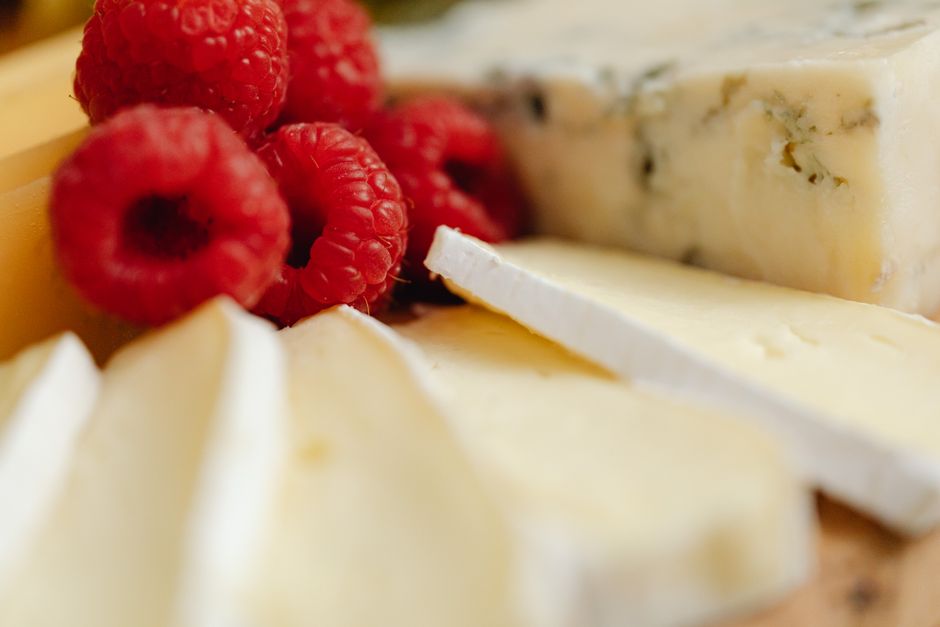
Yes, blue cheese has mold. That is not a flaw. It is the entire point. The blue-green veins you see in cheeses like Roquefort, Gorgonzola, and Stilton are colonies of a specific, safe type of mold called Penicillium roqueforti. This mold is added deliberately during the cheesemaking process to create the flavor and appearance that define the category. Unlike the fuzzy mold that grows on forgotten food in your fridge, the mold in blue cheese is carefully controlled, food-grade, and safe to eat for most people.
What Kind of Mold Is in Blue Cheese?
The mold in blue cheese is almost always Penicillium roqueforti. It is a naturally occurring fungus that was discovered in the caves of Roquefort, France, centuries ago. Cheesemakers now cultivate it in labs and add it to the milk or curd in a controlled way.
This specific strain is safe for human consumption. It is not the same as the toxic molds that can grow on bread, fruit, or leftover food. Those molds can produce mycotoxins, which are compounds that can make you sick. P. roqueforti used in commercial cheesemaking is screened and regulated to ensure it does not produce harmful levels of these toxins.
Some blue cheeses also use a second mold, Penicillium glaucum, though P. roqueforti is the industry standard. Both are food-safe and have been used for centuries.
How Does the Mold Get Into the Cheese?
Blue cheese starts like most other cheeses. Milk is heated, cultures are added, and rennet is introduced to form curds. The key difference is what happens next.
The mold spores are added to the milk or directly to the curds. After the curds are shaped, the cheesemaker pierces the cheese with thin stainless steel needles. These needles create air channels throughout the wheel. The mold needs oxygen to grow, and these channels give it exactly that.
As the cheese ages, the mold grows along these channels and spreads through the curd. This is why the blue veins follow a distinct pattern. The aging process can last anywhere from a few weeks to several months, depending on the style. During this time, the mold breaks down fats and proteins in the cheese, which is what creates the sharp, tangy, and sometimes spicy flavor that blue cheese is known for.
Is Blue Cheese Safe to Eat?
For healthy adults, yes. Blue cheese is safe to eat. The mold is food-grade, and the cheese undergoes strict quality control before it reaches stores.
There are, however, important exceptions. Pregnant women are generally advised to avoid blue cheese. This is not because of the mold itself. It is because blue cheese is often made from unpasteurized milk, and soft-ripened varieties carry a small risk of Listeria contamination. Listeria is a bacteria that can cause serious complications during pregnancy.
People with weakened immune systems — such as those undergoing chemotherapy, organ transplant recipients, or people with advanced HIV — should also be cautious. Their bodies may not handle even food-grade molds or bacteria as well as a healthy immune system would.
If you have a documented mold allergy, you should speak with your doctor before eating blue cheese. While true allergies to P. roqueforti are rare, they do exist. Symptoms can range from mild respiratory discomfort to more serious reactions.




Does Blue Cheese Mold Differ From Regular Mold?
Yes, and the difference matters. The mold on your old bread is often Aspergillus, Penicillium, or Rhizopus species that were never intended for food. These molds can produce mycotoxins, which are toxic compounds that can cause food poisoning or long-term health issues if consumed regularly.
The mold in blue cheese is a specific, cultivated strain that has been used safely for centuries. It is monitored during production to ensure it stays within safe parameters. The conditions inside a cheese wheel — low oxygen, high acidity, salt content, and temperature — are controlled to favor the growth of P. roqueforti and discourage harmful bacteria or molds.
One practical point: if you see fuzzy mold on a block of blue cheese that you did not buy in that condition, do not just cut it off and eat the rest. While the blue veins are safe, surface mold that appears after purchase could be a different, unknown fungus. The USDA advises discarding soft cheeses with unwanted surface mold. For hard cheeses, you can cut away at least one inch around the mold spot, but this guidance applies to standard cheeses, not necessarily to blue cheese with unexpected growth. When in doubt, throw it out.
Can You Eat the Rind of Blue Cheese?
The rind of blue cheese is technically edible, but most people do not enjoy it. The rind forms naturally during aging and can have a bitter, earthy, or ammonia-like taste. It is not harmful, but it is not the reason anyone buys blue cheese.
Some blue cheeses, like Gorgonzola, have a thin, soft rind that is relatively mild. Others, like Stilton, have a thicker, rougher rind that is best left on the plate. There is no safety concern with eating the rind. It is purely a matter of taste and texture.
If you are serving blue cheese on a cheese board, most hosts trim the rind before serving. This is a preference, not a safety requirement.
What Does Blue Cheese Mold Do to Your Body?
When you eat blue cheese, the mold passes through your digestive system. Your stomach acid kills most of the live mold spores. The enzymes the mold produced during aging, however, have already done their work. They broke down milk proteins and fats, which is why blue cheese has a different texture and flavor compared to aged cheddar or Swiss.
Some research suggests that P. roqueforti may have probiotic properties. Probiotics are live microorganisms that can benefit gut health when consumed in adequate amounts. The evidence here is preliminary. Some studies indicate that certain strains of P. roqueforti can survive stomach acid and reach the intestines. Whether they provide a meaningful health benefit in humans is not yet clearly established.
Blue cheese is also a source of calcium, protein, and vitamin K2. Vitamin K2 plays a role in bone and cardiovascular health. The amounts in blue cheese are modest, and blue cheese is high in sodium and saturated fat, so it should be eaten in moderation.
How to Store Blue Cheese Properly
Blue cheese is a living product. The mold continues to grow slowly even after the cheese is packaged. Proper storage slows this process and keeps the cheese at its best.
Wrap blue cheese in wax paper or parchment paper first. Then place it in a loosely closed plastic bag or container. The paper allows the cheese to breathe while the bag prevents it from drying out and absorbing odors from other foods in the fridge. Do not wrap it tightly in plastic wrap, which can trap moisture and cause the cheese to become slimy.
Blue cheese can last for three to four weeks in the refrigerator when stored this way. If you see white or blue mold growing on the cut surface, that is normal. It is the same mold continuing to do what it does. You can scrape it off or cut it away. If you see pink, black, or gray mold, that is a sign of contamination by a different fungus. Discard the cheese.
Does Blue Cheese Have Mold? The Bottom Line
Blue cheese has mold, and that mold is what makes it blue cheese. The specific strain, Penicillium roqueforti, is safe, controlled, and has been used in cheesemaking for centuries. It is not the same as the mold that ruins your leftovers.
For most people, blue cheese is a safe and flavorful addition to the diet. The exceptions are pregnant women, people with weakened immune systems, and individuals with a known mold allergy. If you fall into one of those groups, talk to your doctor before eating it.
When you see the blue veins in your cheese, you are looking at a centuries-old food tradition. It is not spoilage. It is craftsmanship.
Frequently Asked Questions
Is the mold in blue cheese dangerous?
No, the mold in blue cheese is a food-grade strain called Penicillium roqueforti that is safe for healthy adults. It is regulated and monitored during production to ensure it does not produce harmful toxins.
Can pregnant women eat blue cheese?
Most doctors advise pregnant women to avoid blue cheese because it may be made from unpasteurized milk and carries a small risk of Listeria contamination. The mold itself is not the concern.
What happens if you eat moldy blue cheese?
Eating blue cheese with its normal blue veins is safe and expected. If you eat blue cheese that has developed unexpected surface mold from improper storage, you may experience stomach upset, but serious illness is rare for healthy adults.
Is blue cheese mold the same as bread mold?
No, they are different. Blue cheese uses a controlled, food-safe strain of Penicillium, while bread mold is usually an uncontrolled fungus that can produce mycotoxins and cause food poisoning.
