
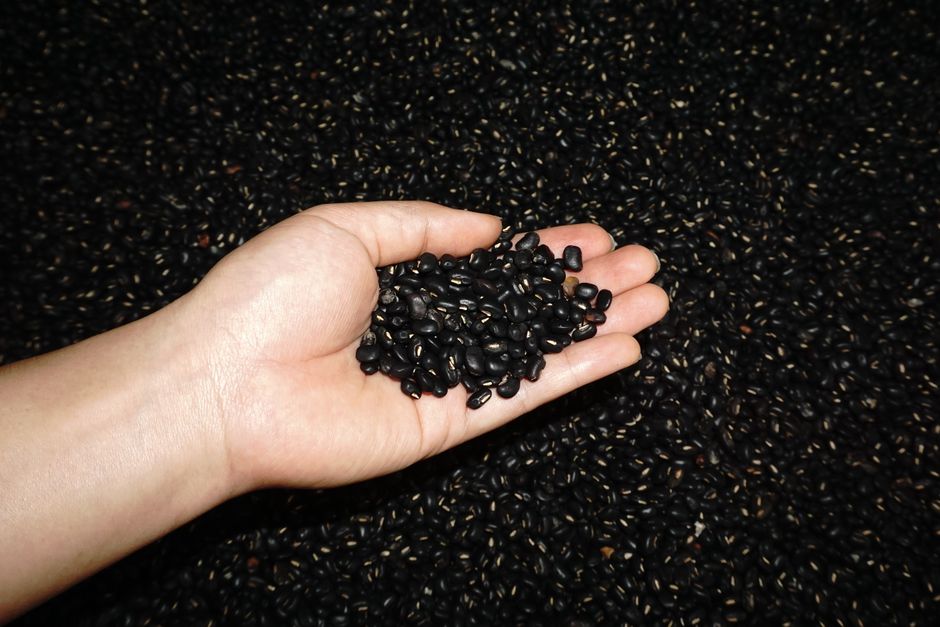
Yes, black beans break down into sugar. All digestible carbohydrates do. But the sugar they release is glucose, it enters your bloodstream slowly, and it arrives bundled with fiber and protein that change how your body responds. That difference matters far more than the word “sugar” suggests.
A half-cup of cooked black beans contains roughly 20 grams of carbohydrate, and most of that is starch and fiber. Your digestive system cannot absorb starch directly. It has to break it into single sugar units first. So the question isn’t whether black beans become sugar — they do — but how fast, how much, and what comes along with it.
How Does the Body Turn Black Beans Into Sugar?
Digestion starts before you swallow. Chewing breaks the beans apart, and an enzyme in saliva called amylase begins splitting starch molecules into smaller pieces. That work continues in the small intestine, where pancreatic amylase finishes the job.
The result is glucose, which gets absorbed through the intestinal wall into your bloodstream. From there, insulin helps move it into cells for energy. This is ordinary carbohydrate metabolism, and it happens with rice, bread, potatoes, and every other starch you eat.
What makes beans different is what happens alongside that process. Black beans are about 60 percent starch and roughly 25 percent fiber by dry weight, based on USDA nutrient data. A good portion of that starch is packaged inside plant cell walls that resist digestion. Your enzymes have to get through those walls first, and that takes time.
Some of the starch also escapes digestion entirely. It travels to the colon, where gut bacteria ferment it. This is called resistant starch, and it never becomes blood sugar at all. It feeds your microbiome instead. The amount varies depending on how the beans were cooked and whether they were cooled afterward — cooked and cooled beans form more resistant starch than freshly cooked ones.
Does Black Bean Break Down Into Sugar Slowly?
Yes, and this is the most important thing to understand about beans and blood sugar. Black beans sit low on the glycemic index, a scale that ranks foods by how quickly they raise blood glucose compared to pure glucose. Beans generally score in the low range, well below white rice, white bread, and most breakfast cereals.
Several factors slow the release:
- Fiber. Soluble fiber forms a gel-like substance in the gut that slows the movement of food and the absorption of glucose.
- Protein. Black beans provide a meaningful amount of plant protein, which slows stomach emptying.
- Intact cell structure. The starch is physically trapped inside plant cells, so enzymes reach it gradually.
- Enzyme inhibitors. Beans contain natural compounds that mildly interfere with starch-digesting enzymes.
The glycemic index is not a perfect tool. It measures a food eaten alone, and most people eat beans with other foods. Fat, acid, and other components of a meal change the response. Still, the direction is consistent: beans produce a gentler blood glucose rise than refined starches.
Are Black Beans Good for Blood Sugar Control?
Evidence supports including beans in a diet aimed at steady blood sugar. Studies have found that meals containing beans or lentils produce lower post-meal glucose responses than comparable meals built on refined grains. Some research suggests regular legume intake is associated with better long-term glycemic control, though the effect sizes in trials are modest and results vary across studies.
This does not make black beans a treatment for diabetes. No food is. What the evidence supports is that swapping refined carbohydrates for legumes is a reasonable dietary pattern for people managing blood glucose — a position consistent with general dietary guidance for diabetes that emphasizes fiber-rich carbohydrates over refined ones.
One clarification worth making: the total carbohydrate count still matters. A cup of black beans has more carbohydrate than a slice of white bread. The difference is the pace and the package. If you are counting carbohydrates for medical reasons, count the beans too. The fiber and slow release help, but they do not make the carbohydrate disappear.
What Happens to the Fiber in Black Beans?
Most of it passes through you. Humans lack the enzymes to break down fiber, so it moves through the small intestine largely intact and reaches the colon, where bacteria ferment it.
That fermentation produces short-chain fatty acids, including butyrate, which is the preferred fuel for the cells lining your colon. This is well-established physiology, not a marketing claim. It is one reason fiber-rich foods are associated with digestive health.
The fermentation also produces gas. That is normal and expected. Black beans contain oligosaccharides — complex sugars your body cannot digest — that gut bacteria ferment readily. If beans are new to you, starting with small portions and increasing gradually gives your gut bacteria time to adapt. Soaking dried beans and discarding the soaking water reduces some of these compounds. Canned beans are already cooked and generally easier to tolerate.
Do Black Beans Raise Blood Sugar the Same Way for Everyone?
No. Individual responses to the same food vary considerably. Age, physical activity, gut bacteria, how much you eat, what you eat with the beans, and whether you have diabetes all influence the blood glucose response.
Research using continuous glucose monitors has shown that two people can eat an identical meal and have meaningfully different glucose curves. This is an active area of study, and the reasons are not fully understood. It is a good reason to be skeptical of any single food being labeled universally “good” or “bad” for blood sugar.
What is consistent is the comparison. For most people, black beans produce a slower, smaller glucose rise than an equivalent amount of carbohydrate from white rice or white bread. That relative difference is the reliable part.
How Should You Eat Black Beans for Steady Blood Sugar?
Pair them with other foods rather than eating them alone. Beans combined with vegetables, healthy fats, and a moderate portion of protein make a meal that digests slowly and keeps you full.
Watch the added ingredients more than the beans themselves. Canned baked beans with added sugar, or black beans simmered in a sweet sauce, carry a very different carbohydrate load than plain cooked beans. Rinse canned black beans to reduce sodium if that matters for you.
Portion size still counts. A half-cup serving is a reasonable standard, and it delivers roughly 7 to 8 grams of fiber and 7 to 8 grams of protein alongside about 20 grams of carbohydrate. Those numbers come from standard USDA nutrient data for cooked black beans.
If you take medication for diabetes or check your blood glucose regularly, the most useful thing you can do is observe your own response. Test after a bean-based meal and compare it to a refined-carbohydrate meal of similar size. Your meter tells you more about your body than any index can.
Frequently Asked Questions
Do black beans turn into sugar in the body?
Yes. The starch in black beans is broken down into glucose during digestion and absorbed into the bloodstream. The process is slower than with refined starches because of the fiber, protein, and intact cell structure in the beans.
Are black beans bad for diabetics?
No, black beans are generally considered a good carbohydrate choice for people with diabetes because they raise blood glucose slowly. Portion size still matters, and anyone counting carbohydrates should include beans in that count.
How much fiber is in a half cup of black beans?
About 7 to 8 grams of fiber, according to USDA nutrient data for cooked black beans. That same half-cup provides roughly 7 to 8 grams of protein and about 20 grams of carbohydrate.
Do black beans spike blood sugar?
They generally do not cause the sharp spikes associated with refined starches like white bread or white rice. Individual responses vary, so checking your own blood glucose after eating them is the most reliable guide.
