
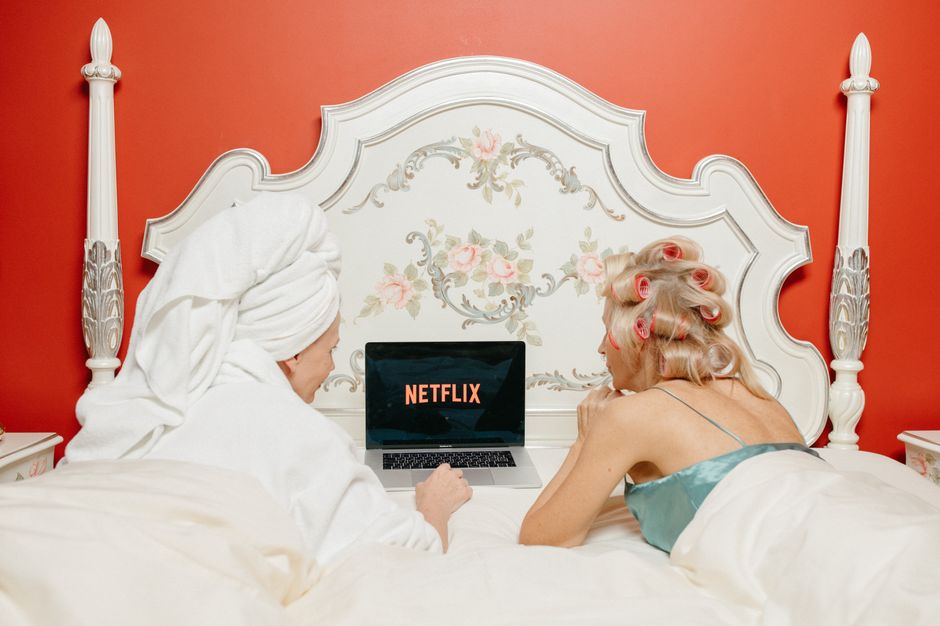
Binge watching and depression are linked in study after study. But the direction of that link is where things get interesting. The evidence suggests it runs both ways: heavy binge watching can worsen mood over time, and people who are already depressed often binge watch as a way to cope. It is rarely a one-way street.
That two-way relationship matters. It means binge watching is not simply a harmless habit that reflects how you already feel. It can also feed the very thing it is being used to escape.
Does Binge Watching Cause Depression Or Just Reflect It?
Both appear to be true, and the research supports each direction.
When researchers follow people over time, they find that heavy binge watching predicts later depressive symptoms, even after accounting for how depressed those people were at the start. That pattern points toward a contributing cause, not just a mirror. At the same time, people who are already struggling with low mood report more binge watching than those who are not. So the behavior reflects an existing state as well.
The most accurate way to think about it is a loop. Low mood leads to long viewing sessions. Long viewing sessions, especially late at night and in place of other activity, can deepen fatigue, isolation, and poor sleep. Those things then worsen mood. The cycle reinforces itself.
What the research does not support is the idea that everyone who binge watches will become depressed. Most people who watch several episodes in a row are not depressed. The risk grows with the pattern — how often, how late, and what it replaces.
What Counts As Binge Watching?
The common definition is watching multiple episodes of the same show in a single sitting. Researchers often use a threshold of two to four or more episodes back to back, though definitions vary across studies.
Streaming changed the scale of this. When a full season drops at once, the structure that used to pace viewing — one episode per week — disappears. The choice to stop now rests entirely with the viewer.
Frequency is the more useful question than any single session. Someone who watches four episodes on a rare free Saturday is in a different category from someone who does it most nights and sacrifices sleep to do it. It is the repeated pattern, not the occasional long evening, that shows up in the research on mood.
How Binge Watching Affects Mood and Sleep
The strongest and best-understood pathway runs through sleep. Watching late pushes bedtime later. The light from screens can delay the body’s natural sleep signals. And the mental arousal from a tense or gripping show makes it harder to fall asleep once you stop.
Sleep loss is not a minor side effect. Short and poor sleep is consistently linked to lower mood, irritability, and reduced stress tolerance. Over weeks, that adds up.
There is also a displacement effect. Time spent watching is time not spent on things that protect mood — moving your body, seeing people, getting outside, finishing tasks that matter to you. When binge watching fills those hours, the activities that usually steady mood get squeezed out.
A third pathway is social. Watching alone, night after night, can shrink real-world contact. Humans are social, and isolation is a well-documented risk factor for depression.
One clarification worth making: the content itself matters less than the pattern. A light comedy watched until 3 a.m. can disrupt sleep just as much as a dark drama. The timing and the duration do more damage than the genre.
Why Depression Can Lead to Binge Watching
Depression drains energy and motivation. Things that once felt rewarding — exercise, hobbies, seeing friends — can lose their pull. This is a core feature of the condition, not a character flaw.
Streaming fits neatly into that state. It requires almost no effort. It offers distraction from painful thoughts. And for a while, it can feel soothing.
There is a catch. Depression often comes with anhedonia, the reduced ability to feel pleasure. That means the relief from binge watching is often shallow and short-lived. The show ends, the mood returns, and the underlying problem is still there — now with less sleep and less time spent on anything that might actually help.
This is why binge watching in depression tends to function as avoidance rather than genuine rest. It numbs for a while without restoring anything.
Who Is Most at Risk?
Not everyone who binge watches is equally vulnerable. Certain factors raise the odds that the habit and mood problems reinforce each other.
- People who already have symptoms of depression or anxiety
- People who watch late at night and cut into sleep
- People who watch mostly alone and have limited social contact
- People who use watching to escape difficult feelings rather than to enjoy a show
- Younger adults, who tend to binge watch more and may be more sensitive to its effects
The key word is vulnerability. For someone with a steady mood, good sleep, and strong relationships, an occasional binge is unlikely to move the needle. For someone already struggling, the same habit can become part of the problem.
How to Tell If It Is a Problem for You
The question is not whether you binge watch. It is whether it is costing you something.
Some signs worth paying attention to:
- You feel worse, not better, after a long session
- You are regularly losing sleep to keep watching
- You are skipping things you value — people, exercise, work, meals
- You watch to escape feelings rather than to enjoy a story
- You feel a sense of regret or emptiness when you stop
If several of these sound familiar, the pattern is worth taking seriously. That does not mean you are depressed. It means the habit may be working against you.
What Actually Helps
If binge watching and low mood are tangled together, the fix is usually not to quit watching entirely. It is to break the parts of the loop that cause harm.
Sleep is the highest-value place to start. Protecting a consistent bedtime and keeping screens out of the last stretch before sleep addresses the most direct pathway between watching and mood.
Setting a limit before you start also helps. Deciding on an episode count in advance is easier than deciding in the moment, when the next episode is already queued.
Rebuilding the activities that binge watching displaced matters too. Movement, daylight, and contact with other people are among the most reliable supports for mood.
And if low mood is persistent — lasting weeks, affecting sleep, appetite, energy, or interest in life — that is a reason to talk to a doctor or mental health professional. Binge watching may be a symptom worth mentioning, but it is not the root issue, and it is not something to manage alone.
If you are having thoughts of harming yourself, reach out right away. In the US, you can call or text 988 to reach the Suicide and Crisis Lifeline at any time.
Frequently Asked Questions
Does binge watching cause depression?
Heavy, frequent binge watching is linked to later increases in depressive symptoms in follow-up studies, suggesting it can contribute. It is one factor among many, not a sole cause.
Can depression make you binge watch?
Yes. Depression reduces energy and motivation and often comes with a reduced ability to feel pleasure, which makes low-effort distraction like streaming appealing. This is why the relationship runs in both directions.
How many episodes count as binge watching?
Researchers commonly define it as watching two to four or more episodes of the same show in one sitting. Definitions vary, and frequency matters more than any single session.
Is it bad to binge watch every night?
Watching most nights becomes a concern when it cuts into sleep, replaces activities that support mood, or is used mainly to escape difficult feelings. Occasional long sessions are unlikely to cause harm on their own.
