
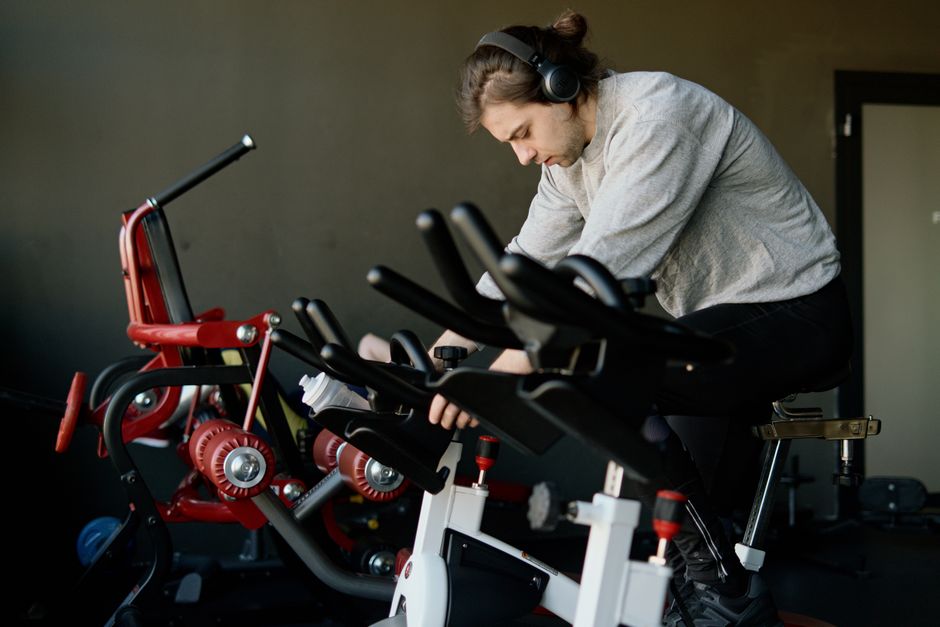
Yes, cycling builds muscle, but not in the way lifting weights does. The muscles that do the work are mostly in your legs and hips, and the amount of growth you see depends heavily on how hard you push, how often you ride, and what kind of riding you do. A gentle daily commute and an all-out sprint session produce very different bodies.
If you are picturing the upper body of a competitive track cyclist or the sculpted calves of a climber, those results come from years of structured training, not from casual riding. This article explains which muscles cycling actually develops, how much growth is realistic, and where the limits are.
Does Biking Build Muscle?
Cycling builds muscle in your lower body through repeated resistance. Every pedal stroke asks your leg muscles to push against a force, and that repeated demand is what drives adaptation.
The key variable is intensity. When you pedal hard enough that your muscles work near their limit, you create the mechanical tension and metabolic stress that signal muscle growth. When you spin easily, your muscles adapt mainly by getting better at using oxygen and producing less fatigue — an endurance change, not a size change.
This is why two cyclists can ride the same number of miles and end up with different legs. One rides at a conversational pace. The other pushes big gears up hills or sprints out of corners. The second rider builds more muscle.
There is an important distinction here. Cycling is not a great tool for building maximum muscle size. It is a good tool for building muscular endurance and moderate strength in the legs. If your main goal is to add visible muscle mass, resistance training with progressively heavier loads will get you there faster. Cycling can support that goal, but it is not the most efficient path to it.
Which Muscles Does Cycling Work?
Cycling works a specific set of muscles in a specific pattern. The movement is a closed-loop push, not a lift, and that shapes which muscles grow.
- Quadriceps — the front of your thigh. These do the most work during the downstroke and grow the most from hard riding.
- Glutes — your buttocks. These extend your hip and contribute heavily when you push hard or stand out of the saddle.
- Hamstrings — the back of your thigh. These help pull the pedal through the bottom of the stroke.
- Calves — the lower leg. These stabilize your ankle and push through the bottom of each stroke.
- Hip flexors — these lift the pedal on the upstroke, though they contribute less force than the pushing muscles.
Your core and lower back work as stabilizers, especially when you ride hard or climb out of the saddle. They hold your torso steady so your legs can push. That is real work, but it is not enough to build a visible six-pack on its own.
Your upper body does very little. Your arms and chest mostly hold the handlebars. This is why serious cyclists often have strong legs and comparatively modest upper bodies. It is a direct result of the sport’s demands, not a training oversight.
Does Biking Build Muscle in Your Legs or Just Endurance?
Both, and the balance between them depends on how you train. This is the part most people get wrong.
Muscle growth and endurance are different adaptations driven by different signals. Heavy resistance with relatively few repetitions tends to favor growth. Long, moderate efforts tend to favor endurance and efficiency. Cycling can sit anywhere on that spectrum depending on how you ride.
Here is where things get practical:
- Easy, steady rides mostly build endurance and cardiovascular fitness, with limited muscle growth.
- Hard efforts in a big gear, hill climbs, and sprints create more muscle tension and can build noticeable leg muscle over time.
- Standing climbs and low-cadence grinding put more load on the quads and glutes than spinning in an easy gear.
One clarification worth knowing: muscle growth from cycling tends to plateau. Once your legs adapt to a given workload, the same ride stops providing a strong growth signal. To keep building, you generally need to increase intensity, add resistance, or change the stimulus. That is why cyclists who ride the same route at the same pace for years often look the same.
Can You Build Muscle With Indoor Cycling?
Yes. Indoor cycling can build leg muscle, and in some ways it is easier to control than outdoor riding.
The advantage of a stationary bike is that you can dial in resistance precisely and hold a hard effort without traffic, weather, or terrain interfering. High-resistance intervals on a stationary bike create the sustained muscle tension that supports growth.
The catch is that many group cycling classes are built around high cadence and low resistance. That style is excellent for cardiovascular fitness and calorie burn, but it provides less of a muscle-building stimulus than heavy resistance work. If muscle growth is your goal, the resistance knob matters more than the playlist.
Some research suggests that combining cycling with strength training produces better muscle and strength outcomes than cycling alone. The two activities complement each other rather than compete. If you want both endurance and muscle, doing both is a reasonable approach.
Does Biking Build Muscle Better Than Running or Walking?
Cycling builds more leg muscle than walking and roughly comparable leg muscle to running, with one important difference: cycling is lower impact.
Running produces higher forces through your legs and generates more muscle damage, which can drive adaptation. But it also loads your joints and connective tissue far more. Cycling lets you work your legs hard with much less pounding, which matters if your knees, hips, or back are sensitive.
Walking is gentle and accessible, but the forces are low. It supports general health and cardiovascular fitness well. It is not a strong muscle-building stimulus for most people.
Here is a simple comparison of how these activities tend to affect leg muscle:
| Activity | Leg muscle growth | Joint impact |
|---|---|---|
| Cycling (hard, high resistance) | Moderate | Low |
| Cycling (easy, steady) | Low | Low |
| Running | Moderate | High |
| Walking | Low | Low |
| Weight training | High | Variable |
These are general patterns, not guarantees. Individual results vary with genetics, training history, nutrition, and how hard you actually push.
How Do You Build More Muscle From Cycling?
You build more muscle from cycling by increasing resistance and pushing closer to your limits. Volume alone will not do it.
Several approaches tend to work better than casual riding:
- Ride in a harder gear at a lower cadence, which increases the force each pedal stroke requires.
- Add hill repeats or high-resistance intervals.
- Include sprint efforts that recruit more muscle fibers.
- Progress the difficulty over time instead of repeating the same easy ride.
- Pair cycling with resistance training for the best muscle-building results.
Nutrition and recovery matter as much as the riding. Muscle is built between sessions, not during them. Adequate protein and enough sleep support the repair process. Without them, hard training does not translate into growth.
Be realistic about the ceiling. Cycling can give you strong, defined legs. It will not give you a bodybuilder’s lower body on its own. That is not a flaw in the sport. It is simply what the training stimulus produces.
Frequently Asked Questions
Does biking build muscle in your legs?
Yes, cycling builds muscle primarily in your quads, glutes, hamstrings, and calves. The amount of growth depends on resistance and intensity, not just distance.
Can you build muscle just by cycling?
You can build moderate leg muscle through cycling alone, especially with hard efforts and high resistance. For maximum muscle size, resistance training is more effective than cycling by itself.
Does biking build upper body muscle?
No, cycling does very little for your upper body. Your arms and chest mainly hold the handlebars, so they get minimal muscle-building stimulus.
How long does it take to build muscle from cycling?
Noticeable changes typically take several weeks to a few months of consistent hard riding. The timeline varies widely with intensity, genetics, nutrition, and training history.
