
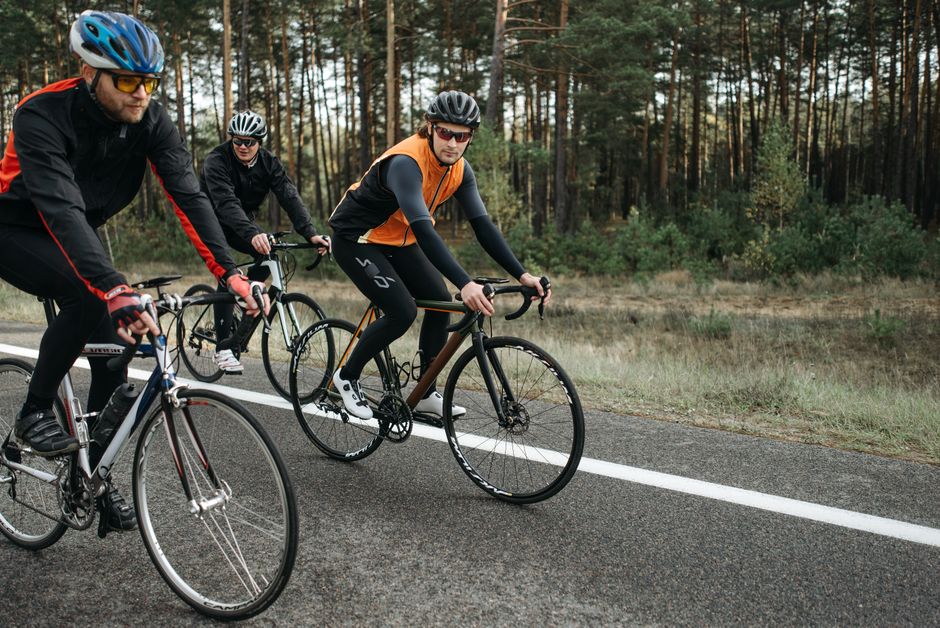
Bike riding burns calories, and burning more calories than you eat leads to fat loss over time. But no exercise can target fat on your stomach specifically. Where your body loses fat first is largely determined by genetics, hormones, and sex — not by which muscle group you work.
That is the honest answer to a question a lot of people ask. Cycling is a genuinely effective way to burn calories and improve heart and lung fitness. It just does not work the way many people hope when they picture a flatter stomach.
Does Bike Riding Burn Stomach Fat?
Yes, cycling can help reduce body fat, including fat stored around the abdomen — but only as part of an overall calorie deficit. The bike is a tool for burning energy, not a spot-reduction device.
Here is what actually happens. When you ride, your working muscles need fuel. Your body draws on a mix of stored carbohydrate (glycogen) and fat, along with some fat from within the muscle itself. Over time, if you consistently burn more energy than you take in, your body pulls from its fat stores to make up the difference. Some of that fat comes from the belly. Some comes from the hips, thighs, back, or face.
You do not get to choose the order. This is one of the most persistent myths in fitness — the idea that working a muscle burns the fat sitting on top of it. Research has tested this idea repeatedly, and the results do not support it. Exercising your abs does not preferentially strip fat from your midsection any more than chewing gum slims your jaw.
What cycling does do is create the conditions for fat loss: it burns a meaningful number of calories, it builds lower-body muscle, and it improves cardiovascular fitness. Those things matter. They just do not guarantee your stomach is where the change shows up first.
Why Can’t You Target Belly Fat With Exercise?
Fat cells release fat in a pattern set largely by your biology, not your workout. This is why two people doing identical cycling programs can end up with very different midsections.
When your body needs energy from fat, hormones signal fat cells to break down stored triglycerides and release them into the bloodstream. Blood then carries those fatty acids to muscles that need fuel. The fat cells that respond most readily are determined by things like:
- Genetics — where you tend to store fat and where you tend to lose it first runs in families
- Sex hormones — estrogen and testosterone influence fat distribution differently in men and women
- Age — fat storage patterns shift over decades, often moving toward the abdomen
- Overall energy balance — the size of your calorie deficit matters more than which exercise you pick
Men tend to store more fat in the abdominal area, while premenopausal women tend to store more in the hips and thighs. After menopause, fat distribution in women often shifts toward the abdomen. These are well-documented patterns, not personal failings.
The practical takeaway: cycling can reduce total body fat, and reducing total body fat usually reduces belly fat too. But you cannot speed up the process at your stomach by adding crunches or by choosing a particular bike.
How Many Calories Does Cycling Actually Burn?
Cycling burns a wide range of calories depending on your body weight, pace, terrain, and effort. A casual ride and a hard interval session are very different workouts.
Rather than quote a single number, it helps to understand what drives the burn. Heavier riders burn more calories at the same pace. Faster riding burns more than slow riding. Riding uphill or into wind burns more than flat, sheltered riding. And a ride where you are breathing hard and sweating will generally burn more than a relaxed cruise of the same duration.
If you want a personalized estimate, a heart rate monitor or power meter gives a far better picture than any general chart. Fitness trackers tend to overestimate calorie burn for cycling, sometimes substantially, so treat their numbers as rough guides.
For fat loss, the total weekly energy deficit matters more than any single ride. A few moderate rides plus a modest reduction in food intake will generally outperform one exhausting weekend ride followed by six days off the bike.





What Kind of Cycling Helps Most for Fat Loss?
Consistency beats intensity for most people. The best cycling routine is the one you will actually keep doing for months, not the one that leaves you too sore to ride again for a week.
Three broad approaches are worth knowing about:
- Steady rides — moderate pace for 30 to 60 minutes. Easy to recover from, easy to fit into a week. Good for building a base.
- Interval rides — short bursts of hard effort with easier recovery between. These burn more calories per minute and can improve fitness efficiently, but they are more demanding.
- Commuting or errand riding — replacing car trips with bike trips adds activity without carving out separate exercise time. This is often the most sustainable option.
There is a common belief that low-intensity riding burns a higher percentage of fat and is therefore better for fat loss. The percentage is real, but it is misleading. What matters for fat loss is total calories burned and the overall energy deficit, not the proportion of fat used during the ride. A harder ride that burns more total calories can produce more fat loss even though it uses a lower percentage of fat at the time.
Strength training two or three times a week alongside cycling is worth considering. It helps preserve muscle while you lose fat, and muscle tissue supports a slightly higher resting energy expenditure. The effect is modest, but it adds up over time.
Does Diet Matter More Than Cycling for Belly Fat?
Diet generally matters more than exercise for fat loss, and this is one of the least popular facts in fitness. It is far easier to eat 500 fewer calories than to burn an extra 500 calories on a bike.
That does not make cycling pointless. It makes it one half of the equation. Exercise helps create the deficit, protects muscle, improves insulin sensitivity, and supports heart health independent of weight. But a ride followed by a large post-ride meal can easily wipe out the calorie burn.
For reducing belly fat specifically, the evidence points to a few things that tend to matter:
- A sustained calorie deficit — the single biggest factor
- Adequate protein — helps preserve muscle during weight loss
- Limiting added sugar and refined carbohydrates — associated with abdominal fat storage in some studies
- Sleep and stress management — poor sleep and chronic stress are linked to higher abdominal fat
- Moderate alcohol intake — heavy drinking is consistently linked to belly fat
None of these are dramatic. None of them are quick. But they are what the evidence supports, and they work alongside cycling rather than instead of it.
What About Belly Fat That Won’t Budge?
Some belly fat is stubborn for reasons that have nothing to do with effort. Two things are worth separating here: subcutaneous fat, which sits under the skin, and visceral fat, which wraps around the internal organs.
Visceral fat is the more concerning type. It is linked to higher risk of heart disease, type 2 diabetes, and other metabolic conditions. The good news is that visceral fat tends to respond well to regular aerobic exercise and calorie reduction — often better than subcutaneous fat does. Cycling is a reasonable choice for this, since it is aerobic and easy to sustain.
If your waist is expanding despite consistent effort, or if you have other symptoms like fatigue, thirst, or changes in blood pressure, that is worth a conversation with a doctor. A small number of medical conditions can drive abdominal weight gain, and those need proper evaluation rather than more miles on the bike.
For most people, the honest summary is this: cycling helps, but it is one input among several. Patience, consistency, and attention to food intake will do more for your stomach than any specific bike workout.
Frequently Asked Questions
Does bike riding burn stomach fat specifically?
No — no exercise can target fat from a specific area. Cycling burns calories and can reduce total body fat, which usually includes belly fat, but where you lose fat first is set by genetics and hormones.
How long does it take to see belly fat loss from cycling?
There is no fixed timeline, and anyone promising one is guessing. Fat loss depends on how large and consistent your calorie deficit is, not on the bike itself.
Is cycling better than running for belly fat?
Neither is clearly better for belly fat — both burn calories and both reduce total body fat when paired with a calorie deficit. The better choice is the one you can do consistently without injury.
Can I lose belly fat by cycling without changing my diet?
It is possible but unlikely to be dramatic, because it is much easier to eat extra calories than to burn them off. Most people see better results combining cycling with a modest reduction in food intake.
