
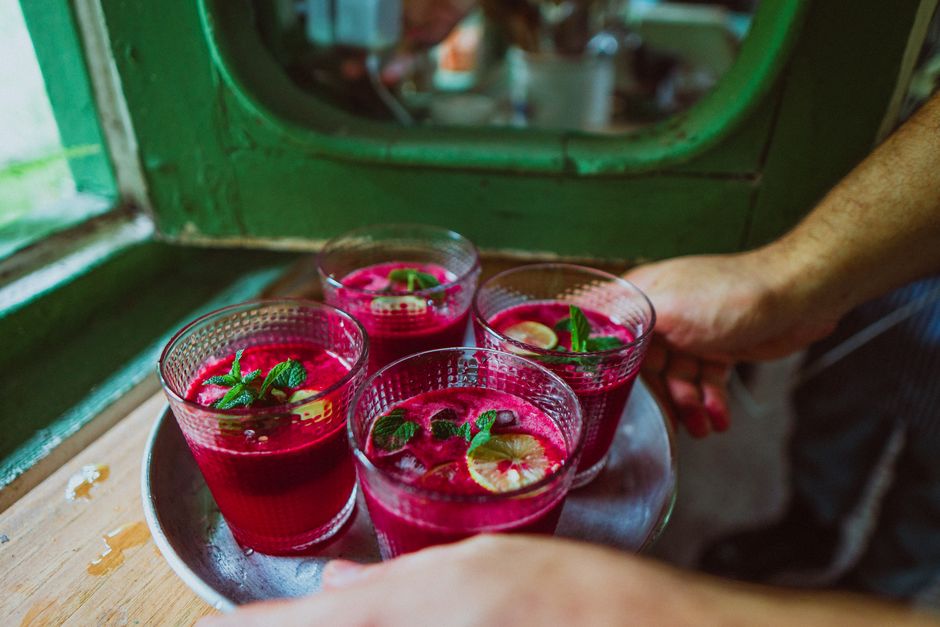
Yes, beet juice can turn your poop red or pink. The color comes from pigments called betalains, which are naturally present in beets and pass through your digestive tract largely intact. Seeing red in the bowl after drinking beet juice is usually a harmless food effect, not bleeding.
That said, red stool has many possible causes. Some are harmless. A few are medical emergencies. Knowing how to tell the difference matters more than the color itself.
Why Does Beet Juice Turn Poop Red?
Beets get their deep crimson color from betalains, a family of water-soluble pigments. The most studied of these is betanin, which gives beets and beet juice their characteristic red-purple hue.
Your body does not fully break betanin down. A portion of it travels through the stomach and intestines without being absorbed, and it exits in your stool still carrying its color. This is why the effect can show up even when you feel completely fine.
The same pigments can also tint urine pink or red. When beet pigments show up in urine, it is sometimes called beeturia. It is not a sign of anything wrong on its own.
How much color you see depends on several things. The amount of beet juice you drank, how concentrated it was, and how quickly your digestive system moved it through all play a role. Some people notice a strong color change after a single glass. Others drink the same amount and see nothing unusual.
Does Beet Juice Make Your Poop Red in Everyone?
No. The effect is real but not universal, and researchers do not fully understand why some people are more prone to it than others.
One factor that has been studied is iron. Some research suggests that people with higher iron levels or certain iron-related conditions may be more likely to absorb beet pigments in a way that shows up in urine. The evidence on stool color specifically is less clear.
Stomach acid may also matter. Betanin is somewhat unstable in highly acidic environments, so how long it stays in the stomach could affect how much pigment survives the trip. This is a reasonable explanation based on how the pigment behaves in the lab, but it has not been confirmed as the main reason for differences between people.
What is clear is that the effect is not dangerous. If your stool turns red after beet juice and returns to normal within a day or two, that pattern fits a food-related cause.
How Can You Tell If Red Poop Is From Beets or Something Else?
Timing and context are your best clues. Food-related color changes follow a predictable pattern. Blood in stool often does not.
Here is what tends to point toward beets:
- The color appeared within a day or so of drinking beet juice or eating beets
- The stool itself is a normal consistency
- You have no pain, cramping, or feeling of urgency
- The color fades back to normal within a day or two once you stop
Here is what should get your attention:
- Red color that appears without any recent beet or red food intake
- Bright red streaks mixed into or coating the stool
- Black, tarry stool, which can point to bleeding higher up in the digestive tract
- Pain, dizziness, weakness, or a racing heart alongside the color change
- Red stool that keeps showing up over several days
Fresh red blood usually means bleeding somewhere in the lower digestive tract, such as the rectum or colon. Black tarry stool usually means bleeding higher up, where blood has time to be digested. Neither pattern is explained by beet juice.
One detail that trips people up: the color from beets is often described as pink, magenta, or purple-red. Blood tends to look more like a true red or maroon. This is not a reliable rule on its own, but it can help you think through what you are seeing.
What Other Foods and Drinks Can Turn Poop Red?
Beets are not the only culprit. Several foods and drinks can produce red or pink stool, and knowing the list can save you a scare.
- Tomato products in large amounts, including juice and sauce
- Red gelatin desserts and other foods colored with red dye
- Red licorice and some candies
- Cherries, cranberries, and pomegranate in large servings
- Red sports drinks and fruit punches with artificial coloring
- Blackberries and blueberries, which can sometimes produce dark stool
Some medications and supplements can also change stool color. Iron supplements commonly turn stool black, not red. Certain antibiotics and antacids can affect color too.
If you recently ate or drank something on this list, that is a reasonable first explanation. If you did not, the picture changes.
When Should You Take Red Poop Seriously?
Red stool that is not explained by food deserves medical attention. This is not a reason to panic, but it is a reason to get an answer.
Seek care promptly if you have red or black stool along with any of these:
- Dizziness, lightheadedness, or fainting
- A rapid heartbeat or shortness of breath
- Severe or worsening abdominal pain
- Vomiting blood or material that looks like coffee grounds
- Stool that is black and tarry
These signs can point to significant blood loss, which needs urgent evaluation. Do not wait to see if it resolves on its own.
For red stool without those warning signs, a call to your doctor is still reasonable, especially if it persists beyond a day or two or happens more than once. Common causes of blood in stool include hemorrhoids, anal fissures, and inflammation in the digestive tract. Some of these are minor. Others need treatment. A doctor can help sort out which is which.
Age matters here too. Adults over 45 are generally advised to stay current with colorectal cancer screening, and any new rectal bleeding should be discussed with a clinician rather than assumed to be benign. Screening recommendations have evolved in recent years, so it is worth confirming current guidance with your doctor.
Is Beet Juice Safe to Drink?
For most people, beet juice is a safe food. It has been part of human diets for centuries.
One thing worth knowing: beets are high in oxalates, natural compounds that can contribute to kidney stones in people who are prone to them. If you have a history of kidney stones, it is worth asking your doctor whether beet juice fits your diet.
Beet juice is also high in natural sugars. If you have diabetes or are watching your blood sugar, the carbohydrate content is something to factor in.
Beet juice can affect blood pressure. Some studies suggest that dietary nitrates in beet juice may modestly lower blood pressure. This effect is generally small and short-lived, and it is not a replacement for blood pressure medication. If you take blood pressure drugs, talk to your doctor before making beet juice a regular part of your routine.
Beet juice can also interact with certain medications in ways that are not fully understood. If you take prescription drugs, a quick check with your pharmacist is a reasonable step.
Does the Color Always Mean Something Is Wrong?
No. Color changes in stool are common and usually harmless. What you eat, what you drink, and even how fast your gut moves can all shift the color.
The key is pattern. A one-time color change after beet juice, with no other symptoms, is not a red flag. A color change that shows up without a clear cause, sticks around, or comes with other symptoms is worth investigating.
Your gut is not a perfect filter. It lets some things through, holds onto others, and changes what it does based on what you put in it. Beet pigments are one of the things it lets through. That is normal biology, not a malfunction.
Frequently Asked Questions
Does beet juice make your poop red?
Yes, beet juice can turn stool red or pink because betalain pigments pass through the digestive tract without being fully broken down. The effect is harmless and usually fades within a day or two after you stop drinking it.
How long after drinking beet juice does poop turn red?
Color changes typically appear within several hours to a day after drinking beet juice, depending on how fast your digestive system moves. The color usually returns to normal within a day or two once you stop.
How can I tell if red poop is from beets or blood?
Food-related color usually appears shortly after eating beets, comes with no other symptoms, and clears up within a day or two. Blood in stool often shows up without a clear food cause and may come with pain, dizziness, or black tarry stool, which needs medical attention.
Is red poop from beet juice dangerous?
No, red stool caused by beet juice is not dangerous and does not need treatment. If the color appears without a food explanation, lasts more than a couple of days, or comes with other symptoms, see a doctor.
