
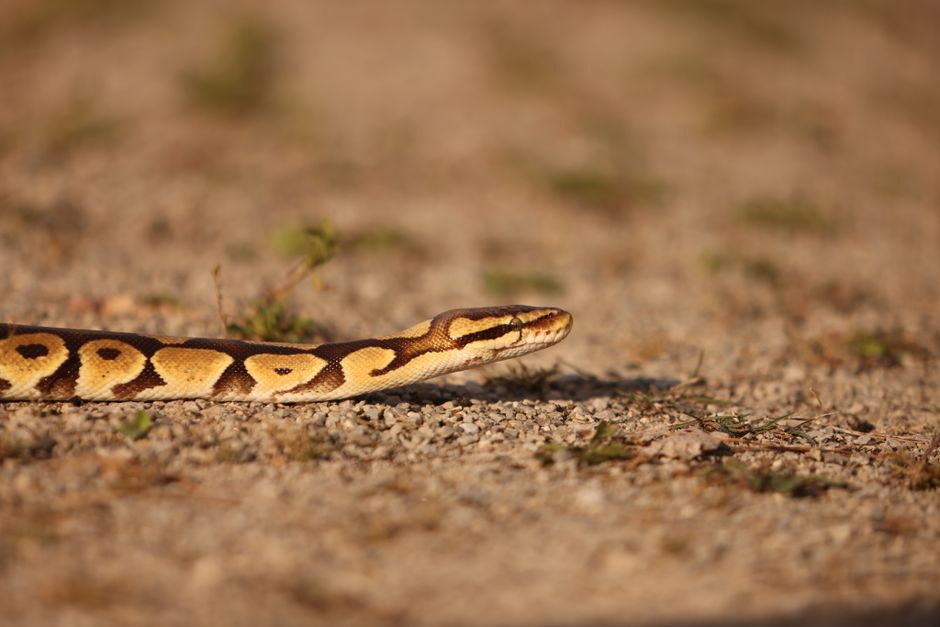
Ball pythons do have teeth, but they are nothing like human teeth or even the fangs of a venomous snake. A ball python has rows of small, sharp, backward-curving teeth set into its upper and lower jaws, and they are built for one job: gripping prey so it cannot escape. These snakes are non-venomous constrictors, so their teeth deliver no venom. They hold, they do not inject.
That single fact answers the main question, but the details matter. How many teeth a ball python has, what happens when one breaks, whether a bite hurts, and why a pet snake might lose teeth are all things owners and curious readers want to know. This guide covers the anatomy, the function, and the practical realities of ball python teeth.
Does Ball Pythons Have Teeth and How Many Do They Have?
A ball python typically has around 100 to 150 teeth spread across its jaws at any given time. The exact number varies from snake to snake, and it changes over the animal’s life because teeth are shed and replaced continuously.
Unlike mammals, which grow one set of baby teeth and then one set of adult teeth, snakes are polyphyodont. That means they replace their teeth throughout their entire lives. A tooth that wears down or breaks loose is pushed out by a replacement tooth forming behind it. This is a normal, ongoing process, not a sign of illness.
The teeth sit in rows along the upper jaw, the lower jaw, and the roof of the mouth. They are small, often only a few millimeters long, and they point backward toward the throat. That backward angle is the key design feature. Once prey is caught, the direction of the teeth makes it very hard for the animal to slide back out of the mouth.
What Kind of Teeth Does a Ball Python Have?
Ball python teeth are called aglyphous teeth, which means they have no grooves or hollow channels for venom. This separates them from the fangs of venomous species. A rattlesnake or cobra has specialized fangs connected to venom glands. A ball python has ordinary, solid teeth with no venom delivery system at all.
They are also not built for tearing or chewing. Mammal teeth come in different shapes for cutting, grinding, and crushing. Snake teeth are mostly uniform, thin, and slightly curved. Their purpose is anchorage.
Here is a comparison of how ball python teeth differ from the teeth of a venomous snake:
| Feature | Ball Python | Venomous Snake (e.g., rattlesnake) |
|---|---|---|
| Venom | None | Yes, delivered through fangs |
| Tooth type | Solid, no grooves (aglyphous) | Hollow or grooved fangs |
| Main function | Gripping and holding prey | Injecting venom, then gripping |
| Replacement | Continuous throughout life | Continuous throughout life |
| Relative size | Small, a few millimeters | Fangs can be much longer |
Why Does a Ball Python Have Teeth If It Constricts?
This is a fair question. If a ball python kills by squeezing, why does it need teeth at all? The answer is that constriction and teeth work together, and the teeth come first.
When a ball python strikes, it grabs the prey with its jaws and teeth to get a secure hold. Only then does it wrap its body around the animal and constrict. Without teeth, the prey could pull free during those first critical seconds before the coils tighten. The teeth are the anchor that makes constriction possible.
There is a common myth that constrictors crush their prey and break its bones. That is not what happens. Research on constrictor snakes indicates that the pressure of the coils stops blood flow, which causes the prey to lose consciousness quickly. The teeth simply hold the animal in place while the coils do their work.
After the prey is dead, the snake does not chew. It walks its jaws forward over the food, alternating the left and right sides of its mouth to pull the meal inward. The teeth help ratchet the prey down the throat. This is why snakes can swallow animals wider than their own heads.





Does a Ball Python Bite Hurt?
A ball python bite is usually minor. The teeth are small and thin, so a bite often feels more like a sharp scratch than a deep wound. Many bites do not even break the skin, and those that do tend to produce small puncture marks rather than a large tear.
Two things make ball python bites more tolerable than people expect. First, there is no venom, so there is no toxic reaction to worry about. Second, ball pythons are famously docile. They are one of the most commonly kept pet snakes precisely because they tend to be calm and rarely bite.
When a ball python does bite, it is almost always a feeding response or a defensive reaction. A hungry snake may strike at a warm hand that smells like prey. A frightened or stressed snake may bite to defend itself. Handling a snake gently and using tongs to offer food reduces the chance of a mistaken bite.
If a bite does happen and the skin is broken, the general approach is the same as for any small animal bite: wash the area with soap and water, apply basic first aid, and watch for signs of infection. Anyone with a compromised immune system, or anyone who develops redness, swelling, or fever, should seek medical care. Animal bites can introduce bacteria, and this is true of snakes as well as cats and dogs.
Can a Ball Python Lose Its Teeth?
Yes, and it is usually not a problem. Because ball pythons replace their teeth continuously, a lost or broken tooth is typically regrown. A snake that loses a tooth while eating, or during a shed, will normally grow a replacement.
That said, repeated tooth loss or damage to the jaw can sometimes point to an underlying issue. Problems with the mouth, such as infections or retained shed skin around the gums, can affect the teeth and jaw. If an owner notices swelling, discharge, a persistently open mouth, or a snake that refuses to eat for an extended period, a veterinarian who works with reptiles is the right person to assess it.
It is worth noting that a snake’s teeth are not the same as the fangs people picture when they think of snakes. A ball python cannot deliver venom, and its teeth cannot cause the kind of injury a venomous snake can. The fear many people carry about snake teeth is largely based on venomous species, not on ball pythons.
How Do Ball Python Teeth Compare to Other Snake Teeth?
Snake teeth fall into a few broad categories, and the ball python sits in the simplest one.
- Aglyphous: Solid teeth with no venom grooves. Ball pythons, pythons, and boas fall here.
- Opisthoglyphous: Rear-fanged snakes with grooved teeth near the back of the mouth. Some deliver mild venom.
- Proteroglyphous: Front-fanged snakes with fixed fangs, such as cobras.
- Solenoglyphous: Front-fanged snakes with fangs that fold back when not in use, such as rattlesnakes and vipers.
The ball python’s aglyphous teeth are the least specialized of the group. They are not designed to inject anything. They are designed to grip, hold, and help move food down the throat. For a constrictor, that is all they need to do.
Understanding this helps put the whole topic in perspective. The question of whether ball pythons have teeth is settled: they do, and they have many. What matters more is what those teeth are for and what they are not. They are tools for feeding, not weapons for envenomation, and they are replaced throughout the snake’s life without any need for concern in a healthy animal.
Frequently Asked Questions
Does a ball python have teeth?
Yes, a ball python has teeth. It has roughly 100 to 150 small, backward-curving teeth set in its upper and lower jaws.
Are ball python teeth venomous?
No, ball python teeth are not venomous. They are solid teeth with no venom grooves or glands, and the snake kills by constriction rather than venom.
How many teeth does a ball python have?
A ball python usually has around 100 to 150 teeth at any one time. The exact number varies between individual snakes and changes as teeth are shed and replaced.
Do ball python bites hurt?
A ball python bite is usually minor and often feels like a sharp scratch. The teeth are small and thin, and because there is no venom, the main concern is basic wound care and watching for infection.
