
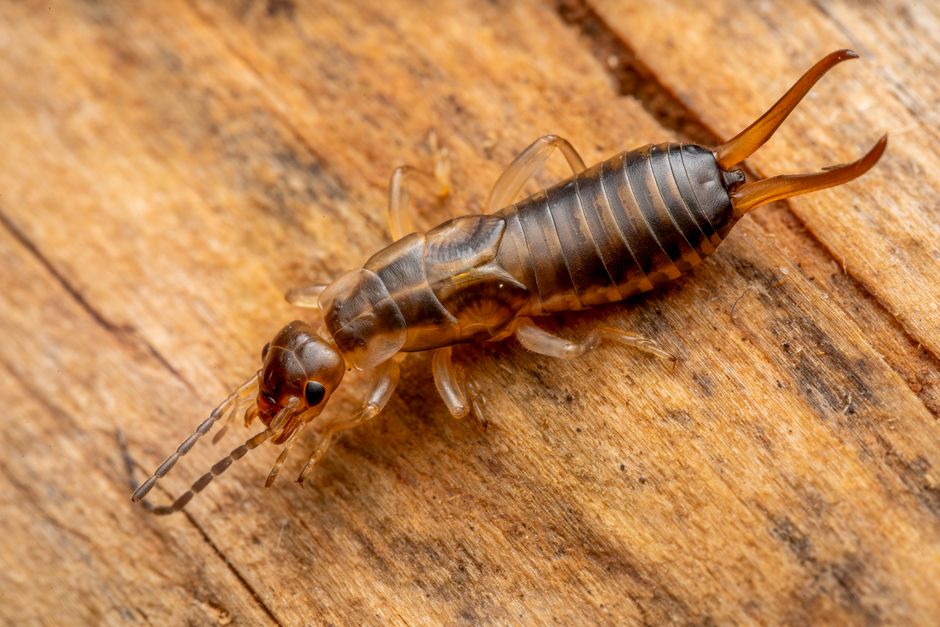
An earwig can get into a human ear, but it is uncommon and it does not lay eggs in your brain or tunnel through your skull. The insect is small, and the ear canal is a closed tube that ends at the eardrum. An earwig that wanders in has no way forward and no interest in staying. The bigger problem is usually the worry, not the bug.
The name “earwig” comes from an old folk belief that these insects crawl into ears. That belief is not supported by how earwigs actually behave. They are outdoor insects that prefer dark, damp, tight spaces, which is why an ear sometimes looks like a good hiding spot to one. But there is no evidence that earwigs seek out human ears, and no evidence that they can live, breed, or survive inside one.
Does An Earwig Go In Your Ear?
Yes, it can happen, but it is rare and almost always harmless. A small insect may crawl into an ear canal by accident, usually at night while a person is sleeping on the floor or outdoors. Earwigs are not parasites and do not feed on people. Once inside, the insect is trapped and confused, not predatory.
What makes the ear canal risky is not the earwig itself but the anatomy. The canal is a narrow tunnel lined with delicate skin and sealed at the inner end by the eardrum. An insect that gets in cannot turn around easily. Its movement against the canal wall or eardrum can cause a loud scratching or fluttering sound, sharp pain, and a strong sense of panic.
The folk tales about earwigs boring into the brain or laying eggs inside the head are false. The eardrum is a physical barrier, and an earwig cannot chew through it or through bone. The insect also has no biological reason to try. This is one of the clearest examples of a scary health myth that falls apart once you understand the anatomy.
It is worth separating two things people often blend together: an insect in the ear and an insect bite or sting. Earwigs do not sting, and their pincers are used for defense and for handling prey, not for attacking human ears. A pinch from an earwig is possible if it is trapped against skin, but it does not inject venom.
Why Do People Think Earwigs Crawl Into Ears?
The name is the main reason. The word “earwig” is old, and the insect’s fan-shaped hind wings supposedly resemble a human ear when spread. The English name likely grew from that resemblance plus the insect’s habit of hiding in tight crevices. Over time, the resemblance turned into a story, and the story turned into a myth.
There is also a practical reason the myth survives. Earwigs do climb into narrow, dark spaces. They shelter under bark, in cracks, in folded fabric, and in damp crevices. An ear canal is narrow, dark, and warm, so it fits the general pattern of a place an earwig might explore. That does not mean the insect targets ears. It means the insect is opportunistic and not very good at telling a safe crevice from a risky one.
Another factor is that earwigs are common around homes in many parts of the United States. People find them in basements, under potted plants, and in mailboxes. When a common insect is also the subject of a creepy story, the story tends to stick.
What Does It Feel Like to Have an Insect in Your Ear?
Most people describe a sudden tickling or scratching deep in the ear, sometimes with a buzzing or fluttering sound. The movement can be startling, and the noise may seem louder than it should because the insect is close to the eardrum. Pain is possible, especially if the insect presses against the sensitive canal wall.
Some people feel a sense of fullness or hear a rustling when they move their jaw. Others notice nothing at first and only become aware of it when the insect moves. The symptoms are not specific to earwigs. Any small insect, a piece of debris, or even a buildup of earwax can produce a similar sensation, so the feeling alone does not confirm what is in the ear.
This is a good place to be honest about uncertainty. It is not possible to identify an insect inside an ear by sensation alone. A doctor or urgent care clinician can look into the canal with an instrument called an otoscope and see what is actually there. That examination is the only reliable way to know.
What Should You Do If Something Is in Your Ear?
Do not dig at it. The most important advice is to keep fingers, cotton swabs, tweezers, and hairpins out of the ear canal. These tools can push the insect deeper, scratch the canal, or injure the eardrum. The canal is short and delicate, and a panicked attempt to remove something often causes more harm than the insect would.
If the sensation is mild and you are not in pain, you can tilt your head to the side and gently wiggle your outer ear. Sometimes that is enough to encourage an insect to move out on its own. Do not pour anything into the ear unless a clinician tells you to. Home remedies like oil or water are sometimes suggested, but they are not appropriate for every situation, and they can make removal harder if the insect is still alive.
Seek medical care if you have pain, bleeding, hearing loss, drainage, or a strong feeling that something is still moving. An urgent care clinic or an emergency department can remove an insect safely. In most cases, removal is quick and does not require surgery or special equipment beyond what a clinician has on hand.
One caution for people with a history of ear surgery, a perforated eardrum, or ear tubes: do not attempt any home removal at all. Let a clinician handle it. The risk of damaging the eardrum or the middle ear is higher in these groups.
Are Earwigs Dangerous?
Earwigs are not dangerous to humans in any meaningful way. They do not carry diseases that are transmitted to people through ear contact, they do not sting, and they are not venomous. Their pincers can deliver a mild pinch if the insect is handled or trapped, but the pinch rarely breaks the skin and does not require treatment beyond basic cleaning.
The real risk from an insect in the ear is injury from attempts to remove it. Scratches to the ear canal can become infected, and pushing an object too far can damage the eardrum. That is why the standard advice is to leave removal to a clinician when symptoms are significant.
Earwigs do have a role outdoors. They feed on decaying plant matter and some smaller insects, and they are generally considered minor garden inhabitants rather than pests of concern. They can become a nuisance indoors when they shelter in damp areas, but they do not establish infestations inside a house the way some other insects do.
How Can You Lower the Chance of an Insect Getting in Your Ear?
There is no way to make the risk zero, and the risk is already low. Still, a few common-sense steps reduce the chance of any small insect ending up in an ear.
- Do not sleep directly on the floor or on the ground outdoors, especially in damp areas where earwigs shelter.
- Keep basements, crawl spaces, and areas near foundations dry, since earwigs prefer moisture.
- Shake out bedding, sleeping bags, and clothing that have been stored in damp or outdoor spaces before use.
- Reduce clutter and leaf litter close to the house, which gives earwigs places to hide.
- Check children’s ears after they play outdoors in tall grass or under logs.
These steps are sensible but not proven to prevent ear injuries in controlled studies, and no clinical guideline specifically addresses earwig prevention. The advice rests on what is known about where earwigs live and how insects end up in ears. Treat it as reasonable caution, not a guarantee.
One non-obvious point: the insects most often removed from ears are not always the ones people fear most. Small insects that crawl at night, including some beetles and flies, show up in clinical case reports more often than earwigs. The earwig gets the attention because of its name, not because it is the most common culprit.
When Should You See a Doctor?
See a doctor if you have pain that does not settle, bleeding from the ear, hearing loss, dizziness, or fluid draining from the ear. These signs can point to a scratch, an infection, or eardrum injury, and they deserve an examination. A clinician can also confirm whether anything is still in the canal.
Go to an emergency department if the pain is severe, if you cannot keep your balance, or if you have sudden hearing loss. These are uncommon with a simple insect in the ear, but they are reasons not to wait. Do not try to remove the insect yourself if you are in significant pain or if you have any of these symptoms.
Most people who have an insect removed from the ear recover fully and quickly. The discomfort is usually short-lived once the insect is out. The main lesson is to avoid the instinct to dig, which is the step most likely to cause a lasting problem.
Frequently Asked Questions
Can an earwig lay eggs in your ear?
No. Earwigs do not lay eggs in human ears, and there is no evidence they can reproduce inside the ear canal. The idea comes from folklore, not from biology.
Will an earwig crawl into your brain?
No. The eardrum blocks the ear canal, and an earwig cannot chew through it or through bone. The insect has no way to reach the brain.
What should I do if I think an earwig is in my ear?
Do not put anything into the ear canal, including cotton swabs or tweezers. See a clinician, who can look inside and remove it safely if something is there.
Are earwigs harmful to humans?
No. Earwigs do not sting, are not venomous, and do not transmit disease to people through the ear. A mild pinch is possible if one is trapped against the skin, but serious harm is very unlikely.
