
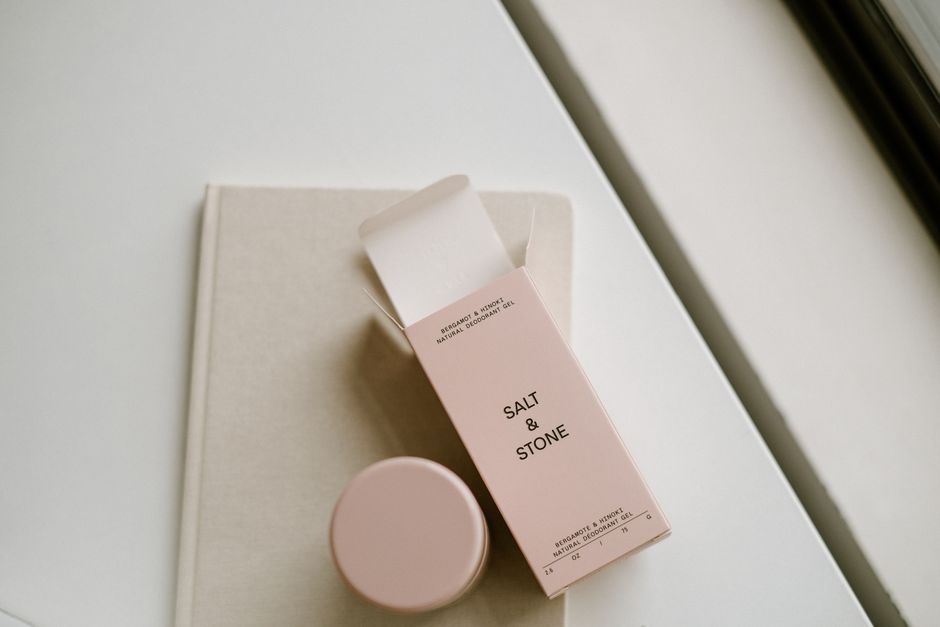
Aluminum-free deodorant can control odor, but it works differently than antiperspirant. Deodorant targets the bacteria that create smell. Antiperspirant, which usually contains aluminum salts, reduces how much you sweat in the first place. If you switch to an aluminum-free deodorant expecting the same dryness you got from an antiperspirant, you will likely be disappointed — because that was never the job it was designed to do.
What Is the Difference Between Deodorant and Antiperspirant?
These are two different products with two different jobs, and the confusion between them causes most of the frustration people feel after switching.
Deodorant addresses odor. Sweat itself is almost odorless when it leaves the gland. The smell comes later, when bacteria on the skin break down compounds in sweat and produce odor molecules. A deodorant works by making the skin less hospitable to those bacteria, masking odor, or neutralizing the compounds already formed.
Antiperspirant addresses wetness. Aluminum salts in these products form a temporary plug near the top of the sweat duct. That reduces how much sweat reaches the skin surface. Because less sweat is present, there is less raw material for odor-producing bacteria — so antiperspirants reduce odor too, but as a side effect of reducing sweat.
This is the key point: an aluminum-free deodorant can be a perfectly good odor control product while doing nothing at all about wetness. Judging it by how dry your underarm stays is judging it by the wrong standard.
How Do Aluminum-Free Deodorants Actually Control Odor?
They work through several mechanisms, and the better products combine more than one.
- Antibacterial ingredients. Many formulas include agents that reduce odor-causing bacteria on the skin. This is the most direct approach.
- Acidifiers. Odor-producing bacteria tend to thrive at a higher skin pH. Ingredients that lower the pH of the underarm make the environment less favorable for them.
- Odor neutralizers. Some ingredients bind to or chemically alter the odor compounds themselves after bacteria produce them.
- Absorbents. Powders such as baking soda or cornstarch can soak up some moisture and odor compounds. They do not stop sweating.
- Fragrance. Perfume can mask odor, though masking is the weakest approach since it fades and does not reduce the source.
The underarm is a distinct microbial environment. It has its own community of bacteria, and the types present influence how strong your odor is. Two people can sweat the same amount and smell very different because of differences in that bacterial community. This is part of why deodorant experience varies so much from person to person.
Does Aluminum-Free Deodorant Work as Well as Antiperspirant?
For odor, a well-formulated aluminum-free deodorant can work well for many people. For wetness, it does not work like an antiperspirant, because it is not designed to.
How well any deodorant controls odor depends on several things:
- How much you sweat and how strong your body odor is naturally
- The specific bacteria living on your skin
- The formula and concentration of active ingredients
- How consistently you apply it
- What you eat, what you wear, and how often you wash
Someone with light sweating and mild odor may find an aluminum-free deodorant works as well as anything they have used. Someone with heavier sweating may find it controls odor but leaves them feeling wet. Neither outcome means the product is a failure — it means the product is doing its actual job.
One non-obvious point: many people who believe aluminum-free deodorant “does not work” are actually reacting to the loss of sweat control, not to a failure of odor control. They smell fine. They just feel damp, and they interpret that as the product not working.




Why Do Some People Say Aluminum-Free Deodorant Stopped Working After a While?
Several things can explain this, and none of them require the product to have changed.
The most common reason is habituation. When you first switch, you may be hyperaware of your own odor. That awareness fades over weeks, and people sometimes mistake the fading of attention for the fading of effectiveness.
Another factor is that the underarm bacterial community can shift over time. Changes in diet, stress, medication, hormonal shifts, and even the products you use can alter which bacteria dominate. A formula that matched your skin six months ago may match it less well now.
A third possibility is simply that the product was never controlling your odor as strongly as you thought, and a change in circumstances — warmer weather, more activity, a new medication — pushed it past its limit.
If a deodorant that once worked stops working, the honest explanation is usually one of these, not that aluminum-free products are inherently ineffective.
Is Aluminum in Antiperspirant Harmful?
This is the question underneath most aluminum-free purchases, and it deserves a straight answer.
The concern traces back to aluminum being able to mimic estrogen in some laboratory settings, and to the fact that estrogen exposure is relevant to breast tissue. That reasoning is a hypothesis, not a demonstrated cause.
The evidence on this is genuinely mixed and does not support a clear causal link. Reviews of the available human research have not found consistent evidence that antiperspirant use increases breast cancer risk. That is not the same as proving safety beyond all doubt — it means the studies done so far have not shown the connection people worry about.
There is one well-established fact worth separating out: some people develop skin irritation from aluminum salts, and switching to an aluminum-free product can resolve that irritation. That is a real and legitimate reason to switch. It is different from a cancer concern.
If you want to avoid aluminum for personal reasons, that is a valid choice. Just make it knowing the evidence does not currently show aluminum antiperspirants cause harm in the way the strongest claims suggest.
What Should You Look For in an Aluminum-Free Deodorant?
Since deodorants are not required to work the same way, the formula matters more than the label.
Look for products that list an actual antibacterial or acidifying ingredient rather than relying on fragrance alone. Fragrance masks odor; it does not reduce its source. A product that lists only fragrance and a carrier will fade quickly on a hot day.
Baking soda is a common ingredient and a genuine acidifier, but it irritates some people’s skin, especially with repeated use. If you develop a rash, that is a known reaction, not a sign of something serious. Cornstarch-based formulas are gentler for many people but can feel gritty.
Also consider how you apply it. Deodorant works best on clean, dry skin. Applying it over yesterday’s product or onto damp skin reduces how well it performs, regardless of the formula.
If odor control is your main goal and wetness does not bother you, an aluminum-free deodorant is a reasonable choice. If wetness is your main complaint, no deodorant — aluminum-free or not — will solve it, because that is not what deodorant does.
Does Aluminum-Free Deodorant Work for Heavy Sweaters?
It can control odor for heavy sweaters, but it will not control wetness. Those are two separate outcomes and it helps to keep them apart.
For people who sweat heavily, an aluminum-free deodorant may need to be reapplied during the day, and it may be outmatched in very hot conditions or during intense exercise. That is a limitation of the category, not a defect in a specific brand.
If heavy sweating is the primary problem, a deodorant is the wrong tool. Heavy sweating that interferes with daily life is a recognized medical condition, and it is worth discussing with a clinician rather than cycling through deodorants that were never designed to address it.
For everyday odor control in normal conditions, an aluminum-free deodorant is a reasonable option for most people. For sweat control, it is not a substitute for an antiperspirant, and no amount of formula improvement changes that.
Frequently Asked Questions
Does aluminum-free deodorant actually work?
Yes, for odor control, when the formula contains real antibacterial or acidifying ingredients rather than fragrance alone. It does not reduce sweating, so it will not keep you dry the way an antiperspirant does.
Why does my aluminum-free deodorant stop working?
Usually because your awareness of your own odor fades, your skin bacteria shift over time, or conditions like heat and activity increased. The product itself rarely changes.
Is aluminum in antiperspirant dangerous?
The available human research has not shown a consistent link between antiperspirant use and breast cancer, though the evidence is not definitive. Skin irritation from aluminum salts is a real and common reason some people switch.
Can I use aluminum-free deodorant if I sweat a lot?
It can help with odor, but it will not control wetness, and you may need to reapply during the day. Heavy sweating that disrupts daily life is a medical issue worth discussing with a clinician.
