
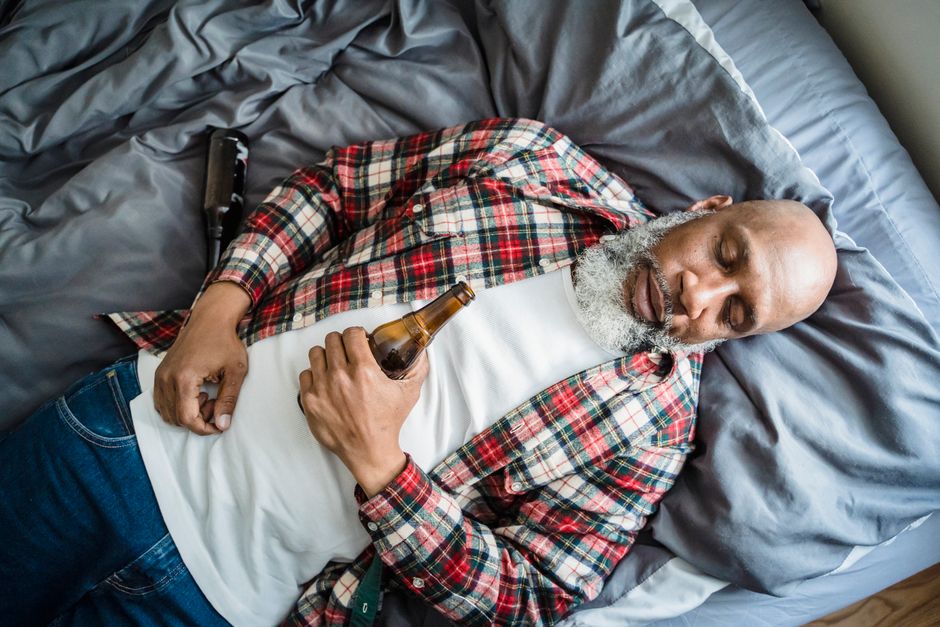
That first drink may make you feel drowsy, but alcohol does not help you sleep. It changes how sleep works in ways that leave most people rested worse, not better. A nightcap can knock you out faster and still leave you waking up tired.
The reason comes down to how alcohol interacts with the brain’s sleep systems. It pushes you toward the lighter stages of sleep and pulls you out of the deep, restorative ones. Understanding that trade-off is the first step toward sleeping better without it.
Does Alcohol Help U Sleep or Just Make You Feel Sleepy?
Alcohol is a sedative. That is different from a sleep aid.
When you drink, alcohol increases activity of a brain chemical called GABA, which slows nerve signals and produces relaxation and drowsiness. That is why a drink can make you feel sleepy within minutes. The effect is real. But sedation is not the same as natural sleep, and the brain does not treat them the same way.
Natural sleep moves through a predictable cycle of stages. You drift into light sleep, descend into deep sleep, then rise into REM sleep, where most dreaming happens. The cycle repeats several times a night, roughly every 90 minutes. Each stage does specific work. Deep sleep helps the body repair tissue and consolidate some types of memory. REM sleep supports emotional processing and learning.
Alcohol disrupts that architecture. It tends to shorten the time it takes to fall asleep, then interferes with what happens after. People often describe this as sleeping “hard” after drinking. Brain monitoring tells a different story.
What Does Alcohol Do to Sleep Stages?
Alcohol suppresses REM sleep and reduces the deepest stages of sleep, especially in the second half of the night.
In the first part of the night, alcohol can increase slow-wave sleep slightly. This is part of why the sleep feels heavy at first. As the alcohol is metabolized and its levels fall, the pattern flips. The body rebounds, and sleep becomes lighter and more fragmented.
Two changes stand out in sleep studies:
- Less REM sleep. Alcohol reduces the amount of REM sleep you get, particularly in the first half of the night. Since REM clusters toward morning, a night of drinking can cut into it directly.
- More awakenings. As alcohol clears from the body, sleep breaks up. Many people wake in the early hours and struggle to fall back asleep.
These shifts happen even in people who feel they slept well. The subjective feeling and the objective quality can diverge sharply. Someone can fall asleep fast, sleep a full night, and still wake up groggy because the time was spent in the wrong stages.
Why Do You Wake Up at 3 AM After Drinking?
The early-morning wake-up has a clear physiological cause: alcohol withdrawal and a rebound in brain activity.
Alcohol leaves the body at a fairly steady rate, and blood levels fall through the night. As they drop, the brain’s calming GABA signals weaken while stimulating signals increase. This is a mild withdrawal effect. It lightens sleep and triggers awakenings, often around the time alcohol levels have fallen substantially.
Alcohol also affects the body’s water balance. It reduces release of a hormone that helps the kidneys retain water, so you urinate more. That means more trips to the bathroom and a higher chance of waking.
There is another factor people rarely connect to their sleep. Alcohol relaxes the muscles of the upper airway, which can worsen snoring and make breathing pauses more likely in people who have or are at risk for sleep apnea. This is a genuine safety concern, not just an annoyance. If a partner has noticed you stop breathing or gasp during sleep, that deserves a conversation with a doctor, and alcohol makes it worse.
Does a Nightcap Help You Fall Asleep Faster?
Yes, alcohol shortens sleep onset for most people. That single benefit is real, and it is why the nightcap habit persists.
The problem is what you trade for it. You fall asleep faster and sleep worse. Over time, the body also builds tolerance to alcohol’s sedating effect, so the same drink produces less drowsiness. That can push some people toward drinking more to get the same result, which raises separate health risks.
There is also a habit loop to consider. If you regularly use alcohol to fall asleep, your brain starts to associate bedtime with drinking. When you skip it, falling asleep can feel harder than it did before you started. This is a learned pattern, and it can make the habit harder to break than expected.
How Long Before Bed Should You Stop Drinking?
There is no single cutoff that works for everyone, because alcohol clearance depends on body weight, sex, food intake, liver function, and how much you drink.
What is well established: the more you drink and the closer to bedtime, the greater the disruption to sleep. As a practical guide, many clinicians suggest leaving a gap of a few hours between your last drink and bedtime, and keeping intake low on nights when sleep matters. This is general guidance, not a precise formula, and it will not fully prevent sleep disruption for everyone.
The amount matters more than the timing alone. A single drink affects sleep far less than several. If you are drinking regularly to manage sleep, that pattern is worth discussing with a healthcare professional, because it can mask an underlying sleep problem and carries its own risks over time.
What Helps You Sleep Without Alcohol?
The approaches with the strongest evidence are unglamorous and well studied: a consistent sleep schedule, a dark and cool bedroom, and limiting caffeine late in the day.
Several strategies have solid support behind them:
- Keep a steady wake time. Going to bed and waking at the same time daily strengthens the body’s sleep-wake rhythm.
- Get morning light. Daylight in the morning helps set the internal clock that governs sleepiness at night.
- Limit caffeine in the afternoon and evening. Caffeine can stay in the body for hours and interfere with falling asleep.
- Keep the bedroom for sleep. This helps break the mental link between bed and wakefulness.
- Wind down before bed. Dim light and quiet activity in the hour before bed signal the brain that sleep is coming.
If sleep problems persist despite these steps, that is a reason to see a doctor, not to reach for another drink. Persistent insomnia, loud snoring, gasping during sleep, or daytime exhaustion can point to conditions that need proper diagnosis. Cognitive behavioral therapy for insomnia is a well-established first-line treatment for chronic insomnia and does not involve medication.
The Bottom Line
Alcohol is a sedative, not a sleep aid. It can shorten the time it takes to fall asleep while reducing sleep quality, suppressing REM sleep, and fragmenting the second half of the night. The morning grogginess many people blame on a late night is often a direct result of how alcohol reshaped their sleep.
If you are using alcohol to sleep, you are not alone, and it is a common pattern. It is also one worth changing, ideally with support. Small adjustments to routine, light, and timing often do more for sleep than a drink ever will.
Frequently Asked Questions
Does alcohol help you sleep?
No. Alcohol can make you fall asleep faster, but it reduces sleep quality by suppressing REM sleep and causing more awakenings later in the night.
Why do I wake up at 3 AM after drinking alcohol?
As alcohol levels fall through the night, the brain’s calming signals weaken and sleep becomes lighter, which often triggers early-morning awakenings. Alcohol’s effect on water balance also causes more bathroom trips.
Does one glass of wine affect sleep?
Even a single drink can affect sleep quality in some people, though the effect is generally smaller than with heavier drinking. The impact depends on body weight, timing, and individual sensitivity.
How long before bed should I stop drinking?
There is no universal cutoff, but leaving a few hours between your last drink and bedtime and keeping intake low reduces disruption. The total amount you drink matters more than timing alone.
