
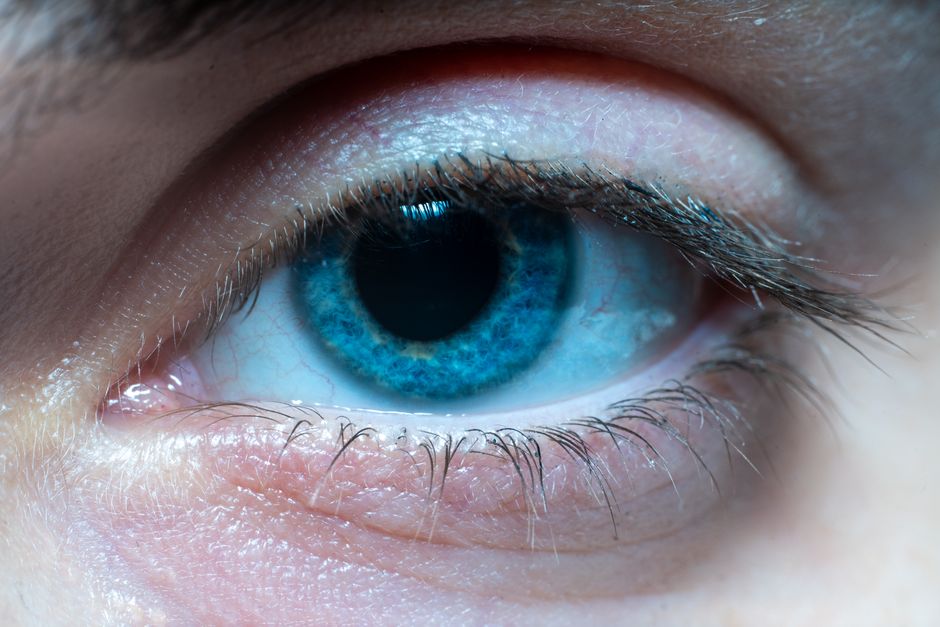
Yes, alcohol can dilate your pupils. It does this by quieting the part of your nervous system that normally keeps the pupil partly constricted, which lets the pupil widen. The effect is usually mild and easy to miss, and it is not the same as the large, fixed pupils seen in medical emergencies or with certain drugs.
Most people never notice their own pupils changing after a drink. But the mechanism is real, and understanding it helps explain why alcohol affects vision, reaction time, and how you look in a dim room.
How Does Alcohol Affect the Pupil?
Your pupil size is controlled by two opposing sets of muscles inside the eye. The sphincter muscle circles the pupil and makes it smaller. The dilator muscle radiates outward like spokes and makes it larger.
These muscles are directed by the autonomic nervous system, which has two branches. The parasympathetic branch handles rest and digestion and signals the sphincter to constrict the pupil. The sympathetic branch handles alertness and the fight-or-flight response and signals the dilator to widen it. At any moment, the pupil sits at a balance point between these two pulls.
Alcohol shifts that balance. It suppresses parasympathetic activity while leaving sympathetic tone relatively intact. With less constricting signal coming in, the dilator muscle has less resistance, and the pupil opens a little wider than it otherwise would.
This is why alcohol’s effect on pupils is sometimes described as passive dilation. The drug is not directly commanding the pupil to widen. It is removing a brake.
Why the Effect Is Usually Subtle
In a normally lit room, your pupil is already fairly small. A modest shift in the balance may only change it by a small amount, often too little to notice without measuring. In dim light, when the pupil is already wide, alcohol’s effect is easier to see but also harder to distinguish from the darkness itself.
The pupil also responds constantly to light, focus, and arousal. Any effect from alcohol is layered on top of those rapid adjustments, which makes it hard to spot by eye.
Does Alcohol Dilate Pupils the Same Way for Everyone?
No. Pupil response to alcohol varies considerably between people, and the research on this is not fully settled.
Some studies have found measurable pupil widening after alcohol. Others have found little or no change, or changes that depended on the dose, the lighting, or the person’s history of drinking. The direction of the effect is generally accepted, but the size of it is not consistent enough to use as any kind of test.
A few factors likely shape how much a given person’s pupils respond:
- Dose and speed of drinking. Larger amounts consumed quickly tend to produce more noticeable effects than a single drink with a meal.
- Lighting. The effect is easier to observe in dim conditions, where the pupil is already partway open.
- Tolerance. People who drink regularly may show different pupil responses than people who rarely drink, though the research here is limited.
- Individual variation. Baseline pupil size and autonomic reactivity differ from person to person.
There is no reliable way to estimate blood alcohol level from pupil size. Anyone who tells you otherwise is guessing.
Can You Tell How Much Someone Has Drunk From Their Pupils?
No. Pupil size is not a valid measure of intoxication.
Alcohol produces many effects that are far more consistent than pupil changes. These include slowed reaction time, impaired coordination, slurred speech, and reduced judgment. Pupil dilation is a minor and inconsistent feature by comparison.
This matters because people sometimes look for physical signs to judge whether someone is safe to drive. Pupils are a poor choice for that. So is any other single sign. Impairment is a whole-body phenomenon, and the only reliable measures are validated tests or a breath or blood alcohol measurement.
There is also a practical trap here. Many things dilate pupils, and several of them have nothing to do with alcohol. Assuming dilated pupils mean drinking can lead to a wrong conclusion.
What Else Causes Dilated Pupils?
Pupil size responds to a wide range of ordinary and medical conditions. Alcohol is only one possible cause among many.
Everyday Causes
- Low light. The most common cause by far. Pupils widen in darkness to let in more light.
- Focusing on something distant. The pupil widens slightly when you look far away and narrows when you look at something close.
- Emotional arousal. Excitement, fear, and intense concentration can all widen the pupil.
- Age. Pupils tend to become smaller with age and respond more slowly to light.
Medications and Substances
Many prescription and over-the-counter drugs affect pupil size. Some common categories include:
- Antihistamines and some cold and allergy medicines
- Certain antidepressants
- Motion sickness medicines
- Stimulants, including caffeine in some people
- Decongestant eye drops and some other eye medications
Recreational drugs such as stimulants and hallucinogens can produce marked pupil dilation. So can withdrawal from certain substances, including alcohol and opioids, in people who are dependent.
Medical Conditions
Some medical problems affect the pupil directly. These include certain eye injuries, nerve problems, and neurological conditions. A pupil that is unusually large, fixed, and does not react to light, especially if it appears suddenly or comes with other symptoms, needs urgent medical attention. That pattern is not typical of alcohol.
Does Alcohol Constrict Pupils at Any Point?
Not in any consistent way. The dominant effect of alcohol on the pupil is mild dilation, not constriction.
There is one important exception worth knowing. In people who are physically dependent on alcohol, withdrawal can produce significant sympathetic activation. That can include dilated pupils along with shaking, sweating, a rapid heart rate, and anxiety. This is a medical situation, not a normal drug effect, and severe alcohol withdrawal can be dangerous. Anyone with significant withdrawal symptoms should seek medical care.
How Does Alcohol Affect Vision More Broadly?
Pupil size is a small part of a larger picture. Alcohol affects vision and eye function in several other ways, and these tend to matter more for daily life.
Alcohol can reduce the eye’s ability to adjust focus between near and far objects, which is part of why driving at night after drinking is risky. It can impair the coordination between the two eyes, contributing to double vision at higher doses. It can also slow the pupil’s reaction to changes in light, which means the eyes adapt more slowly when you move between bright and dark environments.
These effects combine with alcohol’s broader impact on reaction time and coordination. The result is a system that is slower to gather visual information and slower to respond to it. That combination is what makes alcohol and driving a dangerous mix, and it is not something a person can reliably self-assess.
One clarification that often gets lost: alcohol does not improve night vision, despite a common belief that a drink helps you see better in the dark. The opposite is closer to the truth. Alcohol slows the pupil’s response to light and impairs the visual adjustments that dim conditions demand.
When Should Dilated Pupils Be Checked by a Doctor?
Pupil changes from alcohol alone are not a reason for concern. But some pupil changes are.
Seek medical attention if a pupil is suddenly much larger than the other, if it does not react to light, if it is accompanied by a severe headache, eye pain, vision loss, or drooping eyelid, or if the change came on after a head injury. These patterns can point to conditions that need prompt evaluation.
Unequal pupils are sometimes harmless and sometimes not. A doctor can tell the difference with an exam. If you are unsure, it is reasonable to get it checked rather than wait.
The Bottom Line
Alcohol dilates pupils by reducing the parasympathetic signal that keeps them partly constricted. The effect is real but usually mild, inconsistent between people, and not a reliable sign of anything. Many other factors, from lighting to medications to medical conditions, change pupil size far more noticeably.
If you are trying to judge impairment, look at behavior and use validated tests, not pupils. And if a pupil change looks unusual, sudden, or comes with other symptoms, treat it as a medical question rather than a drinking question.
Frequently Asked Questions
Does alcohol dilate pupils?
Yes, alcohol can dilate pupils by reducing the parasympathetic signal that normally keeps them partly constricted. The effect is usually mild and varies from person to person.
How long do dilated pupils from alcohol last?
Pupil changes generally track with alcohol levels in the body and ease as the alcohol is metabolized. There is no reliable timeline that applies to everyone, since it depends on how much was consumed and individual factors.
Can dilated pupils tell you if someone is drunk?
No, pupil size is not a valid measure of intoxication. Many factors change pupil size, and alcohol’s effect on pupils is too inconsistent to use as a sign.
Why do my pupils look big after drinking?
Alcohol reduces the constricting signal to the pupil, letting it widen slightly, and dim lighting at bars or restaurants adds to the effect. The combination makes pupils look larger than usual.
