
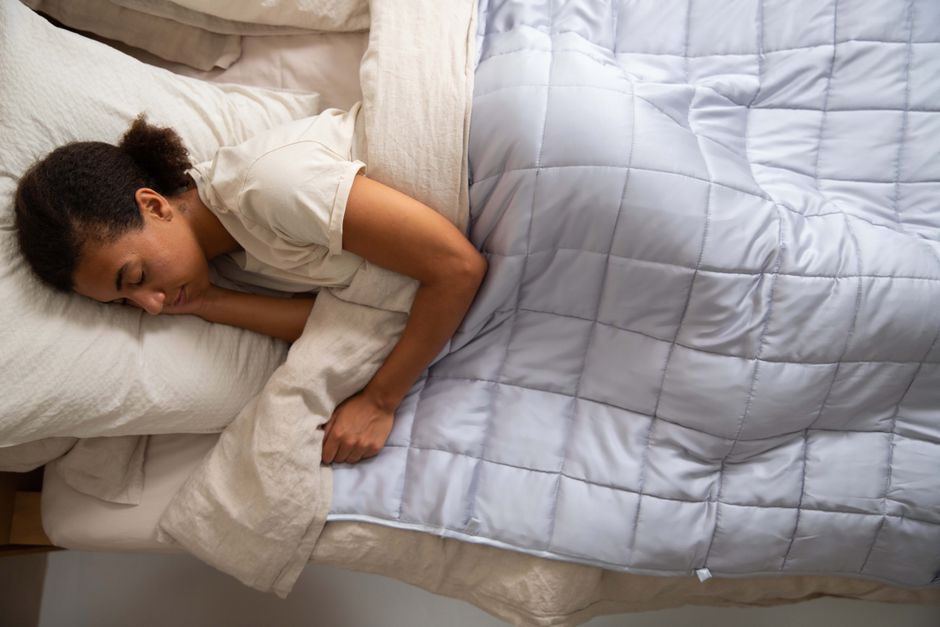
Indoor air quality often does get worse at night, but the reason surprises most people. It is rarely about outdoor pollution increasing after dark. The bigger shift happens inside your home, where closed windows, calm air, and hours of accumulated emissions let pollutants build up while you sleep. Outdoor air can go either way overnight, depending on weather and location. The reliable pattern is indoors: less ventilation, more stagnation, and higher concentrations of whatever is already in the room.
That matters because you spend roughly a third of your life asleep. The air you breathe during those hours is the air your body gets for recovery. Understanding why it changes at night is the first step toward sleeping in cleaner air.
Does Air Quality Get Worse At Night?
Indoor air quality frequently worsens at night because ventilation drops while pollutant sources keep running. When windows and doors stay shut and the outdoor breeze dies down, the air inside a bedroom stops exchanging with fresher outdoor air. Pollutants released by furniture, carpets, cooking residue, and even your own body accumulate in that closed space.
Outdoor air follows a different pattern. In many cities, traffic-related pollution eases after the evening rush hour, so outdoor air can actually be cleaner late at night than during the day. But in valleys and low-lying areas, a weather effect called a temperature inversion can trap pollution near the ground overnight, making outdoor air worse instead. There is no single rule for outdoor air. The consistent finding is that indoor concentrations rise when a space is sealed and unventilated.
Carbon dioxide is the clearest example. In a closed bedroom with one or two people, CO2 climbs steadily through the night. It is not toxic at typical bedroom levels, but rising CO2 is a reliable marker that fresh air is not reaching the room. When CO2 rises, so do other indoor pollutants that have nowhere to escape.
Why Does Indoor Air Pollution Build Up While You Sleep?
Three things happen at once overnight: ventilation falls, air movement slows, and pollutant sources keep emitting. Together they create the conditions for buildup.
First, ventilation. Most homes rely on open windows or doors for fresh air. At night, people close them for security, privacy, and temperature control. Mechanical ventilation systems, if present, often run at lower settings or not at all.
Second, air movement. During the day, foot traffic, doors opening, and warmer air currents stir the air. At night the room goes still. Still air lets pollutants linger near where they were released instead of dispersing.
Third, continuous sources. Many indoor pollutants do not stop at bedtime:
- Volatile organic compounds (VOCs) off-gas slowly from paints, adhesives, pressed-wood furniture, and carpets for months or years after installation.
- Formaldehyde, a common VOC, is released from some pressed-wood products and can accumulate in sealed rooms.
- Carbon dioxide and moisture come from breathing. A closed bedroom with occupants raises both through the night.
- Dust and allergens settle in bedding and carpets, and can be stirred when you move in your sleep.
- Cooking and cleaning residue from the evening can remain suspended if the kitchen was not ventilated well.
None of these sources needs a fire or a spill to matter. They emit quietly, and a closed room concentrates them.
Is Carbon Dioxide a Real Concern in a Bedroom?
Carbon dioxide at typical bedroom levels is not dangerous, but it is a useful signal. Outdoor CO2 is roughly 400 to 450 parts per million (ppm) in most areas. A closed bedroom with sleeping occupants can rise well above that by morning.
Some research suggests that elevated indoor CO2 is associated with poorer sleep quality and next-day drowsiness, though the evidence is not fully settled and results vary. What is well established is that CO2 is a dependable marker of ventilation. If CO2 is high, fresh air is not getting in, and other pollutants are likely building up too.
This is the non-obvious point worth holding onto: you do not need to fear CO2 itself. You can treat it as a gauge. A room with rising CO2 is a room that needs air exchange.
What Time of Night Is Air Quality Worst?
Indoor air quality tends to be worst in the early morning hours, just before you wake. That is when a sealed bedroom has had the longest stretch without fresh air and pollutants have had the most time to accumulate.
The pattern builds gradually. In the evening, a room may still hold some daytime ventilation. As the night goes on and the space stays closed, concentrations climb. By dawn, a closed bedroom is typically at its most stagnant.
Outdoor air timing depends on local conditions and is harder to generalize. Traffic pollution often dips overnight in urban areas, but weather effects like inversions can override that. The dependable takeaway is about your room, not the street.
How Can You Improve Bedroom Air Quality at Night?
The most effective step is to keep some fresh air moving through the room, even in cool weather. A window cracked slightly, or a door left open to a ventilated hallway, restores air exchange and limits buildup. If outdoor air is polluted or the weather is extreme, a mechanical option may suit you better.
Practical steps that rest on well-established principles of ventilation and source control:
- Ventilate. Crack a window or run a ventilation fan. Even modest air exchange reduces accumulated pollutants.
- Use a portable air cleaner with a HEPA filter if outdoor air is poor or you cannot open windows. HEPA filters capture fine particles; they do not remove gases like CO2 or formaldehyde.
- Control moisture. Keep indoor humidity in a moderate range and fix leaks. High humidity encourages mold and dust mites.
- Reduce sources. Avoid burning candles or incense in the bedroom, and do not store strong chemicals there.
- Ventilate the kitchen when cooking in the evening so residue does not drift into bedrooms.
- Keep bedding clean to limit dust and allergens near your face.
Be cautious with air cleaners marketed for gases and odors. Some use technologies that generate ozone, which is itself an irritant. Devices that produce ozone are not recommended for occupied spaces.
Does Outdoor Air Quality Change at Night?
Outdoor air quality can improve or worsen overnight, depending on where you live and the weather. There is no universal rule.
In many urban areas, traffic falls after the evening commute, so nitrogen dioxide and other traffic-related pollutants decline late at night. That can make outdoor air cleaner in the small hours.
But temperature inversions can reverse this. On clear, calm nights, the ground cools faster than the air above it. That traps a layer of cooler air near the surface, and pollution within it cannot rise and disperse. Valleys and basins are especially prone to this. In those conditions, outdoor air can be worse overnight than during the day.
Wildfire smoke adds another layer of unpredictability. Smoke can settle into valleys overnight and linger into the morning. If you live where smoke is a concern, checking local air quality readings before bed is more useful than assuming a time-of-day pattern.
When Should You Be More Careful About Nighttime Air?
Some people are more affected by poor nighttime air and should pay closer attention. This is general guidance, not a substitute for medical advice.
- People with asthma or other respiratory conditions. Poor air can worsen symptoms, and nighttime exposure may matter for sleep and breathing.
- People with allergies sensitive to dust mites and indoor allergens concentrated in bedding.
- Young children and older adults, whose lungs may be more vulnerable to irritants.
- Anyone living with wildfire smoke or heavy local pollution, where outdoor air may be poor overnight.
If you have a chronic lung or heart condition and notice symptoms worsening at night or in the morning, talk with a clinician. Do not rely on air quality adjustments alone to manage a medical condition.
The Bottom Line
Nighttime air quality problems are mostly an indoor story. Sealed rooms, still air, and steady emissions from furnishings and daily activities let pollutants build up while you sleep. Outdoor air is less predictable and varies by location and weather.
The fix is not complicated. Move some air, control the sources, and pay attention to local conditions when outdoor air is poor. Cleaner air at night is less about buying a device and more about not sealing yourself into a stagnant room.
Frequently Asked Questions
Does air quality get worse at night indoors?
Indoor air quality often worsens at night because closed windows and still air let pollutants accumulate. Concentrations typically peak in the early morning after hours without fresh air.
Is it bad to sleep with the windows closed?
Sleeping with windows fully closed can trap carbon dioxide and indoor pollutants in the bedroom. Cracking a window or using ventilation keeps air fresher, though outdoor conditions and weather should guide your choice.
Does opening a window at night help air quality?
Opening a window helps when outdoor air is cleaner than indoor air, which is common in many areas. If outdoor pollution or wildfire smoke is high, a HEPA air cleaner may be the better option.
Why does my bedroom air feel stale in the morning?
Stale morning air usually reflects a night of low ventilation, with rising carbon dioxide and accumulated pollutants. Better airflow during sleep typically reduces that feeling.
