
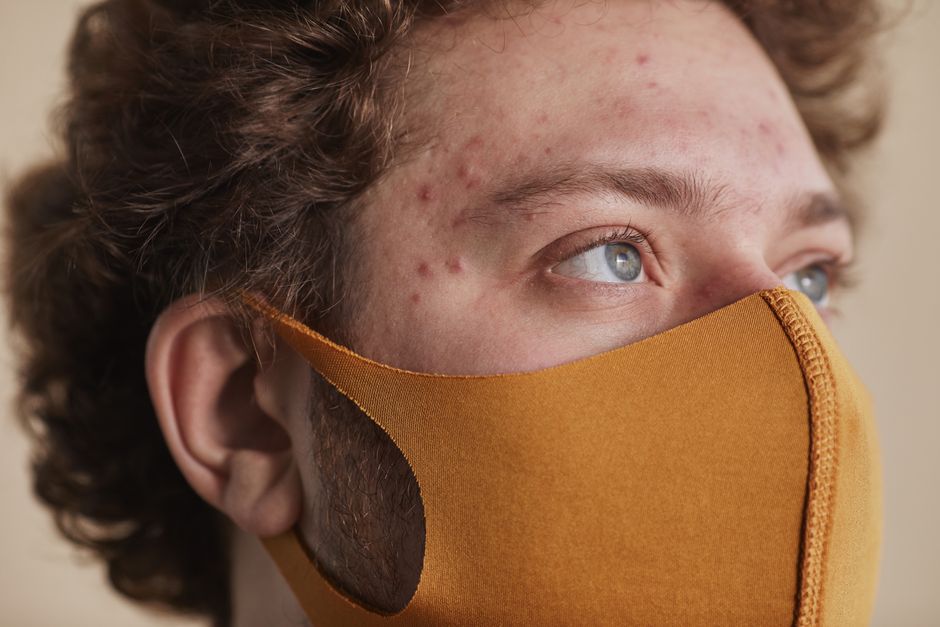
Acne often improves with age, but it does not reliably disappear. Many people see their skin clear in their twenties, while a substantial number continue to get breakouts into their thirties, forties, and beyond. The pattern depends on hormones, genetics, and how long oil glands and hair follicles stay sensitive to those signals.
This is not a simple “teenagers grow out of it” story. Acne is a condition of the pilosebaceous unit — the hair follicle and its attached oil gland. As long as that unit keeps responding to hormones and clogging, breakouts can continue. For some people, acne is a long-term condition rather than a phase.
Does Acne Go Away With Age?
Acne frequently improves after the teenage years, but it does not resolve for everyone.
Teen acne is driven mainly by a surge in androgens — hormones like testosterone — during puberty. Those hormones tell the oil glands to produce more sebum. More oil, combined with dead skin cells, plugs the follicle. Bacteria that normally live on the skin, particularly Cutibacterium acnes, can then multiply in the blocked follicle and trigger inflammation.
After puberty, androgen levels settle. For many people, oil production drops and breakouts ease. But “settle” does not mean “disappear.” Androgens are still present in both men and women throughout life, and oil glands can stay responsive to them.
Research on acne’s natural course shows a real split. Some studies following teenagers into adulthood find that a large share improve by their mid-twenties. Others find that a meaningful minority still have active acne in their thirties and forties. The exact percentages vary between studies and depend heavily on how acne was measured and who was studied.
The honest summary: age helps, but it is not a cure. If your acne is still active well past your teens, that is common and not a sign that something is wrong with you.
Why Do Some People Still Get Acne in Their 30s and 40s?
Adult acne is common, especially in women, and it has different drivers than teen acne.
In adult women, breakouts often track with the menstrual cycle, pregnancy, and the years around menopause. These are times when androgen and estrogen balance shifts. Even small changes in the ratio of these hormones can affect oil glands in people whose skin is sensitive to them.
Several factors can keep acne going into adulthood:
- Genetics. A family history of adult acne raises your own risk. If a parent had acne past their twenties, that pattern can repeat.
- Hormonal conditions. Polycystic ovary syndrome (PCOS) and other conditions that raise androgen levels can cause persistent acne, often along the jawline and chin.
- Cosmetics and skin care. Heavy or pore-clogging products can worsen acne in anyone.
- Medications. Some drugs, including certain steroids and seizure medications, are linked to acne as a side effect.
- Stress and sleep. Stress does not directly cause acne, but it can worsen it, and poor sleep often travels with higher stress.
Adult acne also tends to look different from teen acne. It clusters more on the lower face — jawline, chin, and around the mouth — rather than the forehead and nose. It is also more likely to leave marks and scars, partly because adult skin heals more slowly.
When Does Acne Usually Peak and Decline?
Acne typically peaks in the late teens and early twenties, then gradually declines for many people.
For most people with teen acne, the worst years fall somewhere in mid-to-late adolescence, when androgen levels are highest. After that, the trend is usually downward, though it can be uneven. Some people clear in their early twenties. Others see it fade through their late twenties.
Women often follow a different curve than men. Because hormonal shifts continue across the menstrual cycle and through life stages like pregnancy and menopause, women are more likely than men to have acne that persists or returns in adulthood. This is one of the clearest patterns in the research on adult acne.
There is no fixed age at which acne “should” be gone. If yours is not following the expected decline, that is information, not failure. It may point to a hormonal driver or a genetic pattern worth discussing with a clinician.





Does Acne Ever Fully Stop on Its Own?
For some people, yes. For others, acne becomes a long-term condition that needs ongoing management.
When acne does resolve on its own, it usually does so gradually rather than overnight. Oil production falls, follicles stop clogging as easily, and inflammation quiets down. This can happen without any treatment, but it often takes years.
When acne does not resolve, it is not because you did something wrong. Persistent acne usually reflects an ongoing driver — hormones, genetics, or both — that does not switch off with age.
One important point: waiting for acne to go away on its own carries a real cost. Acne that is inflamed and deep can leave permanent scars. Scars form when the inflammation damages the skin’s deeper layers, and that damage is not reversible with time. This is why many clinicians treat persistent or moderate-to-severe acne rather than waiting it out. Treating active acne is generally easier than treating the scars it leaves behind.
What Actually Helps Adult Acne?
Adult acne responds to many of the same treatments as teen acne, but the approach is often adjusted for adult skin, which tends to be drier and more sensitive.
Common treatment categories include:
- Topical retinoids. These are among the most studied acne treatments. They help unclog follicles and prevent new blockages. They can cause dryness and irritation, especially at first.
- Benzoyl peroxide. It reduces acne bacteria and helps with inflammation. It can bleach fabrics, so use it with care.
- Topical or oral antibiotics. These are used for inflammatory acne and are generally paired with other treatments to limit antibiotic resistance.
- Hormonal treatments. For women, certain oral contraceptives and other hormonal options can reduce acne driven by androgens.
- Isotretinoin. A powerful oral retinoid used for severe or treatment-resistant acne. It requires close medical monitoring because of its side effects, including serious risks in pregnancy.
Which option fits depends on the type of acne, its severity, and your history. This is a decision to make with a clinician, not from a list. No single treatment works for everyone, and results usually take weeks to months, not days.
It is also worth separating proven treatments from marketing. Many over-the-counter products claim to “clear acne,” but the evidence for most of them is thin. The ingredients with the strongest research behind them are the ones clinicians have used for decades: retinoids, benzoyl peroxide, and certain antibiotics and hormonal therapies.
Can You Prevent Adult Acne?
You cannot prevent acne that is driven by genetics or hormones, but you can reduce things that make it worse.
Skin care habits matter. Using gentle, non-comedogenic products — meaning they are less likely to clog pores — can help. So can avoiding harsh scrubbing, which irritates skin and can worsen inflammation. Picking or squeezing pimples increases the risk of scarring and infection, so it is worth resisting.
Diet is a more debated area. Some studies suggest that high-glycemic diets and certain dairy products may be linked to acne in some people. The evidence is not strong enough to say that changing your diet will clear your skin, and it is not a substitute for treatment. If you want to test a dietary change, it is reasonable to discuss it with a clinician rather than assuming it will work.
Stress management and sleep are worth attention too, not because they cure acne, but because stress and poor sleep tend to make many skin conditions worse.
When Should You See a Doctor About Acne?
See a clinician if your acne is painful, deep, or leaving scars, or if it is affecting your confidence or mood.
Acne is not just a cosmetic issue. Research consistently links persistent acne to higher rates of anxiety and low mood, especially in adults. That alone is a good reason to seek help.
You should also see a clinician if:
- Your acne is not improving after several months of over-the-counter treatment.
- You have signs of a hormonal condition, such as irregular periods, excess hair growth, or acne that suddenly worsens.
- You are pregnant or planning pregnancy and need treatment guidance.
- Your acne is leaving dark marks or indentations.
A clinician can identify the type and severity of your acne and match treatment to it. For many people, the right treatment makes a real difference — not because acne “goes away with age,” but because it can be managed well.
Frequently Asked Questions
Does acne go away on its own with age?
It often improves, but it does not reliably disappear. Many people see clearer skin in their twenties, while others continue to have acne into their thirties, forties, and beyond.
At what age does acne usually stop?
There is no fixed age when acne stops. It most often peaks in the late teens and early twenties and then gradually declines, but the timing varies widely from person to person.
Why do I still have acne in my 40s?
Adult acne is commonly driven by hormones, genetics, or both, and it is more frequent in women. Persistent acne past your thirties is common and not a sign that something is wrong with you.
Can adult acne be treated effectively?
Yes, adult acne usually responds to treatment, though it may need ongoing management rather than a one-time fix. A clinician can match treatment to your type and severity of acne.
