
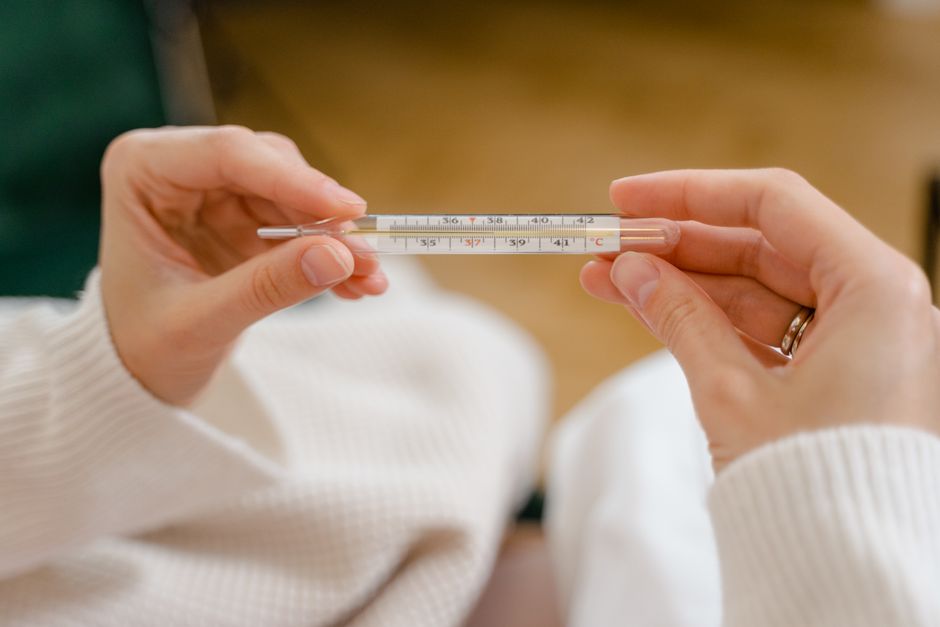
Fever is one of the most misunderstood responses your body has. When your temperature climbs, many people panic and reach for medicine to bring it down. But the truth is that a moderate fever is a natural, ancient defense mechanism. Research shows that raising your body temperature actually helps your immune system work faster and makes it harder for some germs to survive. A fever does not just make you feel bad for no reason. It is a deliberate biological process that helps you fight infection.
What Is a Fever and Why Does It Happen?
A fever is not a disease. It is a symptom. When your immune system detects an invader like a virus or bacteria, it releases chemicals called pyrogens. These travel to your brain and reset your body’s thermostat in the hypothalamus. Your body then works to raise its temperature above the normal 98.6°F (37°C).
This is an active process. You shiver to generate heat. Your blood vessels constrict to keep warmth inside. Your muscles may ache because they are working harder. That uncomfortable feeling is your body spending energy to make itself hotter.
Most fevers stay between 100°F and 104°F (37.8°C to 40°C). This range is generally safe for adults. The body has built-in limits that prevent temperatures from rising to dangerous levels in most cases. A fever is not your body losing control. It is your body taking control.
Does A Fever Actually Help Fight Infection Directly?
Yes, it does, and in several ways. First, many bacteria and viruses reproduce best at normal body temperature. When your temperature rises, their growth slows down. Some germs simply cannot survive in a hotter environment. This gives your immune system a window to catch up.
Second, your immune cells work faster when it is warmer. White blood cells move more quickly to the site of infection. They also produce more antibodies and signaling molecules. Studies have shown that certain immune cells called T-cells are more active at fever temperatures than at normal body temperature.
Third, fever increases the production of heat shock proteins. These proteins help your cells survive stress and also help present bits of the invader to your immune system. This makes it easier for your body to recognize and attack the specific germ causing the infection.
Research in animals has shown that animals with a fever are more likely to survive infections than animals whose fever is blocked. While human studies are harder to do for ethical reasons, the evidence strongly supports that a moderate fever is helpful.
When Should You Treat a Fever and When Should You Let It Run?
This is where the confusion lives. Many people think any fever needs to be brought down. That is not what the evidence says. For a healthy adult, a fever below 102°F (39°C) usually does not need medication. Letting it run can shorten the illness.
You should consider treating a fever when:
- Your temperature is above 103°F (39.4°C) and rising
- You have a serious medical condition like heart disease or lung disease
- You are pregnant
- The fever lasts more than three days
- You feel extremely uncomfortable and cannot rest
For children, the rules are different. Current research suggests that for kids over three months old, a fever below 102°F does not need treatment unless the child is clearly uncomfortable. Fever in very young infants under three months always needs medical attention.
The goal of treating a fever is not to get to 98.6°F. The goal is to bring it down to a tolerable level so you can rest and drink fluids. Lowering a fever by one or two degrees is enough. You do not need to eliminate it.





What Does Research on Fever and Infection Show?
A well-known study published in the Journal of Leukocyte Biology found that fever enhances the activity of neutrophils, which are the first responders to infection. These cells kill bacteria more effectively at higher temperatures. Another study in the journal Immunity showed that fever-range temperatures improve the ability of T-cells to travel to lymph nodes where they are activated.
There is also research from the 1970s and 1980s that is still relevant. One classic study looked at children with chickenpox. Those who were given acetaminophen to reduce fever actually took longer to heal than those who were not treated for fever. The difference was about one day longer to recovery.
As of 2026, the consensus in immunology is clear: fever is part of the immune response, not a malfunction. The American Academy of Pediatrics advises against aggressive fever reduction in children unless the child is in significant discomfort. The World Health Organization has similar guidance for adults.
However, there is a limit. Extremely high fevers above 105°F (40.6°C) are dangerous and can cause tissue damage or seizures. These are rare and usually result from heatstroke or serious infections that overwhelm the body. The vast majority of fevers from common infections stay in the helpful range.
How Fever Compares to Other Immune Responses
Fever is just one part of your immune system’s toolkit. Here is how it compares to other responses your body uses to fight infection.
| Immune Response | What It Does | How It Helps |
|---|---|---|
| Fever | Raises body temperature | Slows germ growth, speeds immune cells |
| Inflammation | Brings blood and immune cells to the site | Contains and destroys invaders |
| Mucus production | Traps germs in nose and lungs | Prevents deeper infection |
| Coughing and sneezing | Expels germs from airways | Removes invaders physically |
| Fatigue | Conserves energy for immune system | Redirects resources to fight infection |
Notice that all these responses are uncomfortable. That is not an accident. Your body is designed to make you rest and limit your activity so it can focus on the infection. Treating every symptom can actually interfere with this process.
Common Misconceptions About Fever
One of the most persistent myths is that fever itself causes brain damage. This is not true for normal fevers from infection. Brain damage from high temperature only happens above 107.6°F (42°C), which is almost never reached by a fever from illness. That level of heat usually comes from being in a hot car or extreme exercise in heat.
Another myth is that you should starve a fever. There is no evidence that avoiding food helps. Your immune system needs energy. If you can eat light foods, that is fine. If you cannot, focus on fluids. Dehydration is a real risk with fever because you lose water through sweating and faster breathing.
Some people believe that a high fever means a serious infection. That is not always true. Children especially can spike high fevers from mild viruses. The height of the fever does not reliably predict how sick someone is. How the person looks and feels matters more than the number on the thermometer.
There is also a belief that fever should be brought down to prevent febrile seizures. Febrile seizures happen in some children, usually between ages six months and five years. They are frightening but almost never harmful. And research shows that treating fever with medication does not prevent them. Seizures happen because of how fast the temperature rises, not how high it gets.
Frequently Asked Questions
Should I let a fever run its course without medication?
For a healthy adult with a fever below 102°F, letting it run is usually fine and may help you recover faster. If you are very uncomfortable or have a medical condition, treating it is reasonable.
Can a fever be too high for a child?
A fever above 104°F in a child warrants a call to your pediatrician. Any fever in an infant under three months needs immediate medical attention.
Does taking fever medicine make an infection last longer?
Some studies suggest that reducing fever can slightly lengthen illness duration, but the effect is modest. The main goal is comfort, not eliminating the fever completely.
What is the best way to lower a fever naturally?
Drinking fluids, resting, and keeping the room cool are the safest natural approaches. Do not use cold baths or alcohol rubs, as these can cause shivering and raise core temperature.
