
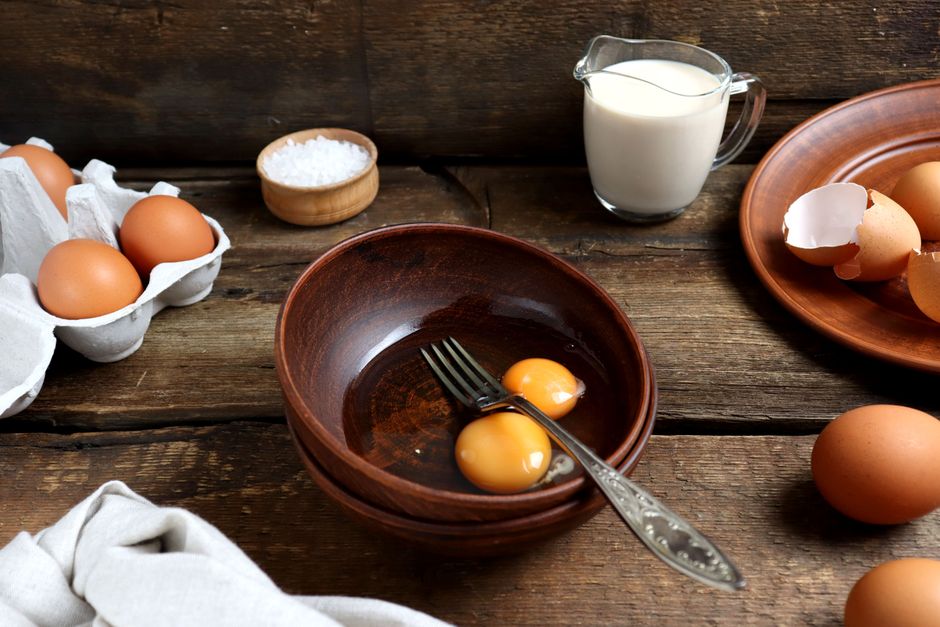
Finding a double yolk egg in your carton can feel like a small surprise. You crack it open, and two golden yolks slide out side by side. It is natural to wonder if this means something special. The short answer is no. A double yolk egg does not mean you will have twins. The egg was not fertilized, and it has no connection to human pregnancy. It is simply a quirk of the hen’s reproductive system.
Why Do Double Yolk Eggs Happen?
A double yolk egg forms when a hen releases two yolks at nearly the same time. Normally, a hen releases one yolk, and the shell forms around it. But sometimes two yolks travel down the oviduct together. The shell forms around both of them, creating one larger egg with two yolks inside.
This happens most often in young hens. When a pullet first starts laying, her reproductive system is still learning to regulate. The hormonal signals can misfire, causing two yolks to drop at once. It is a normal part of early laying, and it usually settles down as the hen matures.
Some research suggests that certain breeds are more prone to double yolks than others. But the exact rate varies widely and is not well documented across all breeds. What is clear is that it is a biological event in the hen, not a sign or omen for humans.
The Myth About Twins and Double Yolks
The idea that a double yolk egg predicts twins is an old folk belief. It likely comes from the visual similarity. Two yolks look like two potential babies. But the egg is unfertilized. It will never develop into chicks, and it has no bearing on human fertility or pregnancy.
In some cultures, double yolks were seen as good luck. In others, they were considered a sign of a coming birth. These are cultural stories, not medical facts. There is no scientific mechanism that connects a hen’s egg to a human pregnancy.
If you are hoping for twins, a double yolk egg will not help you predict that. Twin conception is determined by human biology. Identical twins come from one fertilized egg that splits. Fraternal twins come from two separate eggs released in the same cycle. A chicken egg has nothing to do with either process.
Are Double Yolk Eggs Safe to Eat?
Yes. Double yolk eggs are completely safe to eat. They are not defective or spoiled. They are just larger than a typical egg and contain two yolks instead of one.
The nutritional value is slightly different. You get roughly double the yolk, which means more fat, cholesterol, and calories than a single yolk egg. The white volume is about the same as a normal egg. If you are tracking your intake precisely, account for the extra yolk.
There is no safety concern with the egg itself. Cook it the same way you would any other egg. Scrambled, fried, or baked, it behaves normally. The only practical difference is that it may cook a bit differently because of the extra yolk mass.





How Common Are Double Yolk Eggs?
Double yolk eggs are not rare, but they are not common either. Most estimates put the rate at around 1 in 1,000 eggs. However, this number varies depending on the flock and the age of the hens.
Young hens produce more double yolks in their first few weeks of laying. Some commercial farms sort eggs by size. Double yolk eggs are often larger and may be separated out. If you buy jumbo eggs, you may encounter them more often.
There is no reliable way to tell if an egg has a double yolk before cracking it. The egg will be larger than usual, but not all large eggs have two yolks. You will only know for certain when you open it.
What Causes a Hen to Produce a Double Yolk?
The main cause is hormonal. When a hen’s reproductive cycle is not yet steady, her ovary may release two yolks in quick succession. This is most common in young hens just starting to lay.
It can also happen in older hens, but less frequently. Some hens may produce double yolks throughout their laying life. This is not a sign of illness or distress. It is simply a variation in normal egg production.
There is no evidence that diet, lighting, or stress causes double yolks. The condition is largely a matter of individual hen biology. If you raise chickens, you may see double yolks occasionally. If you buy eggs from a store, you may see them rarely.
Can a Double Yolk Egg Hatch Into Twins?
If a double yolk egg is fertilized, it is possible for two chicks to develop. But this is rare and often unsuccessful. The two chicks compete for space and nutrients inside the shell. Many do not survive to hatching.
When two chicks do hatch from one egg, they are not identical twins in the human sense. They are siblings that shared the same shell. They may look similar or different, depending on their genetics.
Most double yolk eggs are not fertilized. In commercial egg production, hens are kept without roosters. The eggs cannot develop into chicks. They are simply food.
For backyard flock owners with a rooster, a fertilized double yolk egg is possible. But the odds of both chicks surviving are low. It is not something you should count on or try to encourage.
Does a Double Yolk Egg Mean Twins in Humans?
No. There is no connection between a double yolk egg and human twins. This is a superstition, not a medical fact. The egg is a product of the hen’s body. It cannot influence or predict anything about your pregnancy.
If you are pregnant and wondering about twins, the only reliable way to know is through an ultrasound. A doctor can confirm the number of embryos early in pregnancy. No food or egg can tell you this information.
Some people enjoy the symbolism of a double yolk as a fun coincidence. That is fine. But it is not a sign. It is not a warning. It is just an egg with two yolks.
Frequently Asked Questions
Can eating a double yolk egg cause twins?
No. Eating a double yolk egg has no effect on human reproduction. Twins are determined by genetics and biology, not by food.
Are double yolk eggs more nutritious than regular eggs?
They contain more yolk, so they have more fat and cholesterol. The protein content is similar to a regular egg because the white is about the same size.
Why did I get several double yolk eggs in one carton?
This can happen when the eggs come from a flock of young hens. Young hens are more likely to produce double yolks in their first weeks of laying.
Is a double yolk egg a sign of good luck?
Some cultures consider it lucky, but there is no scientific basis for this. It is a normal variation in egg production.
