
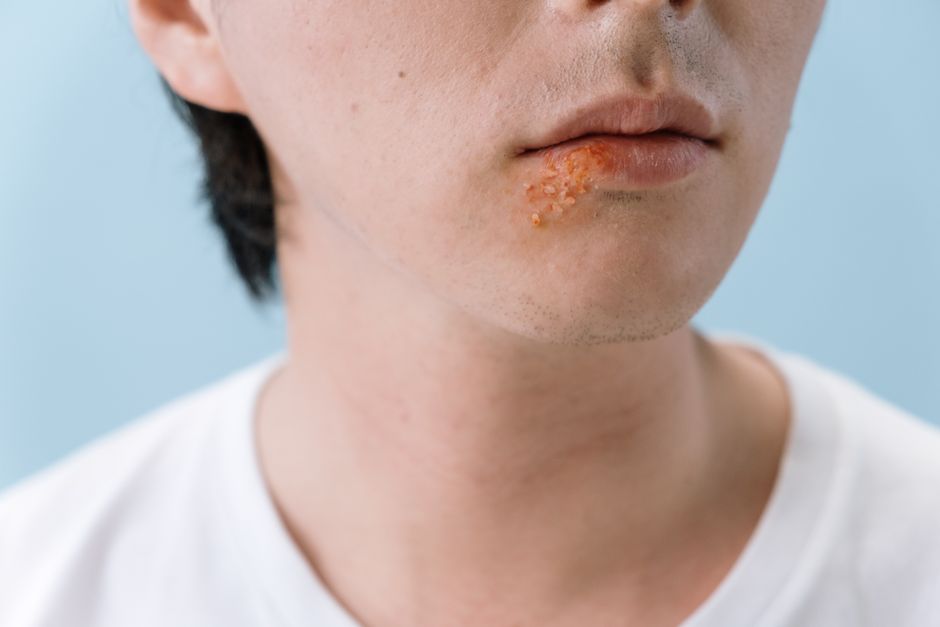
A cold sore can look like it has a white head, but what you are seeing is not pus in the way a pimple has pus. Cold sores are caused by the herpes simplex virus, usually HSV-1, and the white or yellowish material is typically a mix of dead skin cells, fluid, and crusting at the surface of a blister. That difference matters, because it changes how you should treat it and why squeezing or popping it can make things worse.
Does A Cold Sore Have a Whitehead?
Yes, a cold sore can develop a white or yellowish center that looks like a whitehead. It is not a pimple. The white material is usually dead tissue, dried fluid, and inflammatory cells collecting at the top of a small blister.
A pimple forms when a hair follicle gets clogged with oil and dead skin, and bacteria may multiply inside it. A cold sore forms when the herpes simplex virus reactivates in nerve cells and travels to the skin. The two look similar at certain stages, but the cause is completely different.
That visual overlap is why people confuse cold sores with acne, ingrown hairs, or canker sores. A canker sore sits inside the mouth on soft tissue and is not caused by herpes. A cold sore usually appears on or near the outer lip, often at the same spot each time.
What Are the Stages of a Cold Sore?
Cold sores follow a fairly predictable pattern, though the timeline varies from person to person and from one outbreak to the next. Not everyone gets every stage, and some people get very mild symptoms that they barely notice.
The stages typically look like this:
- Tingling or itching: Many people feel a warning sensation on the lip before anything is visible. This is sometimes called the prodrome.
- Redness and swelling: A small raised, red area appears.
- Blister formation: One or more small fluid-filled blisters develop, often clustered together.
- Ulcer or weeping stage: The blisters break open, leaving a shallow sore. This is often the most painful and contagious stage.
- Crusting: A yellow or brown crust forms over the sore as it dries.
- Healing: The crust falls off and the skin gradually returns to normal.
The white head you may notice usually shows up around the blister or crusting stage. It can look like a small white bump or a yellowish scab. That is surface material, not a pocket of pus like you would find in a bacterial infection.
Why Does a Cold Sore Look Like a Pimple?
A cold sore looks like a pimple because both create a raised, red bump with a lighter-colored center. The similarity is real, and it trips up a lot of people.
Here is what is actually happening. When HSV-1 reactivates, it causes the skin cells in that area to become infected and eventually break down. The body sends immune cells to the site, and fluid collects under the skin. When that blister opens and begins to dry, dead cells and dried fluid form a whitish or yellowish layer on top.
In a pimple, the white head is a plug of oil, dead skin, and sometimes bacteria trapped in a follicle. The color comes from the same general mix of dead cells and debris, which is why the two can look alike. But the underlying process is viral in one case and follicular in the other.
One detail that can help tell them apart: cold sores tend to tingle or burn before they appear, and they often come back in the same location. Pimples usually do not have a tingling warning, and they can show up anywhere you have hair follicles.





Should You Pop a Cold Sore?
No. Do not squeeze, pop, or pick at a cold sore. This is one of the few pieces of advice that is nearly universal in clinical guidance, and the reasons are practical.
First, the fluid inside a cold sore blister contains live virus. Breaking it open spreads that fluid to nearby skin and to your fingers. If you then touch your eyes, nose, or genitals, you can spread the infection to those areas. Herpes infections of the eye are a serious medical concern and need prompt care.
Second, popping the blister creates an open wound. That gives bacteria a way in, which can lead to a secondary bacterial infection. A cold sore that becomes infected can get more painful, more swollen, and slower to heal.
Third, picking at the crust can cause scarring and can prolong the outbreak. The crust is part of the healing process. Let it come off on its own.
If a cold sore is very painful or you are unsure whether it is a cold sore or something else, a clinician can evaluate it. Some skin conditions and infections can look similar.
What Triggers a Cold Sore to Come Back?
The virus that causes cold sores stays in the body for life. After the first infection, it settles into nerve cells and stays inactive most of the time. Certain triggers can wake it up.
Common triggers include:
- Physical or emotional stress
- Fever or illness
- Sun exposure and wind
- Hormonal changes, including menstruation
- Fatigue and lack of sleep
- Skin injury or trauma to the lip area
- Weakened immune function
Not everyone reacts to the same triggers. Some people get cold sores a few times a year, and others rarely get them at all. The pattern tends to be individual.
How Long Does a Cold Sore Last?
A cold sore usually heals within about one to two weeks in healthy people. The first outbreak tends to be more severe and may last longer than later ones.
The blister stage often lasts a few days, then the sore opens and weeps, then it crusts over and heals. Healing time can be longer in people with weakened immune systems or in young children during a first infection.
Antiviral medications, available by prescription, can shorten the duration and reduce symptoms if started early. Over-the-counter creams and pain relievers can help with comfort but do not cure the infection. Starting treatment during the tingling stage tends to work better than waiting until the blister is fully formed.
When Should You See a Doctor for a Cold Sore?
Most cold sores do not need medical care. They are common, usually mild, and heal on their own. But some situations call for a clinician’s attention.
See a healthcare provider if:
- The cold sore is near or in the eye, or you have eye pain, redness, or vision changes
- You have a weakened immune system from a condition or medication
- The sore is unusually large, spreading, or very painful
- It does not improve after about two weeks
- You have frequent outbreaks and want to discuss prevention options
- You have a fever or feel generally unwell along with the sore
- An infant or newborn has a cold sore or blister near the mouth
Herpes infection in newborns is a medical emergency. If a baby develops blisters or seems unwell, seek care right away.
How Can You Prevent Spreading a Cold Sore?
Cold sores are contagious from the time symptoms start until the sore has fully healed. The virus spreads through direct contact with the sore or its fluid.
To reduce spread:
- Do not kiss or share eating utensils, cups, towels, or lip balm while a sore is present
- Wash your hands often, especially after touching your face
- Avoid touching your eyes after touching the sore
- Do not share razors or other personal items that contact the face
- Avoid close contact with people who have weakened immune systems or with infants
Everyday prevention also includes managing known triggers where possible. Using lip balm with sun protection may help if sun exposure sets off your outbreaks. Getting enough rest and managing stress may reduce how often the virus reactivates for some people, though the evidence for trigger avoidance is not as strong as the evidence for antiviral treatment.
Frequently Asked Questions
Can a cold sore look like a whitehead?
Yes, a cold sore can have a white or yellowish center that resembles a whitehead. The white material is usually dead cells and dried fluid, not pus from a bacterial infection.
Is it safe to pop a cold sore?
No, popping a cold sore can spread the virus to other areas and increase the risk of a bacterial infection. Let it heal on its own.
How long does a cold sore last?
A cold sore usually heals within one to two weeks in healthy people. The first outbreak may last longer and be more severe than later ones.
When should I see a doctor for a cold sore?
See a doctor if the sore is near your eye, you have a weakened immune system, it lasts more than two weeks, or you have frequent outbreaks. Herpes infection in a newborn is a medical emergency.
