
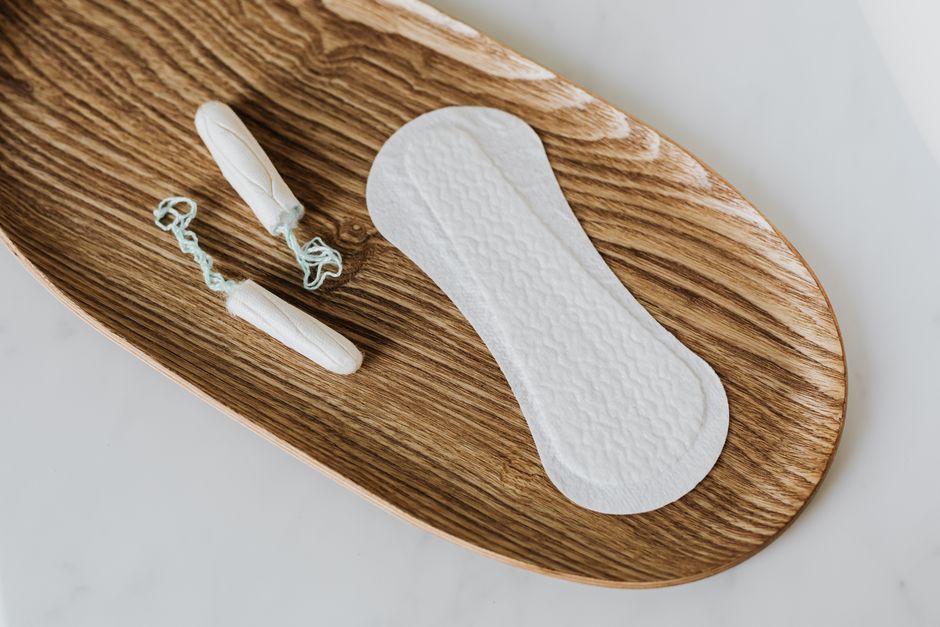
Yes, you can sleep in a tampon — but only if you follow a few rules that many people get wrong. Leaving a tampon in longer than recommended raises the risk of a rare but serious bacterial infection called toxic shock syndrome (TSS). The safe answer is simple: wear one overnight only if you change it before bed and again when you wake up, and never leave it in for more than eight hours. If your sleep runs longer than that, a pad or period underwear is the safer choice.
Do You Sleep In Tampons? What the Guidance Actually Says
There is no rule that says you cannot wear a tampon while you sleep. The guidance is about time, not position or activity.
Tampon manufacturers and medical organizations generally advise changing a tampon every four to eight hours. Overnight sleep often lasts longer than that window for many people, which is why the question matters. If you typically sleep seven to eight hours and insert a fresh tampon right before bed, you stay within the recommended range. If you sleep nine or ten hours, or you lose track of time, you may go past it.
Some clinicians recommend using the lowest absorbency that controls your flow. This is not just about comfort. Higher-absorbency tampons hold more fluid and can stay in place longer before you notice they need changing, which can quietly extend wear time.
The practical takeaway: sleeping in a tampon is fine for most people, as long as the total wear time stays within the recommended limit. It is the duration, not the sleep itself, that carries risk.
What Is Toxic Shock Syndrome and How Is It Linked to Tampons?
Toxic shock syndrome is a rare but life-threatening condition caused by bacterial toxins, most often from Staphylococcus aureus or group A Streptococcus. It causes sudden fever, low blood pressure, rash, and problems in multiple organ systems. It requires emergency medical care.
The link between TSS and tampons was identified in the early 1980s. At that time, cases were associated with a specific high-absorbency tampon design that has since been removed from the market. Cases dropped sharply after that product was withdrawn and after labeling changes recommended more frequent changing.
TSS is now rare, but it has not disappeared. It is not caused by tampons themselves. It is caused by toxin-producing bacteria, and certain conditions — including leaving a tampon in place for a long time — can create an environment where those bacteria multiply. Tampons can also cause small abrasions in the vaginal wall, which may give bacteria a point of entry.
This is why the time limit matters. The longer a tampon stays in, the more opportunity there is for bacterial growth. That risk is not limited to sleep. Forgetting a tampon, using multiple tampons at once, or using one for days all raise the same concern.
Menstrual cups, which are also worn internally, carry a similar theoretical risk if left in too long. Current guidance for cups generally recommends emptying and rinsing them within a set time frame, and the same principle applies: do not leave an internal product in place longer than directed.
How Long Can You Safely Leave a Tampon In Overnight?
Eight hours is the outer limit most manufacturers and health agencies describe for a single tampon. That number is not arbitrary — it reflects the wear time that keeps risk low based on decades of surveillance data since the 1980s.
If your sleep is shorter than eight hours, a tampon worn overnight can fit inside that window. If it is longer, or if you are unsure how long you will sleep, a pad or period underwear removes the timing problem entirely.
A few practical points that make overnight use safer:
- Insert a fresh tampon right before you go to sleep, not hours earlier.
- Set an alarm if you tend to sleep long, or choose a different product on those nights.
- Use the lowest absorbency that handles your flow. Do not use a super-absorbency tampon for light flow just to avoid changing it.
- Change it as soon as you wake up, even if you feel fine.
- Never insert a second tampon without removing the first.
The last point is more common than people think. A forgotten tampon can stay in place for days or longer, and that is one of the situations most strongly associated with TSS. If you cannot remember whether you removed a tampon, it is worth checking.





Is It Safe to Sleep in a Tampon Every Night of Your Period?
There is no evidence that overnight tampon use, done within the time limit, is harmful on its own. The concern is cumulative wear time, not the number of nights.
That said, many clinicians suggest alternating products — using pads or period underwear for at least part of your period, especially overnight. This is not because tampons are dangerous when used correctly. It is a simple way to reduce the chance of leaving one in too long, and it gives the vaginal tissue a break from repeated friction.
If you have had TSS before, or you have a history of recurrent vaginal infections, talk to a clinician about whether internal products are right for you. Some people are advised to avoid them.
There is also a practical reality worth naming: the risk of TSS is real but small. Most people who use tampons correctly never experience it. The goal is not fear — it is awareness of the one variable that matters most, which is how long the tampon stays in.
What Are the Warning Signs of Toxic Shock Syndrome?
TSS can progress quickly, and early symptoms can look like a bad flu. Knowing the signs matters because treatment works best when it starts early.
Watch for a sudden high fever, often with vomiting or diarrhea. Muscle aches, a sunburn-like rash, dizziness, confusion, and low blood pressure can follow. The rash may later peel, especially on the palms and soles.
If you have any of these symptoms during your period or within a few days after it ends, remove your tampon immediately and seek emergency care. Tell the clinician that you use tampons and when you last changed one. That detail can speed up diagnosis.
Do not wait to see if symptoms pass on their own. TSS is treatable, but it can become severe fast. This is one of the few situations where the right move is to go to an emergency department rather than wait for a routine appointment.
Safer Options If You Sleep Longer Than Eight Hours
If your sleep schedule regularly runs past eight hours, the simplest solution is to use a product without a time limit overnight.
Pads and period underwear are worn externally and do not carry the same TSS risk. They can be worn for longer stretches, including through a full night’s sleep. Reusable period underwear has become a common alternative, and disposable pads remain widely available in a range of absorbencies.
Menstrual cups are another option, but they are not a way to avoid the time question. Cups also need to be emptied and cleaned on a schedule, and leaving one in too long carries its own risk of infection and, rarely, TSS. If you use a cup overnight, follow the manufacturer’s guidance on maximum wear time.
Some people combine methods — a tampon for the first part of the night and a pad for the rest, or a pad on heavier nights and a tampon during the day. There is no single right answer. The goal is matching the product to your flow and your sleep, not forcing one option to fit every situation.
The Bottom Line on Sleeping With a Tampon
Sleeping in a tampon is not off-limits. It is a timing decision. Insert a fresh one before bed, keep total wear under eight hours, and change it when you wake up.
If your sleep runs longer, or you are not sure, choose a pad or period underwear for that night. That single swap removes the main risk and costs you nothing.
Know the signs of TSS and take them seriously. The condition is rare, but it is not something to wait out. If something feels wrong during your period, remove the tampon and get medical help.
Frequently Asked Questions
Can you sleep in a tampon overnight?
Yes, if the total wear time stays within the recommended four-to-eight-hour limit. Insert a fresh tampon right before bed and change it as soon as you wake up.
What happens if you leave a tampon in for more than 8 hours?
Leaving a tampon in longer than recommended raises the risk of toxic shock syndrome, a rare but serious bacterial infection. If you realize you have left one in too long, remove it and watch for symptoms like sudden fever, rash, or vomiting.
Is it better to wear a pad at night instead of a tampon?
A pad or period underwear removes the time limit entirely, which makes it a safer choice if you sleep longer than eight hours. Many clinicians suggest alternating products overnight for this reason.
Can you get toxic shock syndrome from sleeping in a tampon once?
TSS is rare, and a single night of correct use is unlikely to cause it. Risk rises with longer wear time, higher absorbency, and forgotten tampons rather than with one night of proper use.
