
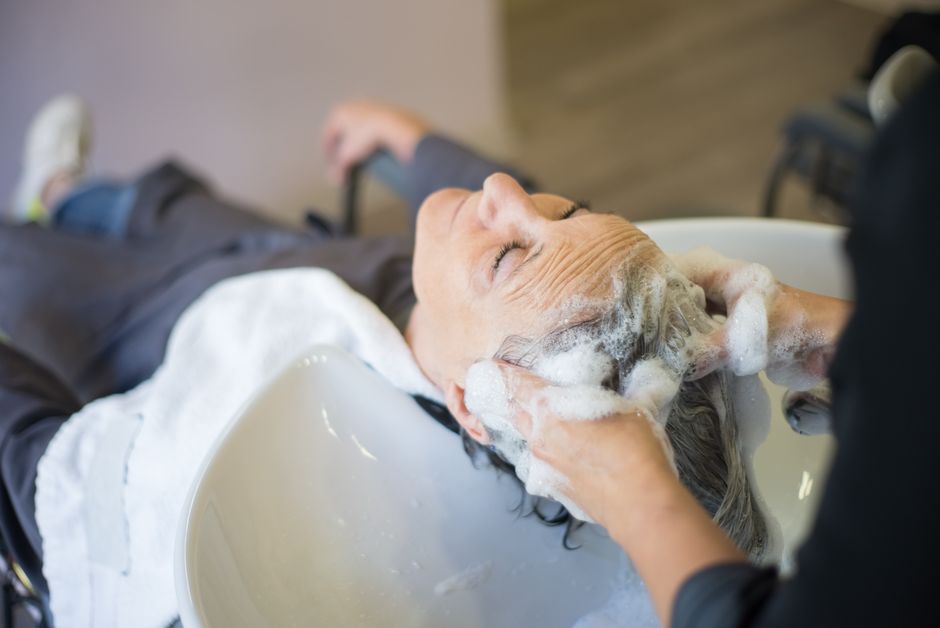
Wet your hair, apply shampoo, rinse, then apply conditioner. That order is what most hair scientists and dermatologists describe as the standard because shampoo cleans the scalp and conditioner treats the strands. Doing it the other way around usually means the shampoo washes away most of the conditioner you just applied.
The order matters less than what each product does and where you put it. Shampoo is designed for your scalp. Conditioner is designed for your hair. Once you understand that split, the sequence stops being a mystery.
Do You Shampoo Or Condition First?
Shampoo comes first. Conditioner comes second. This is the order that lets each product do its job without undoing the other.
Shampoo contains surfactants. These are molecules that grab oil, dirt, and product buildup and lift them off the scalp and hair so water can rinse them away. Surfactants do not distinguish between the oil you want gone and the oil you want to keep. If you condition first, the shampoo that follows will strip much of that conditioner off before it has a chance to do anything useful.
Conditioner works differently. It deposits ingredients that smooth the outer layer of each hair strand, reduce friction, and help with detangling. That layer sits on the surface of the hair. It is not meant to be scrubbed away, which is exactly what a second shampoo would do.
So the logic is simple. Clean first. Treat second. Rinse the cleanser out completely before you add anything designed to stay.
Why Does The Order Actually Matter?
The order matters because shampoo and conditioner have opposite jobs. One removes. One adds. Reversing them means the removing step interferes with the adding step.
Hair has an outer layer called the cuticle. It looks a bit like overlapping roof shingles. When hair is clean and slightly rough, those shingles can lift. Conditioner smooths them back down, which is why conditioned hair feels softer and combs more easily.
Shampoo raises the cuticle slightly as part of cleaning. That is normal and temporary. Conditioner then helps it lie flat again. If you flip the order, you smooth the cuticle and then rough it back up with shampoo, leaving hair in the state you were trying to avoid.
There is one more practical reason. Conditioner leaves a coating on the hair. If that coating is still present when you shampoo, the shampoo has to work harder to reach the scalp, and it may not clean as thoroughly. You end up with a scalp that is not fully clean and hair that is not fully conditioned.
Should You Apply Conditioner To Your Scalp?
For most people, no. Conditioner belongs on the mid-lengths and ends of the hair, not the scalp.
The scalp produces its own oil, called sebum. That oil naturally travels down the hair shaft, so the hair closest to your head usually has plenty. The ends are the oldest part of the hair and the part most likely to be dry, split, or rough. They need the most help.
Applying conditioner to the scalp can leave a heavy residue that weighs hair down and can contribute to an oily or itchy feeling, especially for people with fine hair or an oily scalp. Some conditioners are formulated for scalp use, and some people with very dry scalps find a light application helpful. But the general rule is to keep it off the roots.
A simple approach: apply conditioner from about the middle of the hair shaft to the tips. Leave it on for the time the label suggests. Then rinse.





Does The Order Change For Different Hair Types?
The basic order stays the same across hair types, but how you apply each product can change quite a bit.
People with oily scalps often do well shampooing more often and conditioning only the ends, or using a lighter conditioner. People with dry or curly hair may need a richer conditioner and may benefit from leaving it on longer. Very curly and coily hair tends to be drier because natural oils do not travel down the shaft as easily, so conditioning is especially important for those hair types.
Color-treated hair is another case. Some color-safe conditioners are designed to help maintain color, and the general order still applies. Shampoo first, then condition.
There is a technique some people use called co-washing, which means washing with conditioner only and skipping shampoo. This can work for some people with very dry or curly hair. It is not the same as the standard shampoo-then-condition routine, and it does not clean the scalp the way a surfactant-based shampoo does. Whether it works for you depends on your scalp and hair.
What About Leave-In Conditioner And Hair Masks?
Leave-in conditioner and rinse-out conditioner are not the same product, and they go in different places in your routine.
A rinse-out conditioner is applied in the shower and rinsed away. A leave-in conditioner stays on the hair. If you use both, the rinse-out conditioner goes first, right after shampoo, and the leave-in goes on after you have towel-dried or while hair is still damp.
Hair masks are heavier treatments meant to sit on the hair for longer than a regular conditioner. Most are used after shampooing and before or instead of your usual conditioner. The order is still shampoo first, then the mask, then rinse.
One non-obvious point: more product is not better. Over-conditioning can leave hair limp, greasy, and harder to style. If your hair feels heavy after conditioning, you are likely using too much or applying it too close to the scalp.
How Long Should You Leave Conditioner On?
For a regular rinse-out conditioner, the label time is usually enough. Many conditioners work in about one to three minutes. Some people leave it on longer, but there is limited evidence that a standard conditioner keeps doing more after that window.
Hair masks and deep treatments often call for longer times, sometimes ten to twenty minutes. Follow the product directions. There is no established benefit to leaving a regular conditioner on for an hour, and it will not repair hair that is already damaged.
This is worth saying plainly: conditioner cannot repair split ends or permanently damaged hair. It can smooth the surface, reduce friction, and make hair feel and look better. It does not rebuild the structure of a hair strand that has broken. The only fix for split ends is a trim.
Common Mistakes People Make
Most problems with shampoo and conditioner come down to a few habits.
- Conditioning before shampooing, which wastes the conditioner.
- Putting conditioner on the scalp instead of the ends.
- Not rinsing shampoo out fully before conditioning.
- Using too much conditioner and weighing hair down.
- Expecting conditioner to repair split ends.
Fixing these is usually more useful than switching to a more expensive product. The order and the placement matter more than the price tag.
Does The Order Matter If You Only Use One Product?
If you only use one product, the question of order does not apply. But it is worth knowing which one you actually need.
If your main concern is an oily scalp or product buildup, shampoo is doing the important work. If your main concern is dry, tangled, or rough ends, conditioner is doing the important work. Many people need both, which is why the two-step routine is so common.
Some two-in-one products combine a mild cleanser with conditioning ingredients. These can be convenient, but they tend to do both jobs less thoroughly than using separate products. That is a trade-off, not a flaw.
Frequently Asked Questions
Do you shampoo or condition first?
Shampoo first, then conditioner. Shampoo cleans the scalp and hair, and conditioner smooths and softens the strands afterward.
What happens if you condition before shampooing?
The shampoo that follows will rinse away much of the conditioner before it can work. You may end up with hair that is neither fully clean nor fully conditioned.
Should you put conditioner on your scalp?
For most people, no. Conditioner is best applied to the mid-lengths and ends, since the scalp already produces its own oil.
Can conditioner repair damaged hair?
No. Conditioner can smooth the surface and reduce tangling, but it cannot repair split ends or rebuild damaged hair structure.
