
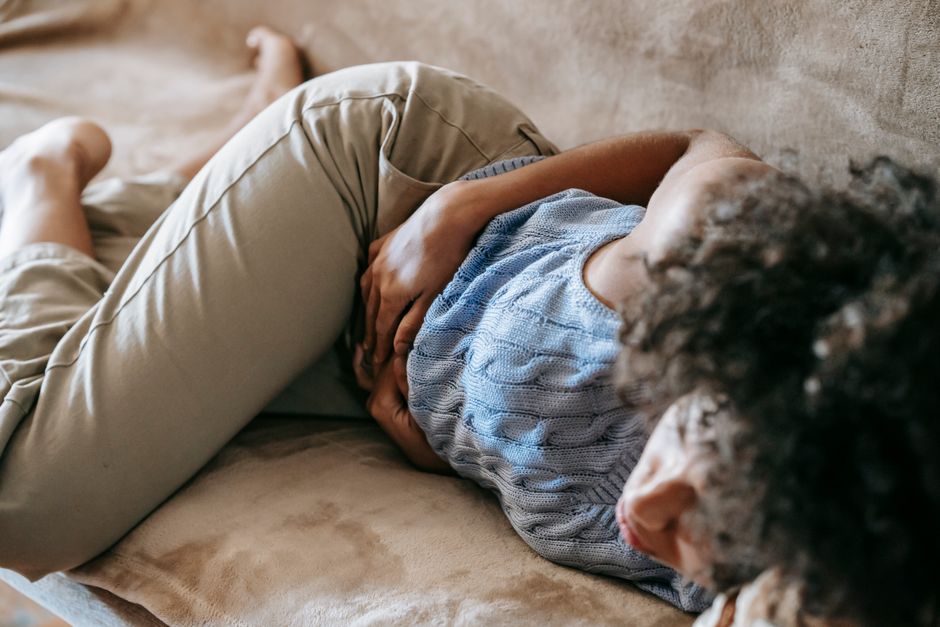
Yes, cramps around ovulation are real. The medical term is mittelschmerz, German for “middle pain,” and it affects a meaningful share of women at some point in their reproductive years. The pain is usually mild, one-sided, and lasts anywhere from a few minutes to a day or two. It is not a sign that something is wrong.
What surprises many people is the timing. Ovulation pain happens mid-cycle, roughly two weeks before the next period in a typical cycle — not right before bleeding like menstrual cramps. That distinction matters because the two types of pain have different causes and different patterns.
Do You Get Cramps When You Ovulate?
Ovulation cramps are a recognized physiological event, not a myth or a symptom of a problem. They occur in the middle of the menstrual cycle, close to when an ovary releases an egg.
Estimates of how many women experience mittelschmerz vary widely across studies. Some research suggests it may affect a substantial minority of women, while other surveys report lower numbers. Part of the reason for the range is that many women feel only a mild twinge and never label it as pain. Others feel nothing at all.
The sensation is typically described as a dull ache or a sharp twinge on one side of the lower belly. It can switch sides from month to month, depending on which ovary is releasing an egg. Some women also notice light spotting or a small amount of discharge around the same time.
What Actually Causes Ovulation Pain?
The most accepted explanation involves the ovary itself. Just before an egg is released, a small fluid-filled sac called a follicle swells on the surface of the ovary. When it ruptures to release the egg, a small amount of fluid and sometimes a little blood escapes into the pelvic cavity.
That fluid can irritate the lining of the abdomen, called the peritoneum, which is sensitive to irritation. The ovary also stretches as the follicle grows. Both of these — the stretching and the irritation — are thought to contribute to the cramping sensation.
There is a detail worth knowing here. The pain is not caused by the egg traveling through the fallopian tube, which is a common assumption. The egg is microscopic and its movement is not felt. The discomfort comes from events at the ovary and the surrounding tissue, not from the egg’s journey.
Some researchers have also looked at whether contractions of the fallopian tube or changes in blood flow to the ovary play a role. The evidence for these additional mechanisms is less settled.
How Can You Tell Ovulation Cramps From Other Pain?
Timing is the clearest clue. Ovulation pain typically shows up around the midpoint of the cycle — usually somewhere between day 10 and day 16 in a 28-day cycle, though cycle length varies a lot between women. Menstrual cramps, by contrast, come with or just before bleeding.
A few features help distinguish ovulation pain from other kinds of pelvic discomfort:
- It is usually felt on one side, though it can occasionally be central
- It tends to be brief — often hours, sometimes up to a day or two
- It may alternate sides from one cycle to the next
- It is often mild and does not usually interfere with daily activity
- It may come with a small amount of clear discharge or light spotting
Menstrual cramps tend to be more central, last longer, and often start before or with the period. They are driven by prostaglandins, hormone-like substances that make the uterus contract. Ovulation pain is not primarily a uterine event.
There is a practical limit to self-diagnosis here. Pelvic pain has many possible causes, and the pattern alone cannot rule out other conditions. If pain is severe, persistent, or changing, that is a reason to see a clinician rather than assume it is ovulation.
When Is Ovulation Pain a Reason to See a Doctor?
Most ovulation pain is harmless and needs no treatment. Some patterns, though, warrant medical attention.
Seek care if the pain is severe enough to disrupt your day, lasts more than a couple of days, comes with fever, vomiting, heavy bleeding, or pain during sex or urination. Sudden severe one-sided pelvic pain is a particular red flag and should be evaluated promptly, because it can signal problems unrelated to ovulation, such as an ovarian cyst, an ectopic pregnancy, or appendicitis.
Recurring pain that seems tied to mid-cycle but is intense or getting worse over time is also worth discussing with a clinician. Conditions like endometriosis and pelvic inflammatory disease can cause cyclic pelvic pain, and their symptoms can overlap with ovulation pain. Distinguishing between them usually requires an evaluation, not guesswork.
This is where honest caution matters. A pattern that looks like mittelschmerz is not proof that it is mittelschmerz. Only a clinician, with a history and sometimes an exam or imaging, can sort that out.
Can Ovulation Cramps Be Used to Track Fertility?
Ovulation pain is sometimes used as one fertility sign, but it is an unreliable one on its own. The pain can occur before, during, or after the actual release of the egg, and many women who ovulate feel nothing at all.
More reliable indicators of the fertile window include changes in cervical mucus, which tends to become clearer and stretchier near ovulation, and a rise in basal body temperature, which typically happens after ovulation has already occurred. Ovulation predictor kits detect a hormone surge that precedes ovulation by roughly a day or so.
Using pain as a single signal can mislead. Some women assume mid-cycle pain means they are ovulating at that exact moment, but the timing is approximate. If fertility tracking matters to you, combining methods gives a clearer picture than relying on sensation alone.
What Helps With Ovulation Cramps?
Because ovulation pain is usually mild and brief, many women manage it without medication. A heating pad, rest, and gentle movement are common approaches, though the evidence for these specifically in ovulation pain is limited — they are widely used for pelvic discomfort in general.
Over-the-counter pain relievers such as ibuprofen or acetaminophen are commonly used for mild cramping. Anyone who is trying to conceive, pregnant, or has other health conditions should check with a clinician or pharmacist before using pain medication, since some options are not appropriate in those situations.
If ovulation pain is recurring and bothersome, some clinicians recommend hormonal contraception, which prevents ovulation and therefore prevents the pain. That is a clinical decision, not a self-treatment step, and it comes with its own trade-offs. There is no strong evidence that dietary changes or supplements reliably reduce ovulation pain, despite what some marketing suggests.
Does Ovulation Pain Mean Anything About Your Health?
For most women, ovulation pain is simply a normal part of the cycle. It does not indicate a hormone problem, a fertility issue, or a disease. Feeling it does not mean your ovaries are unhealthy, and not feeling it does not mean you are not ovulating.
The one thing to keep in mind is that pain is a symptom, not a diagnosis. Mild, predictable, brief mid-cycle discomfort is generally not a concern. Pain that is severe, new, worsening, or accompanied by other symptoms deserves a proper look. That distinction — between a normal twinge and something that needs evaluation — is the practical takeaway.
Frequently Asked Questions
How long do ovulation cramps last?
Most ovulation cramps last from a few minutes to a day or two. Pain that persists longer or keeps getting worse should be checked by a clinician.
Do ovulation cramps mean you are fertile?
Not reliably. Ovulation pain can happen around the time of egg release, but it is not a dependable fertility signal and many women who ovulate feel no pain at all.
Which side do you feel ovulation cramps on?
Usually the side of the ovary releasing the egg, and it can switch sides from month to month. Some women feel it centrally instead.
Is it normal to have cramps when you ovulate every month?
Yes, some women notice mid-cycle pain most cycles, and it is generally not a sign of a problem. Severe or worsening pain is the exception and should be evaluated.
