
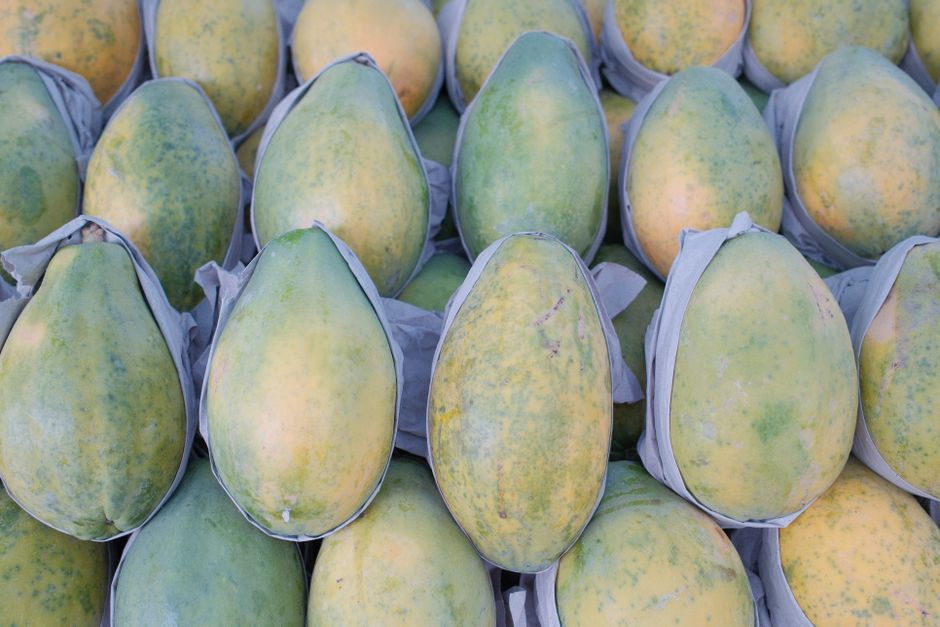
Yes, you can eat papaya skin. It is not toxic. People in parts of Asia, Latin America, and the Caribbean have eaten green papaya with the peel for generations, usually cooked rather than raw. The flesh under the skin is what most people eat, but the peel itself is edible.
That said, edible and enjoyable are two different things. Raw papaya skin is tough, bitter, and contains latex-like sap that can irritate some people. Ripe papaya skin is softer but still not pleasant to chew. If you want to eat it, cooking is the practical route.
Do You Eat The Skin Of A Papaya?
You can, but most people don’t. The skin is safe to consume and contains fiber and some nutrients. The reason it rarely shows up on plates is texture and taste, not safety.
Papaya skin is thin and waxy when ripe. It has a mild bitterness and a slightly grassy flavor. When green and unripe, the skin is firm and releases a milky sap called latex. That sap contains an enzyme called papain, which breaks down protein. Papain is the same enzyme used in meat tenderizers.
The latex is the main reason some people react to raw papaya skin. It can cause itching, redness, or a burning sensation on the lips, mouth, or hands. Cooking destroys papain and softens the skin, which is why cooked green papaya dishes are common and raw skin is not.
Is Papaya Skin Safe To Eat?
Papaya skin is not toxic. There is no known poison in it. The concern is irritation from latex, not poisoning.
People with a latex allergy should be cautious. Papaya contains proteins that cross-react with natural rubber latex. This is a documented connection, and reactions can range from mild mouth itching to more serious symptoms in sensitive people. If you have a known latex allergy, talk to your doctor before eating papaya skin or even unripe papaya flesh.
For everyone else, the risk is low. Some people eat it with no problem. Others get a scratchy throat or tingling lips. That reaction is usually mild and goes away. If it doesn’t, stop eating it.
One more point: papaya skin can hold dirt, pesticide residue, and bacteria from handling and transport. Wash it well under running water before you cook or eat it. This matters more for skin than flesh because the skin is the outer surface.
What Nutrients Are In Papaya Skin?
Papaya skin contains fiber, some vitamins, and plant compounds. The exact amounts are not well documented in standard nutrient databases, because most nutrition research measures the flesh, not the peel.
What is known: the skin is higher in fiber than the flesh. It also contains carotenoids and polyphenols, which are antioxidant compounds found in many fruit peels. Papaya flesh is a well-known source of vitamin C and vitamin A (as beta-carotene). The skin likely contains some of these too, but the specific levels are not firmly established.
Be careful with claims you see online. You may read that papaya skin “detoxifies” the body or “boosts immunity.” No study has confirmed those claims. The liver and kidneys handle detoxification. No food peel does that job.
How Do You Eat Papaya Skin?
Cooking is the best approach. Heat softens the skin and breaks down the latex enzymes that cause irritation.
Common methods include:
- Boiling or steaming green papaya chunks with the skin on, then eating them in soups or stews
- Shredding green papaya (skin included) for salads like Thai som tam, though many versions peel it first
- Pickling green papaya with the skin for a crunchy condiment
- Stir-frying thin slices of ripe papaya with the skin until tender
If you want to try raw skin, start small. A thin slice is enough to see how your body responds. Some people find the taste too bitter to enjoy. That is a normal reaction, not a sign something is wrong.
Ripe papaya skin is softer and less bitter than green. If you are going to try it raw, ripe is the easier starting point. Still wash it first.
Who Should Avoid Papaya Skin?
People with a latex allergy should avoid it. The cross-reaction risk is real and documented.
Pregnant women should be cautious with unripe papaya, including the skin. Unripe papaya contains latex and papain. Some traditional practices use unripe papaya to induce labor, and there is concern that large amounts could cause uterine contractions. The evidence is not strong enough to say a small amount is dangerous, but the precaution is reasonable. Ripe papaya is generally considered safe during pregnancy. Unripe papaya is where the question mark sits.
Anyone with a sensitive stomach or a history of plant allergies should start with cooked skin, not raw. If you have any doubt, leave the skin on the compost pile and eat the flesh. You are not missing out on anything essential.
Does Papaya Skin Have Health Benefits?
Papaya skin has fiber and plant compounds, but no clinical trials have shown it treats or prevents any disease. The evidence for health benefits is thin.
Fiber is good for digestion and heart health. That is well established. But you can get fiber from many sources. Papaya skin is not special in that regard.
Papain, the enzyme in papaya latex, is used in medicine for wound debridement and in some digestive supplements. That is a clinical use of the extracted enzyme, not a reason to eat the skin. Eating the skin does not deliver a measured dose of papain, and the enzyme is largely broken down during digestion anyway.
Some research suggests papaya leaf extract may have effects on blood platelets, and it has been studied in dengue fever. That research is about the leaf, not the skin. Do not confuse the two. Papaya skin has not been studied for those effects.
If you see papaya skin sold as a “superfood” or “detox” product, be skeptical. No human trials support those claims. The marketing is ahead of the science.
Is The Skin Of A Papaya Healthier Than The Flesh?
No. The flesh is the part with the well-documented nutrition. Papaya flesh is rich in vitamin C, vitamin A, folate, and potassium. Those values are measured and published.
The skin has fiber and some antioxidants, but it is not a nutritional powerhouse compared to the flesh. It is also bitter and tough, which means you will eat less of it. A food you eat a little of provides a little nutrition.
If your goal is nutrition, eat the flesh. If your goal is to reduce food waste or try something new, the skin is fair game when cooked. Both can be true.
One practical note: the seeds are also edible. They have a peppery taste and are sometimes dried and used as a spice. Like the skin, they are safe but not for everyone.
What About Papaya Skin In Skincare?
Papaya skin shows up in DIY face masks and some commercial products. The idea is that papain exfoliates dead skin. Papain does break down protein, and that includes the protein in dead skin cells.
But applying raw papaya skin to your face is not the same as using a formulated product. The concentration of papain is not controlled. It can irritate sensitive skin. Some people get redness, burning, or a rash. If you want to try it, test a small area first and rinse well. Do not leave it on for long periods.
There is no strong evidence that papaya skin masks do more than other exfoliants. The enzyme activity is real, but the clinical benefit for skin appearance is not well studied.
Frequently Asked Questions
Can you eat papaya skin raw?
Yes, it is safe to eat raw for most people, but it is tough and bitter. Raw skin contains latex that can irritate your mouth or lips, so cooked is usually better.
Is papaya skin poisonous?
No, papaya skin is not toxic. The main concern is the latex sap, which can cause allergic reactions in people sensitive to latex.
What does papaya skin taste like?
It tastes bitter and slightly grassy, with a tough texture when raw. Cooking softens it and reduces the bitterness.
Can pregnant women eat papaya skin?
Ripe papaya is generally considered safe during pregnancy, but unripe papaya and its skin are often avoided. The concern is that latex and papain in unripe fruit could affect the uterus, though evidence is limited.
