
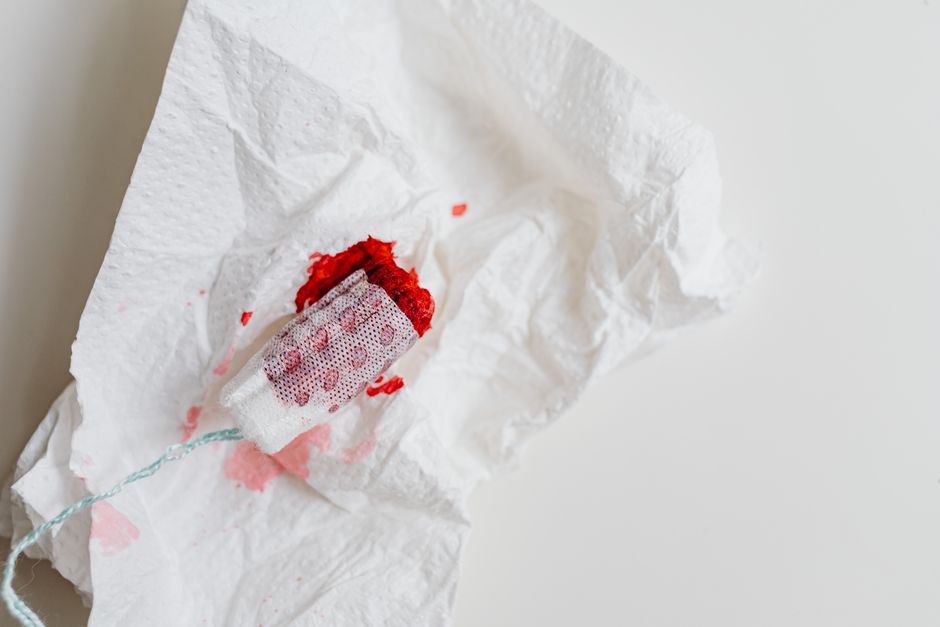
Most people who have vaginal sex for the first time do not bleed. Some do, and that bleeding is usually light and brief. The idea that first intercourse always involves blood is one of the most persistent myths about sex — and it causes real anxiety for people who expect pain and blood, and real confusion for those who experience neither.
The hymen is the structure at the center of this myth. It is a thin, stretchy ring of tissue at the opening of the vagina, and it does not work the way most people imagine. Understanding what it actually is explains why bleeding happens sometimes, why it often does not, and why the absence of blood tells you nothing about a person’s sexual history.
Do You Bleed When You Lose Your V?
Usually not. Research on first-time intercourse consistently finds that a minority of people bleed, and studies vary in their exact numbers depending on the group studied and how bleeding was defined. What the evidence does show clearly: bleeding is common enough to be normal, and absent often enough that no blood is also completely normal.
When bleeding does happen, it tends to be light — a few spots or streaks, sometimes only noticed when wiping. It typically comes from small tears in the tissue at the vaginal opening or from stretching of the hymen, not from a dramatic rupture. Heavier bleeding, bleeding that continues for days, or bleeding with severe pain is not typical and warrants a medical conversation.
One clarification worth making: the phrase “losing your virginity” frames first sex as a loss of something physical. Anatomically, there is no structure that is removed or destroyed. The hymen changes over a lifetime — through sports, tampon use, stretching, and yes, sex — and those changes are gradual and often invisible.
What Is the Hymen, Really?
The hymen is a membranous ring of tissue that sits just inside the vaginal opening. It is present from birth and develops during fetal life. It is not a seal or a barrier. In most people it has an opening from the start — otherwise menstrual blood could not exit the body.
Hymens vary enormously in shape, thickness, and elasticity from person to person. Some are thin and stretch easily. Some are thicker or have a smaller opening. A small number of people are born with a hymen that fully covers the opening (imperforate hymen), which is a medical condition that typically becomes apparent at puberty when menstruation cannot occur and requires medical evaluation.
The tissue is also not static. Estrogen levels affect how elastic it is, which is one reason the hymen tends to become more stretchy during puberty and why it can change with age and hormonal shifts. This is why the same person can have completely different experiences at different points in life.
Why the hymen does not “break”
The word “break” is misleading. The hymen stretches. It may tear slightly, and it may not. Many people who have had years of sexual activity still have visible hymenal tissue. Some people who have never had sex have hymens that have already stretched or worn thin from non-sexual activity.
This matters because the presence or appearance of hymenal tissue has been used — wrongly — as a test of virginity. Medical organizations have stated clearly that there is no reliable physical sign of virginity. The hymen cannot confirm or rule out sexual activity.
Why Does Bleeding Happen Sometimes and Not Others?
Bleeding during first intercourse depends on several factors that have nothing to do with morality or experience. Tissue elasticity is the biggest one. A hymen that is thin and stretchy is less likely to tear. A thicker or less elastic one is more likely to.
Lubrication matters a great deal. When the vagina is well lubricated — from natural arousal or added lubricant — there is less friction and less chance of small tears. Nervousness can reduce natural lubrication, which is one reason anticipation and anxiety can make the experience more uncomfortable than it needs to be.
Pace and gentleness matter too. Gradual stretching gives tissue time to accommodate. Sudden or forceful penetration is more likely to cause small tears at the opening, regardless of hymen status.
Other factors that influence bleeding risk:
- How much the hymen has already stretched from non-sexual activity
- Whether the person is aroused and naturally lubricated
- Individual tissue fragility, which varies
- Any underlying conditions that affect tissue or bleeding, such as certain bleeding disorders
- Use of medications that affect bleeding or dryness
None of these are things a person can predict with certainty in advance. That uncertainty is normal.
How Much Bleeding Is Normal?
Light spotting is the most common pattern. A few drops, a small streak on toilet paper, or slight pinkness is typical and usually resolves within hours. Some people notice a small amount of blood for a day or two.
What is not typical: bleeding that soaks through a pad, bleeding that continues beyond a couple of days, bleeding accompanied by significant pain, or bleeding that starts well after intercourse. These are reasons to check in with a clinician. They are not automatically serious, but they are not the expected pattern either.
Pain is a separate issue from bleeding and deserves its own attention. Some discomfort with first intercourse is common, often related to nervousness, muscle tension, or inadequate lubrication. Severe pain, pain that prevents penetration, or pain that persists is not something to push through. It can have treatable causes, including a condition called vaginismus in which the muscles around the vagina tighten involuntarily, and it is worth discussing with a healthcare provider.
Does No Bleeding Mean Something Is Wrong?
No. Not bleeding is common and expected for many people. It does not mean the hymen was already “broken,” it does not mean the person was not a virgin, and it does not mean anything went wrong.
The expectation of blood comes from culture, not anatomy. For generations, the presence of blood on sheets was treated as proof of virginity — a belief with no medical basis. It has caused harm in many parts of the world, including pressure on people to prove their virginity and stigma when they cannot.
If you did not bleed, nothing is missing. If you did bleed, nothing is wrong. Both are within the normal range of human variation.
What Should You Know Before Your First Time?
Preparation reduces discomfort more reliably than hoping for the best. These are practical steps grounded in basic anatomy, not guarantees:
- Use lubricant. Water-based or silicone-based lubricant reduces friction and the small tears that cause most bleeding.
- Go slowly. Allow time for arousal and for tissue to stretch.
- Communicate. Tell your partner what feels comfortable and what does not.
- Expect variability. Some discomfort is common; severe pain is not something to ignore.
- Have a pad or period underwear on hand if you are worried about spotting.
- Know that condoms protect against sexually transmitted infections, which is a separate and important consideration from bleeding.
One thing worth saying plainly: the physical experience of first sex is often less dramatic than the cultural narrative suggests. For many people it is awkward, brief, and unremarkable. That is not a failure. It is just reality.
If you have concerns about pain, bleeding, or your anatomy before or after first intercourse, a healthcare provider — ideally one you trust — can answer questions specific to your body. No question is too basic.
Frequently Asked Questions
Do you always bleed when you lose your virginity?
No. Most people do not bleed the first time they have vaginal sex, and studies consistently show that bleeding is a minority experience. Light spotting can happen and is normal, but its absence is equally normal.
How much bleeding is normal after first sex?
Light spotting — a few drops or streaks — is the typical pattern and usually stops within hours. Bleeding that soaks a pad, lasts more than a couple of days, or comes with severe pain is not typical and should be checked by a clinician.
Can you lose your virginity without bleeding or pain?
Yes. Many people experience neither bleeding nor significant pain. Comfort depends mostly on lubrication, arousal, pace, and individual anatomy rather than on any fixed rule.
Does not bleeding mean the hymen was already broken?
No. The hymen stretches rather than breaks, and it can change from sports, tampons, and normal activity long before any sexual contact. There is no reliable physical way to determine whether someone has had sex.
