
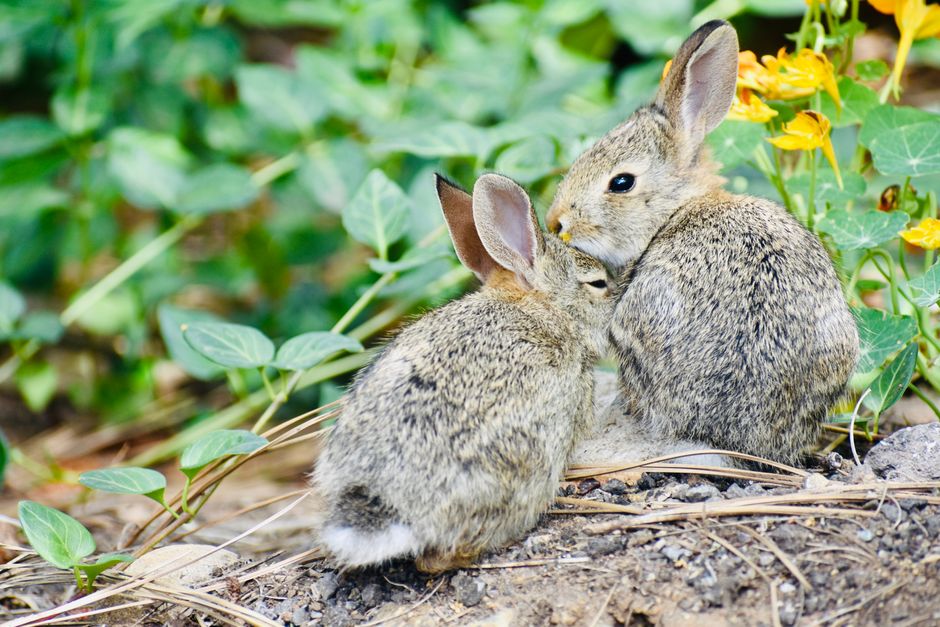
Rabies in wild rabbits and bunnies is extremely rare. Public health authorities in the United States have long considered rabbits and hares among the animals that almost never carry the rabies virus, and there has never been a documented case of a human getting rabies from a wild rabbit. The animals that matter for rabies risk are raccoons, skunks, bats, foxes, and coyotes. Still, “extremely rare” is not the same as “impossible,” so it helps to understand why rabbits sit where they do on the risk list and what to do if a bite or scratch happens.
Do Wild Bunnies Have Rabies The Real Risk Explained
The rabies virus does not circulate in rabbit populations the way it does in raccoons or skunks. For an animal to sustain rabies in the wild, it needs a large enough population that the virus can keep passing from one animal to the next through bites. Rabbits do not meet that condition.
Several factors explain why. Rabbits are prey animals with small home ranges, and they rarely survive long enough after infection to transmit the virus widely. A rabid animal typically becomes aggressive and disoriented, which for a rabbit means it is far more likely to be caught by a predator than to bite another rabbit. The virus simply does not get a foothold.
The Centers for Disease Control and Prevention tracks animal rabies cases in the United States, and rabbits appear only as a tiny handful of confirmed cases over many decades. That rarity is why most state health departments do not list rabbits as a species of concern when a person reports a bite.
Why “Rare” Is Not “Never”
Any mammal can theoretically be infected with rabies, because the virus attacks the nervous system of all mammals. Rabbits are mammals. Confirmed cases do exist, just in very small numbers. A rabbit that has been attacked by a rabid raccoon or skunk can develop rabies.
So the accurate statement is this: a wild rabbit is very unlikely to carry rabies, but a rabbit that is behaving strangely or that has visible wounds from a predator deserves caution. The rarity of the disease in rabbits is a population-level fact, not a guarantee about the individual animal in front of you.
How Would a Wild Bunny Even Get Rabies?
Rabies spreads through saliva, most often when an infected animal bites another. A rabbit would have to be bitten by a rabid animal and survive long enough for the virus to take hold. That chain of events is uncommon.
The predators and scavengers that share a rabbit’s habitat are the usual rabies carriers. A raccoon, skunk, fox, or coyote in the late stages of rabies may attack a rabbit. Bats can also carry rabies, though transmission from a bat to a rabbit is not a common event.
There is another route worth naming. The rabies virus can enter through a wound if infected saliva contacts broken skin or a mucous membrane. For a rabbit, that would mean being bitten or scratched by a rabid animal in a way that introduces virus into tissue. Again, this requires the rabbit to survive the encounter, which is not typical.
What does not cause rabies: rabbits do not carry the virus in their bodies by default, and a rabbit born in the wild is not “born with” rabies. Infection is always acquired from another infected animal.
What Does a Rabid Rabbit Actually Look Like?
There is no reliable way to diagnose rabies in a live rabbit by looking at it. The classic signs are vague and overlap with many other problems. A rabbit with rabies might seem unusually tame, or unusually aggressive, or unsteady on its feet. It might have trouble swallowing or show paralysis.
These same signs can come from head trauma, a brain infection, poisoning, or a severe injury from a predator. That overlap is exactly why visual inspection cannot confirm or rule out rabies.
The one behavior that should always get your attention is a wild rabbit that approaches you without fear, or that is active and stumbling in daylight when it should be hiding. Healthy wild rabbits are skittish and avoid people. A bold, sick-looking rabbit is a warning sign, but the warning is about a sick animal generally, not rabies specifically.
What Should You Do If a Wild Bunny Bites or Scratches You?
Wash the wound right away with soap and running water. This is the single most important first step for any animal bite, and it applies whether or not rabies is a concern. Thorough washing reduces the risk from many kinds of germs, not just rabies.
Then contact a healthcare provider or your local health department. They will assess the bite, the animal’s behavior, and rabies activity in your area. In the United States, health departments take every mammal bite seriously enough to evaluate it, even when the species is low-risk.
Post-exposure prophylaxis (PEP) is the series of shots given after a possible rabies exposure. It is highly effective when started promptly, and it is a decision made with medical guidance, not something to self-assess. Whether PEP is recommended after a rabbit bite depends on the circumstances, and a clinician or public health official is the right person to make that call.
Do not try to catch or kill the rabbit to have it tested unless a health official asks you to. Handling a potentially sick wild animal puts you at more risk. If the animal is available and the exposure was significant, authorities may want it for testing, but let them direct that process.
How Common Is Rabies in Rabbits Compared With Other Animals?
Rabbit rabies is vanishingly rare next to the main wildlife carriers. The table below shows the general picture of which animals account for the vast majority of wildlife rabies cases in the United States.
| Animal | Role in US Wildlife Rabies |
|---|---|
| Raccoons | A leading source of reported wildlife rabies cases |
| Bats | A major source, and the most common cause of human rabies in the US |
| Skunks | A significant reservoir in parts of the country |
| Foxes | Carry rabies in specific regions |
| Coyotes | Occasional cases, regionally important |
| Rabbits and hares | Extremely rare; not considered a reservoir |
The pattern matters. Rabies persists in species that live in dense groups and bite each other readily. Raccoons, skunks, and bats fit that description. Rabbits do not. That is the core reason the risk is so low, and it is also why a rabbit bite is treated differently from a raccoon bite in public health practice.
Can You Get Rabies From a Rabbit Without Being Bitten?
Non-bite exposure is possible in theory for any rabid mammal, but it is not a realistic concern with rabbits. The virus lives in saliva and nervous tissue. A scratch from a rabid animal’s claws is not considered a typical transmission route, because claws do not carry saliva the way teeth do.
The scenario that gets discussed is contact between a rabbit and a pet, or a rabbit getting into a home or garage. Even then, the risk is negligible unless there is a bite or saliva contact with an open wound or mucous membrane. A rabbit hopping through your yard is not a rabies exposure.
One clarification that surprises people: you cannot get rabies from rabbit droppings, urine, or blood. The virus is not shed in feces, and it does not survive long outside the body. Cleaning up after a rabbit that visited your garden is not a rabies risk.
Should You Worry About Rabies When You See a Wild Bunny?
For the vast majority of encounters, no. A wild bunny in your yard, garden, or a park is not a rabies threat. Watching it from a distance and leaving it alone is the right approach.
Keep pets away from wild rabbits for reasons that go well beyond rabies. Dogs and cats can be injured by a cornered rabbit, and pets can pick up other infections from wildlife. Keeping cats and dogs current on their rabies vaccines is standard veterinary guidance and protects them from the animals that do carry the virus.
If you find a rabbit that is clearly sick, injured, or behaving oddly, contact your local animal control or wildlife agency rather than handling it yourself. They can assess the situation and decide whether testing or removal is needed. That is the safe path for you and the animal.
The bigger rabies picture deserves attention too. Bats are the leading cause of human rabies in the United States, and bat exposures can be easy to miss. If you wake up with a bat in your bedroom or find one in a room with a sleeping person or a young child, that is a situation to discuss with a health professional promptly. It is a far more realistic rabies concern than any rabbit.
Frequently Asked Questions
Can you get rabies from a wild bunny?
It is extremely unlikely. There has never been a documented human rabies case from a wild rabbit in the United States, and rabbits are not a rabies reservoir.
How common is rabies in rabbits?
Confirmed rabies in rabbits is very rare. Only a tiny number of cases have been reported over many decades, compared with thousands of cases in raccoons, skunks, and bats.
What should I do if a wild rabbit bites me?
Wash the wound thoroughly with soap and water, then contact a healthcare provider or your local health department for evaluation. They will decide whether post-exposure treatment is needed based on your specific situation.
Can you get rabies from touching a wild rabbit?
No. Rabies spreads through saliva and nervous tissue, usually from a bite, so simply touching a rabbit is not a transmission route.
