
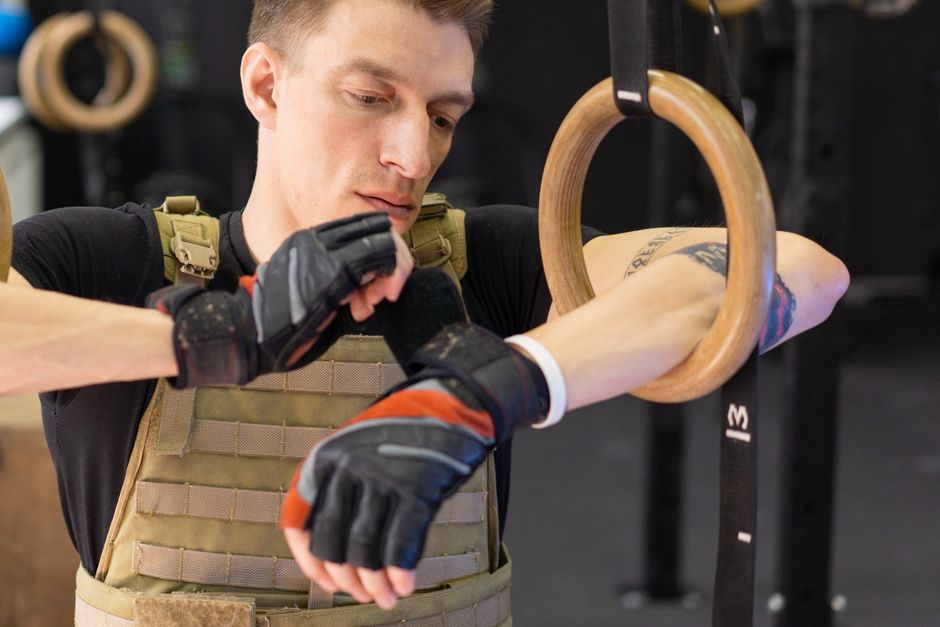
Weighted vests are having a moment. Walk into any fitness store or scroll through social media and you will see them marketed for everything from building bone density to burning extra calories to improving running speed.
Do weighted vests work? It depends entirely on what you expect them to do. For adding resistance to walking, squats, and other weight-bearing exercise, the answer is yes — they work the way any added load works. For claims about bone density, fat loss, or athletic performance, the evidence is thinner than the marketing suggests.
What Is a Weighted Vest and How Does It Add Resistance?
A weighted vest is a garment worn over the torso that holds small weights, usually in individual pockets sewn into the front and back. Most adjustable models range from about 10 to 50 pounds, though heavier versions exist for specialized training. The weight is distributed close to your center of mass, which is why a vest feels different from carrying a backpack or holding dumbbells.
The physiology here is straightforward. Your muscles, bones, and cardiovascular system respond to mechanical load. Adding weight to your body increases that load during any weight-bearing activity. Walk with 20 pounds on your chest and your legs, hips, and spine must work harder to move you forward and keep you upright. Squat with a vest and your quadriceps, glutes, and core must produce more force.
That part is not controversial. Load is load. The questions start when you move from “does it add resistance” to “does that resistance produce the specific outcomes companies claim.”
Do Weighted Vests Help Build Bone Density?
This is the claim with the most research behind it — and also the most nuance. Bone tissue responds to mechanical stress. When you load a bone repeatedly, it signals cells called osteoblasts to lay down new mineral. This is why weight-bearing exercise is generally recommended for bone health, and why astronauts lose bone mass in microgravity.
Some studies suggest that wearing a weighted vest during walking, stair climbing, or jumping may help maintain or modestly improve bone mineral density in postmenopausal women. The research is not uniform. Results vary based on the amount of weight, how often it is worn, and whether participants already had low bone density or osteoporosis.
What the evidence does not support is the idea that a weighted vest alone — without other exercise — will meaningfully rebuild bone. Bone adaptation requires progressive loading over months, not occasional use. And for people with established osteoporosis, the risk of falls and fractures from added weight must be weighed against any potential benefit. Anyone in that category should talk to their doctor before using one.
For healthy adults in their 30s and 40s, the bone-building case for weighted vests is weaker. Peak bone mass is largely established by the late 20s. Loading can help slow age-related loss, but it will not dramatically increase density in someone who already has healthy bones.
Can a Weighted Vest Increase Calorie Burn?
Yes, but probably less than you think. Carrying extra weight increases the energy cost of movement. Walking with a 20-pound vest burns more calories than walking without one at the same speed. That is basic physics — you are moving more mass.
The catch is that the increase is modest. Adding roughly 10 percent of your body weight might increase calorie burn by a similar proportion during the same activity. For a 180-pound person, that is about 18 pounds of added load. The extra burn during a 30-minute walk may amount to a few dozen calories, not hundreds.
Weighted vests are also not a shortcut around the fundamental rule of weight management. If you eat back the extra calories or move less the rest of the day because you are tired, the net effect disappears. A vest can be one small tool in a broader approach, but it is not a fat-loss device.





Are Weighted Vests Useful for Strength Training?
They can be, especially for exercises where adding external weight is awkward. Bodyweight movements like push-ups, pull-ups, lunges, and step-ups become harder when you add 10 to 20 pounds to your torso. For people who have maxed out their bodyweight capacity on these movements, a vest offers a way to progress.
For traditional barbell lifts — squats, deadlifts, bench press — a vest is not the best tool. The weight sits on your chest and back rather than being loaded through a bar, which changes your center of gravity and can alter technique. If you have access to a gym, a barbell is more effective and easier to adjust.
Where vests shine is in home training or outdoor workouts where you want to increase difficulty without equipment. They are also useful for loaded carries and sled pushes, though those are less common in home settings.
Do Weighted Vests Improve Running Performance?
This is where the evidence gets thin. Some athletes use weighted vests for “resisted running” — sprinting or jogging with extra load to build strength and power. The theory is that once you remove the weight, you run faster.
Research on resisted sprint training is mixed. Some studies show improvements in acceleration, particularly over short distances. Others show no benefit or even negative effects on running mechanics. The load matters enormously. Too much weight changes your stride, increases ground contact time, and can promote poor form.
For recreational runners, the risk probably outweighs the reward. Added load increases stress on the knees, hips, and lower back. If your goal is to run faster, interval training, hill repeats, and tempo runs have stronger evidence behind them. A weighted vest is not a replacement for those methods.
What Are the Risks of Using a Weighted Vest?
The main risks are musculoskeletal. Adding weight to your torso shifts your center of gravity and changes how your joints absorb force. This can aggravate existing back, knee, or hip problems and increase the risk of strain in people who are not conditioned for it.
Falls are a particular concern. A heavier body is harder to control, especially on uneven terrain or stairs. For older adults or anyone with balance issues, this is a real risk. A fall while wearing a vest is more likely to cause injury than a fall without one.
Fit matters too. A poorly fitted vest that bounces or shifts can cause chafing and force you to compensate with your posture. Look for a vest that stays close to your body and distributes weight evenly.
People with heart conditions, uncontrolled blood pressure, or recent injuries should check with a doctor before adding load. The cardiovascular system has to work harder when you carry extra weight, and that is not always desirable.
How Should You Start Using a Weighted Vest?
Start lighter than you think you need. For most healthy adults, 5 to 10 percent of body weight is a reasonable starting point for walking or bodyweight exercises. A 150-pound person would begin with roughly 8 to 15 pounds.
Wear it for short sessions at first — 10 to 20 minutes — and see how your body responds. Soreness in the muscles you worked is normal. Sharp pain in your joints or back is not. If something hurts in a way that feels wrong, stop.
Progress gradually. Add time before you add weight. Once you can comfortably wear a vest for 30 minutes of walking or a full bodyweight workout, consider increasing the load slightly. There is no clinical guideline for exactly how much weight to use or how often — this is an area where individual tolerance and goals matter more than a fixed number.
Do not wear a weighted vest all day. Some products are marketed for “passive” use during chores or errands. There is no evidence that this produces meaningful training benefits, and prolonged wear may increase fatigue and strain.
Bottom Line: What Do Weighted Vests Actually Do?
A weighted vest is a simple tool for adding resistance to weight-bearing activity. It works for that purpose. If you want to make walking, push-ups, or step-ups harder, it will do the job.
What it will not do is replace a well-designed exercise program, reverse bone loss on its own, or produce dramatic fat loss. The evidence for bone density benefits in postmenopausal women is promising but not definitive. The evidence for running performance is mixed at best. The evidence for calorie burn is real but modest.
If you are considering one, think about what specific problem you are trying to solve. If the answer is “I want to add load to my home workouts,” a vest is a reasonable purchase. If the answer is “I want to lose weight” or “I want to build strong bones,” there are more effective and better-studied approaches. A vest can be part of the plan, but it is not the plan.
Frequently Asked Questions
Do weighted vests actually work for building muscle?
They add resistance to bodyweight exercises, which can help build muscle when combined with progressive overload and adequate protein intake. They are less effective than barbells for heavy compound lifts.
How much weight should I start with in a weighted vest?
Most healthy adults can start with 5 to 10 percent of their body weight for walking or bodyweight exercises. There is no formal clinical guideline for vest weight, so individual tolerance should guide progression.
Can I wear a weighted vest every day?
Daily use during exercise is generally fine for healthy adults who build up gradually. Wearing one all day for passive activities is not supported by evidence and may increase fatigue or strain.
Are weighted vests safe for older adults?
They may help with bone density in postmenopausal women, but they also increase fall risk. Older adults should talk to their doctor before using one, especially if they have balance issues or osteoporosis.
