
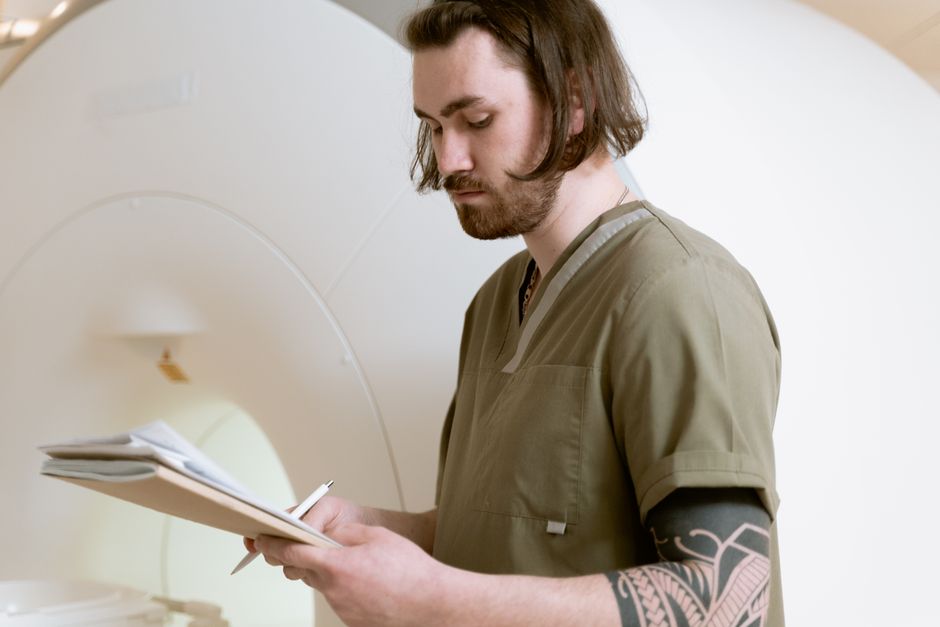
Yes, tattoos can affect an MRI scan, but serious problems are rare. The main concern is heat. Some tattoo inks contain tiny amounts of metal, and the strong magnetic field and radio waves of an MRI can cause a small warming or pulling sensation in tattooed skin. Most people feel nothing at all. In rare cases, the reaction is uncomfortable enough to stop the scan, and there are documented reports of minor skin irritation or swelling afterward.
So the short answer is: tell your technologist about your tattoos, expect to be fine, and know that a mild warm or tingling feeling is the most common thing people notice. Severe reactions are unusual and have been reported mainly in case reports rather than large studies.
How Can Tattoos Affect an MRI Scan?
An MRI machine uses a powerful magnet and pulses of radio waves to build images of the inside of your body. The magnetic field is far stronger than the Earth’s and is always on, even when the machine isn’t scanning.
Most tattoo inks are made from organic pigments, but some darker inks — especially black — have historically contained metal-based compounds. Ink manufacturers don’t have to disclose exact ingredients, and formulations vary widely by brand, color, and country of origin. That’s part of why reactions are unpredictable.
When a small amount of metal sits in the skin inside a strong magnetic field, two things can theoretically happen. The field can exert a slight pull on the particles, and the radio waves can induce tiny electrical currents that generate heat. In the skin, this shows up as warmth, tingling, or a pulling sensation. The effect is usually small because the amount of metal in tattoo ink is tiny compared with, say, a surgical implant.
It’s worth separating tattoos from medical metal. An MRI safety screening focuses heavily on implants, pacemakers, and metal fragments in the eye because those can be genuinely dangerous. Tattoo ink is treated as a much lower-level concern. The physics is similar, but the quantity and location of metal are very different.
What Does an MRI Feel Like With a Tattoo?
Most people with tattoos feel nothing during an MRI. When sensations do occur, they tend to be mild and brief.
People have described:
- A warm or heating feeling over the tattooed area
- Tingling or a slight prickling sensation
- A pulling or tugging feeling in the skin
- Occasionally, a brief stinging sensation
These feelings usually appear during the scan itself and fade when it stops. Some people notice nothing during the scan but develop mild redness or swelling over the tattoo afterward. Documented reports of skin irritation, redness, or small swelling reactions exist, but they are uncommon.
One clarification that surprises people: the sensation isn’t necessarily tied to how large or elaborate the tattoo is. A small tattoo with a particular ink can react while a full sleeve does not. It comes down to what’s in the ink, and that information usually isn’t available to you or your technologist.
Are There Serious Risks From Tattoos During an MRI?
Serious harm from a tattoo during an MRI is very rare. The published record consists mostly of individual case reports and small case series, not large controlled studies. That limits how precisely anyone can estimate risk.
Reported outcomes have included:
- First- or second-degree skin burns in rare cases
- Localized swelling or inflammation over the tattoo
- Discomfort significant enough to stop the scan early
These events are uncommon, and many are mild. There is no strong evidence that tattoos cause deeper injury or lasting damage during MRI. At the same time, the honest position is that the evidence base is thin. Most MRI safety guidance treats tattoos as a recognized but low-probability concern rather than a routine hazard.
The bigger practical risk is an incomplete scan. If you feel discomfort and don’t speak up, you may move, and movement blurs the images. That can mean a repeat scan or a less useful result. Telling your technologist before you go in is the single most useful thing you can do.
Should You Tell the Technologist About Your Tattoos?
Yes. Mention your tattoos during the pre-scan safety screening, especially any on your head, neck, or chest, or any that are large or dark.
MRI facilities screen every patient for metal before a scan. Tattoos are part of that conversation. The technologist can note where your tattoos are, keep an eye on those areas, and adjust if you report discomfort. They can also talk you through what to expect so a warm feeling doesn’t catch you off guard.
You don’t need to cancel or avoid an MRI because of tattoos. The general clinical direction is that tattoos are not a reason to withhold a needed scan. If you have a known skin condition over a tattoo, or you’ve had a reaction to a tattoo before, say so — that’s useful context for the team.
Which Tattoos Are More Likely to React?
Darker inks, particularly black, have been linked to most reported reactions. That fits with the historical use of iron oxide and other metal-containing pigments in dark inks.
Other factors that may matter:
- Older tattoos, which may contain pigments made before modern ink regulations
- Inks from unregulated sources or homemade tattoos
- Tattoos containing metallic or glittery pigments
- Larger areas of solid dark color
Color inks can react too, so lighter tattoos aren’t automatically risk-free. The evidence doesn’t support firm predictions for any individual tattoo. Ink composition is largely unregulated in terms of metal content, and two tattoos that look identical can behave differently.
What Should You Do If You Feel Discomfort During the Scan?
Tell the technologist right away. MRI machines have a two-way intercom, and you can speak or squeeze a call button during the scan.
Don’t try to tough it out. A brief warm sensation is common and usually harmless, but increasing heat, stinging, or pain is your cue to speak up. The technologist can pause the scan, check on you, and decide whether to continue.
If you’ve had a reaction to a previous MRI, mention it before the next one. That history helps the team plan. For most people, though, the practical takeaway is simple: disclose your tattoos, stay in contact with the technologist, and report anything that feels more than mildly warm.
Frequently Asked Questions
Can you have an MRI if you have tattoos?
Yes. Tattoos are not a reason to avoid a medically needed MRI. Tell the technologist about them during screening so they can monitor the area.
Do all tattoo inks react to MRI machines?
No. Most tattoos cause no reaction at all during an MRI. Reactions have been reported most often with dark inks, but ink ingredients vary and can’t be reliably predicted.
Can a tattoo cause a burn during an MRI?
Burns have been reported in rare cases, usually minor. The published evidence is limited to case reports and small series, so the exact risk is not well established.
Why does my tattoo feel warm during an MRI?
Metal particles in some inks can absorb energy from the magnetic field and radio waves, producing mild heat. The sensation is usually brief and fades when the scan stops.
