

Stork bites are one of the most common marks a newborn can have, and they almost always fade on their own. A stork bite is a flat, pink or salmon-colored patch of skin that shows up most often on the back of the neck, and sometimes on the eyelids, forehead, or upper lip. In most children, the mark on the face fades within the first year or two, while a patch on the back of the neck often stays visible for life but causes no harm.
What Is a Stork Bite?
A stork bite is a type of birthmark caused by clusters of tiny blood vessels sitting close to the surface of the skin. Doctors call it a nevus simplex. You may also hear it called a salmon patch or an angel kiss, depending on where it appears.
The name “stork bite” comes from folklore. People once said a stork carried babies by the back of the neck, leaving a mark. There is no truth to that, but the nickname stuck.
These marks are present at birth or appear in the first few days of life. They are flat, not raised. They range from pale pink to a deeper salmon or red color. When a baby cries or strains, the mark often gets darker for a short time because blood flow to the area increases. This is normal and not a sign of anything wrong.
Stork bites are extremely common. Many newborns have at least one. They are not a disease, not contagious, and not a sign of injury.
Where Do Stork Bites Usually Appear?
The most common spot is the back of the neck, near the hairline. This location is sometimes called a “stork bite” specifically, while marks on the face get different folk names.
- Back of the neck: The classic stork bite. Often persists into adulthood.
- Eyelids and between the eyebrows: Sometimes called an “angel kiss.” Usually fades.
- Forehead: Common in newborns and typically fades.
- Upper lip and nose: Less common but possible. Usually fades.
- Lower back and buttocks: Sometimes called a “stork bite” as well, though these can be a different type of mark.
Location matters for one main reason: marks on the face tend to fade, while marks on the back of the neck often do not. This difference is well documented in pediatric dermatology.
Do Stork Bites Go Away?
Most stork bites fade, but the answer depends on where the mark is. Facial stork bites usually lighten and disappear as the child grows, often within the first year or two. Neck stork bites often stay visible for life, though they may become less noticeable over time.
The reason for the difference is not fully understood, but it relates to how the skin and blood vessels mature in different areas. On the face, the tiny vessels tend to become less visible as the skin thickens. On the back of the neck, the vessels often remain visible.
Even when a neck stork bite persists, it is usually faint. Many adults have one and do not realize it. It may only show up when they are hot, upset, or straining. In most cases, it looks like a mild pink patch that is easy to miss.
There is no treatment that makes a stork bite fade faster. No cream, ointment, or home remedy has been shown to change how these marks behave. If a mark is still visible later in life and someone wants it removed for cosmetic reasons, a doctor may discuss options such as laser therapy. This is not medically necessary and is not usually done for stork bites.
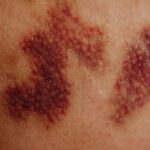




How Is a Stork Bite Different From Other Birthmarks?
Stork bites are often confused with other vascular birthmarks, especially port-wine stains and infantile hemangiomas. They look similar at first, but they behave very differently.
| Feature | Stork Bite (Nevus Simplex) | Port-Wine Stain | Infantile Hemangioma |
|---|---|---|---|
| Appearance at birth | Flat, pink or salmon | Flat, pink to dark red | Often faint or not visible, then grows |
| Change over time | Fades on face, may persist on neck | Darkens and thickens over years | Grows for months, then shrinks slowly |
| Texture | Flat | Flat, may thicken later | Raised, spongy |
| Common locations | Neck, eyelids, forehead | Anywhere, often one side of face | Anywhere |
| Need for treatment | Usually none | Often treated with laser | Sometimes treated with medication |
The key difference is behavior. A stork bite stays flat and either fades or stays the same. A port-wine stain does not fade and tends to get darker and thicker with age. An infantile hemangioma grows after birth, then slowly shrinks over years.
If a mark is growing, getting darker, or changing texture, it should be checked by a doctor. These changes do not fit the pattern of a stork bite.
When Should a Parent Be Concerned?
Most stork bites need no medical attention. But some situations call for a doctor’s evaluation.
See a pediatrician or dermatologist if a mark:
- Grows quickly or gets noticeably darker
- Becomes raised, bumpy, or spongy
- Bleeds, sores, or seems painful
- Appears in a large patch on the face or near the eye
- Comes with other symptoms, such as swelling or vision changes
There is one rare situation worth knowing about. A stork bite near the eye or on the forehead can sometimes be linked to a condition that affects the brain and eyes, but this is uncommon. When a mark is large and in a specific pattern on the face, some doctors recommend further testing. This is a decision made case by case. It is not something a parent needs to worry about with a typical small mark.
If you are unsure, ask your child’s doctor. A quick exam is usually all that is needed.
Can Stork Bites Be Prevented or Treated?
Stork bites cannot be prevented. They form before birth and are not caused by anything a parent did or did not do during pregnancy. They are not linked to diet, stress, or injury.
There is no proven treatment to make a stork bite fade. This is worth stating clearly because many products claim to help with birthmarks. No study has confirmed that any cream, oil, or supplement changes the course of a stork bite.
For a stork bite that stays visible into adulthood, some people choose to have it treated for cosmetic reasons. Laser therapy is sometimes used for vascular marks, and it may lighten a stork bite. But results vary, and the treatment carries some risk of scarring or skin color changes. It is a personal choice, not a medical necessity.
For most people, the simplest approach is to leave the mark alone. A neck stork bite is usually faint and harmless.
What Should Parents Expect Over Time?
Facial stork bites tend to fade within the first year or two. Some disappear completely. Others leave a very faint mark that is barely noticeable. Neck stork bites often stay the same for life, though they may seem less obvious as the child grows and the skin changes.
It helps to remember that these marks are common and harmless. They are not a sign of illness. They do not affect a child’s health, growth, or development.
If a mark does not fade as expected, that alone is not a reason to worry. The pattern matters more than the timeline. A stork bite that stays flat and stable is not a concern. A mark that changes in size, color, or texture is worth a doctor’s look.
Frequently Asked Questions
Do stork bites go away on their own?
Most stork bites on the face fade on their own within the first year or two of life. Marks on the back of the neck often stay visible for life but are usually faint and harmless.
Are stork bites permanent?
Facial stork bites are usually not permanent and tend to fade with age. Neck stork bites are often permanent, though many adults barely notice them.
Should I be worried about a stork bite on my baby’s neck?
A typical stork bite on the neck is not a concern and needs no treatment. See a doctor if the mark grows, changes texture, bleeds, or appears alongside other symptoms.
Can stork bites be removed?
There is no proven cream or home remedy that removes a stork bite. Laser therapy may lighten a persistent mark for cosmetic reasons, but results vary and it is not medically necessary.
