
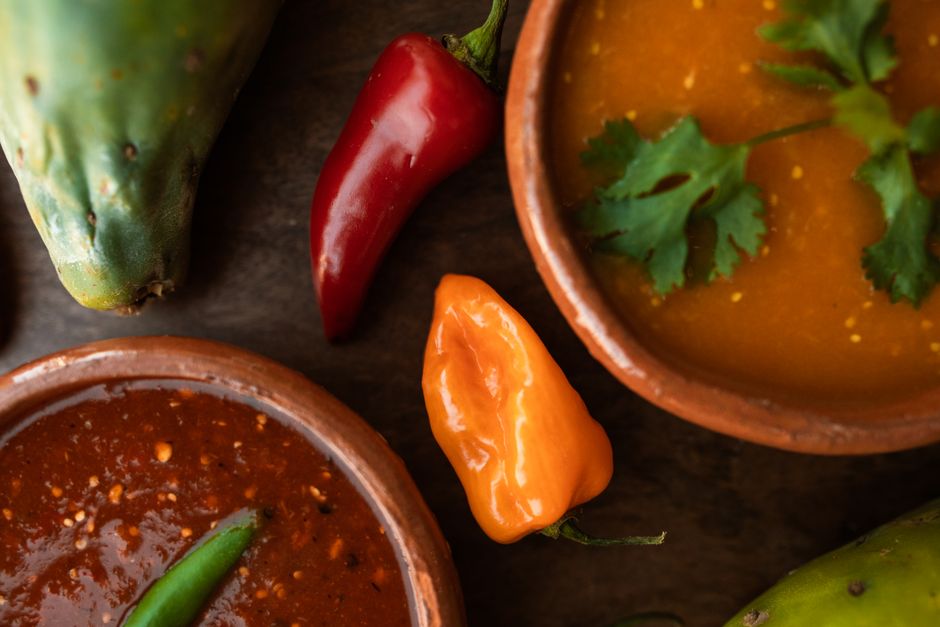
No, spicy food does not reliably cause labor. The idea that a hot curry or a bowl of chili can kick-start childbirth is one of the most repeated pieces of pregnancy folklore, and the evidence behind it is thin. There is no established biological mechanism by which capsaicin — the compound that makes chili peppers hot — triggers uterine contractions. Some women do go into labor after eating spicy food, but pregnant women go into labor after eating all kinds of things, and labor at term is common enough that coincidences are easy to mistake for cause and effect.
What follows is an honest look at where this belief came from, what the research actually shows, why spicy food can still cause real discomfort in late pregnancy, and what the evidence says about the other popular “natural induction” methods people often try alongside it.
Where Does the Idea That Spicy Food Induces Labor Come From?
The belief is cultural and folk-based rather than scientific. It shows up across many countries — in Mexican, Indian, Thai, and Italian food traditions, families pass down the advice that a heavily spiced meal near the due date will “get things moving.”
The reasoning usually offered is that spicy food irritates the digestive tract, and that irritation of the bowel might somehow stimulate the nearby uterus. This is a plausible-sounding story, but plausibility is not proof. The uterus and the bowel are separate organs with separate nerve supplies and control systems. A spicy meal can absolutely cause cramping and urgency in the gut. That does not mean it triggers the coordinated, hormone-driven process of labor.
There is also a timing problem in how people judge the result. Most women try these methods when they are already at or past their due date, when labor is imminent anyway. If you eat spicy food at 40 weeks and go into labor within a day or two, it feels like the food worked. Statistically, it was probably going to happen regardless.
What Does the Research Actually Show About Spicy Foods and Labor?
There is no strong clinical evidence that spicy food starts labor. This is not a case of mixed results — it is a case of very little rigorous research existing at all, and what exists does not support the claim.
Some surveys have asked women who had recently given birth whether they tried various methods to induce labor and whether they thought those methods worked. Self-reported beliefs like these are weak evidence. They tell us what women believe happened, not what actually caused labor. A method that is tried by many women near term will always appear to “work” a certain percentage of the time, because labor happens on its own.
What is better established is the physiology of labor onset. Labor begins through a complex interplay of hormonal signals, including changes in the balance of estrogen, progesterone, oxytocin, and prostaglandins, along with mechanical factors like stretching of the uterus and cervix. Capsaicin from chili peppers acts on heat and pain receptors in the mouth and gut. It is not known to act on any of the hormonal pathways that govern labor. No established mechanism connects the two.
It is fair to say the evidence is absent rather than negative. Nobody has run large trials showing spicy food fails to induce labor, because there is no strong reason to think it would work in the first place.
Why Spicy Food Can Still Cause Real Problems in Late Pregnancy
Spicy food will not start labor, but it can make the last weeks of pregnancy genuinely uncomfortable. This matters more than the induction question for many women.
Late pregnancy already slows digestion. Progesterone relaxes smooth muscle throughout the body, including the gut, which is why constipation and heartburn are so common in the third trimester. Adding a very spicy meal on top of that can worsen both.
- Heartburn and reflux. The growing uterus presses upward on the stomach, and spicy food can aggravate an already sensitive situation.
- Loose stools and cramping. Capsaicin can irritate the bowel, and the resulting cramps can be mistaken for contractions — or make it harder to tell the difference.
- False alarms. Bowel cramping from a hot meal can send some women to the hospital thinking labor has started. It is a common and understandable mix-up.
None of this means spicy food is dangerous in pregnancy. For most women it is fine in normal amounts. The point is that “harmless” and “helpful for starting labor” are two different claims, and only the first is well supported.
Can Spicy Food Be Dangerous During Pregnancy?
For most pregnant women, eating spicy food in ordinary amounts is not considered dangerous. There is no established link between normal spicy food consumption and miscarriage, preterm labor, or harm to the baby.
The cautions that do exist are about comfort and food safety, not about the spice itself.
Food safety is the more important issue. The risk in a spicy meal is rarely the chili — it is what the chili is on. Undercooked meat, unpasteurized dairy, raw seafood, and improperly handled leftovers carry real risks in pregnancy. A spicy dish made with thoroughly cooked ingredients and safe handling is a different matter from a spicy dish that is also a food-safety risk.
Some women find spicy food triggers strong heartburn or reflux that makes sleep and eating miserable. That is a comfort problem, not a safety one, but it is a real reason some women choose to cut back in the third trimester. If you have a condition like acid reflux or irritable bowel syndrome, you likely already know how your body responds.
Anyone with persistent abdominal pain, regular contractions before 37 weeks, bleeding, or reduced fetal movement should contact their care provider rather than trying to sort out whether it was the food. Those symptoms need assessment regardless of what was eaten.
Does Anything Actually Help Start Labor?
Very few “natural induction” methods have strong evidence behind them, and several popular ones are ineffective or carry risks. It is worth being honest about this, because the internet is full of confident advice.
What the evidence supports, with caveats: Membrane sweeping — a procedure where a clinician gently separates the membranes around the baby from the cervix — is associated with a modest increase in the likelihood of starting labor and is used in clinical practice. It is performed by a healthcare provider, not at home, and it can cause cramping and bleeding. Whether and when to offer it is a decision for a clinician.
What is commonly done but weakly supported: Nipple stimulation has been studied, and some research suggests it may have an effect, but the evidence is not strong enough to make it a reliable method, and it can cause strong contractions. Some clinicians mention it; it is not a proven induction technique.
What is not supported: Spicy food, castor oil, and herbal “labor cocktails” are widely tried but not backed by good evidence. Castor oil in particular is a laxative that can cause severe diarrhea, dehydration, and painful cramping, and it is not a safe home induction method. Some herbal preparations marketed for induction have uncertain contents and potential risks. No clinical guidelines endorse them for starting labor.
The most important point: induction methods that actually work are medical interventions, and they carry risks that need to be weighed by a clinician. Trying to force labor at home is not something the evidence supports, and in some cases it can be harmful.
What Should You Do If You Are Past Your Due Date?
Talk to your care provider rather than trying home remedies. Being past your due date is common — pregnancy is dated from the last menstrual period, and only a minority of babies arrive exactly on that date. Many arrive a week or two on either side.
Your provider will monitor you and the baby and discuss options if labor has not started. The decision about whether and when to induce is a medical one based on your specific situation, including how far past your due date you are, how the baby is doing, and your health. That conversation is far more useful than a bowl of chili.
If you enjoy spicy food and it does not bother your stomach, there is no strong reason to avoid it in late pregnancy. Just do not count on it to start labor. The honest position is that it is a harmless tradition for most women, not a reliable method — and the difference matters when you are making decisions about your care.
Frequently Asked Questions
Can spicy food induce labor?
No, there is no reliable evidence that spicy food induces labor. Some women go into labor after eating it, but that is coincidence rather than cause.
Why do people say spicy food starts labor?
It is a long-standing cultural belief, not a scientific finding, and it likely persists because many women try it near their due date when labor is likely to start anyway. No established mechanism links capsaicin to uterine contractions.
Is spicy food safe during pregnancy?
For most women, spicy food in normal amounts is considered safe in pregnancy. It can worsen heartburn and stomach upset in the third trimester, and food safety depends on how the meal is prepared rather than on the spice.
What actually helps start labor?
Few natural methods have strong evidence, and membrane sweeping is the main procedure with modest support, performed by a clinician. Decisions about induction should be made with your care provider, since medical induction carries risks that need to be weighed individually.
