
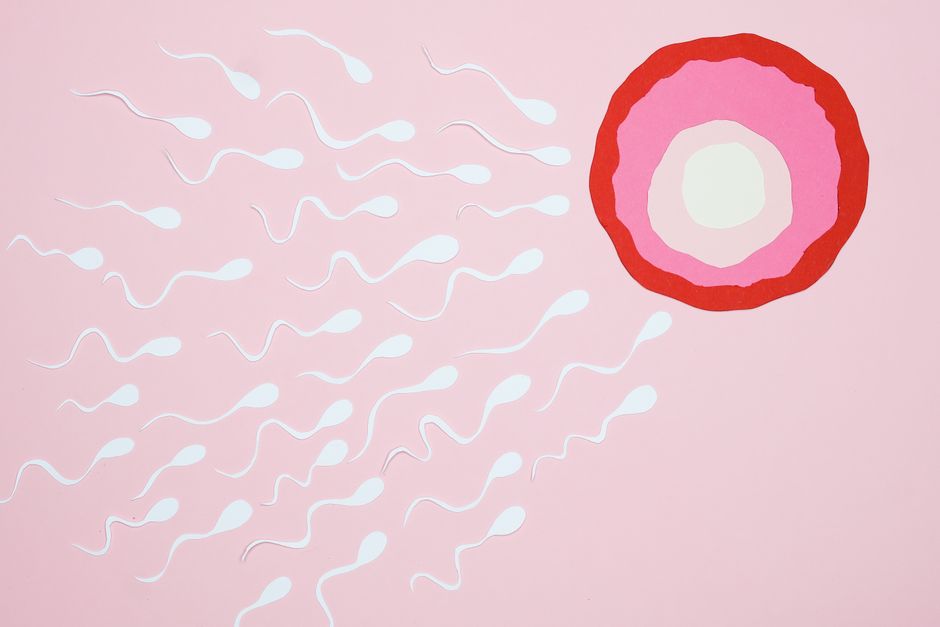
Yes, sperm have mitochondria. But not in the way most people picture. A mature sperm cell carries a small cluster of mitochondria wrapped tightly around the base of its tail, and those mitochondria are locked out of the embryo at fertilization. They power the sperm’s journey, then they are discarded. This is one of the more striking examples in human biology where a structure is essential for one job and then deliberately excluded from the next generation.
That arrangement matters for how we inherit mitochondrial DNA, why some male fertility problems trace back to energy supply in sperm, and why claims about “boosting sperm mitochondria” deserve skepticism. Here is what is actually established.
Do Sperm Have Mitochondria And What Happens To Them?
Sperm mitochondria are real, they are working, and they are destroyed. Early in sperm development, the cell has mitochondria distributed through its body like most cells do. As the sperm matures, those mitochondria are reorganized into a compact sheath wrapped around the midpiece — the section of the tail just below the head.
The midpiece is essentially an engine housing. The sperm’s flagellum (tail) needs a constant supply of the energy molecule ATP to beat. The mitochondria in the midpiece generate that ATP right where it is needed, which is a more efficient arrangement than producing energy far from the tail and shipping it down.
At fertilization, the sperm head enters the egg. The midpiece and tail are normally left outside or broken down. Even the small number of paternal mitochondria that may enter the egg are actively targeted for destruction by the egg’s own machinery. The result is that essentially all mitochondrial DNA in a child comes from the mother.
That last point is well established in human genetics. It is also why mitochondrial diseases are inherited in a maternal pattern, and why the rare documented exceptions are treated as case reports rather than a normal route of inheritance.
What Do Sperm Mitochondria Actually Do?
Their main job is energy production for movement. A sperm is one of the few human cells built almost entirely around transport — it has to swim a distance that is enormous relative to its size, through mucus and the female reproductive tract, to reach an egg. That journey is metabolically expensive.
Sperm mitochondria produce ATP through oxidative phosphorylation, the same process mitochondria use in other cells. The tail’s motor proteins consume that ATP to bend the flagellum. Without a working energy supply in the midpiece, motility drops.
There is a nuance worth knowing. Sperm also generate energy through glycolysis — breaking down sugar without oxygen — and the relative contribution of mitochondrial energy versus glycolytic energy to sperm movement is still studied. It is not accurate to say sperm run purely on mitochondrial power. Both systems contribute, and the balance appears to vary by species and by conditions.
Mitochondria in sperm also participate in managing reactive oxygen species — chemically reactive molecules produced during energy generation. In controlled amounts these molecules serve as signaling molecules in sperm function. In excess, they damage the sperm’s membrane and DNA. That tension between useful and harmful oxidation is central to a lot of fertility research.
Why Are Paternal Mitochondria Destroyed After Fertilization?
The egg actively eliminates them. This is not passive neglect. Research in model organisms has identified specific mechanisms — including labeling paternal mitochondria for degradation and physically breaking them down shortly after the sperm enters the egg.
Why evolution built this system is not fully settled. One long-standing explanation is genetic conflict: mitochondrial DNA that replicates faster or behaves more selfishly could spread at the expense of the organism, so uniparental inheritance keeps it in check. Another line of thinking points to compatibility — the egg’s mitochondria and nuclear DNA are a matched set, and mixing in a second mitochondrial lineage could disrupt coordination between the two genomes.
These are hypotheses, not settled fact. What is settled is the outcome: paternal mitochondrial DNA is effectively excluded from the embryo in humans.
One clarification that often gets lost: the sperm does not “lose” its mitochondria before fertilization. They are present and functioning at the moment of fertilization. They are eliminated afterward, inside the egg.





Can Sperm Mitochondria Affect Male Fertility?
Yes, and this is an active area of clinical research. Because sperm motility depends partly on mitochondrial energy, problems with mitochondrial function can show up as reduced motility — one of the standard measures in a semen analysis.
Studies have reported associations between markers of sperm mitochondrial function and measures like motility and concentration. Some research suggests that sperm from men with certain types of infertility show higher rates of mitochondrial DNA damage or altered mitochondrial activity. The evidence indicates a real relationship, but it is not yet at the point where a mitochondrial test is a standard part of fertility evaluation.
What is not established is whether targeting sperm mitochondria with supplements improves fertility outcomes. Several products marketed for “sperm energy” or “mitochondrial support” make claims that no large human trial has confirmed. Biological plausibility — the idea that since mitochondria make energy, supporting them should help — is not the same as demonstrated benefit.
If you are dealing with fertility concerns, the useful step is a proper evaluation: semen analysis, history, and discussion with a reproductive specialist. That is where established guidance lives.
Do Mitochondria Come Only From The Mother?
In humans, yes, with vanishingly rare exceptions. Mitochondrial DNA is inherited maternally. Every mitochondrion in your body traces back to the egg cell you developed from.
This has real clinical consequences. Mitochondrial diseases — conditions caused by faulty mitochondrial DNA — pass from mother to child, and the severity can vary between siblings because of how mitochondrial DNA is distributed among eggs. This is also the rationale behind mitochondrial replacement techniques, sometimes described in the media as “three-parent” methods, which aim to replace faulty maternal mitochondria with donor mitochondria. Those techniques raise substantial ethical and regulatory questions and are not universally permitted.
The rare reported cases of paternal mitochondrial inheritance exist in the scientific literature. They are exceptions that prove the rule, not a normal pathway.
What Does This Mean For Mitochondrial Health In General?
Your own mitochondria — the ones you inherited from your mother — work the same way sperm mitochondria do: they generate ATP through oxidative phosphorylation. What differs is that your mitochondria are not discarded. They are maintained, copied, and passed to your cells as they divide throughout your life.
Mitochondrial function declines with age in many tissues, and this decline is studied as a contributor to age-related changes in muscle, brain, and metabolic health. The evidence for this is strong at the level of mechanism. The evidence that any particular supplement or intervention meaningfully reverses it in healthy people is much weaker.
What is well established for supporting mitochondrial function is not exotic. Regular physical activity, adequate sleep, not smoking, and a diet that meets nutritional needs are the interventions with the most consistent supporting evidence. None of them are marketed as mitochondrial therapies, which is part of why they get less attention.
Common Myths About Sperm And Mitochondria
Several claims circulate widely and do not hold up.
- “Sperm mitochondria are destroyed so the father contributes nothing but DNA.” The father contributes DNA, and the sperm’s mitochondria do their job right up to fertilization. They are eliminated after entry, not before.
- “You can inherit mitochondrial DNA from your father.” In humans, essentially no. The rare exceptions are documented but not a normal route.
- “Mitochondrial supplements boost sperm quality.” No large human trial has confirmed this. Marketing claims outpace the evidence considerably.
- “Sperm run entirely on mitochondrial energy.” Sperm also use glycolysis. The balance between the two is still being worked out.
The honest position on sperm mitochondria is that the biology is well understood at the level of structure and inheritance, and still being mapped at the level of clinical intervention. That gap is where most misleading claims live.
Frequently Asked Questions
Do sperm have mitochondria?
Yes. A mature sperm carries a cluster of mitochondria in its midpiece, the section just below the head, where they generate energy for the tail. These mitochondria are essential for sperm movement.
What happens to sperm mitochondria after fertilization?
They are eliminated. The egg actively breaks down paternal mitochondria shortly after the sperm enters, so essentially all mitochondrial DNA in the embryo comes from the mother.
Can you inherit mitochondrial DNA from your father?
In humans, essentially no. Mitochondrial DNA is inherited maternally, and the rare reported exceptions are documented case reports rather than a normal pathway.
Does mitochondrial function affect male fertility?
Some studies suggest a link between sperm mitochondrial function and measures like motility, but mitochondrial testing is not yet a standard part of fertility evaluation. No large human trial has confirmed that supplements targeting sperm mitochondria improve fertility.
