
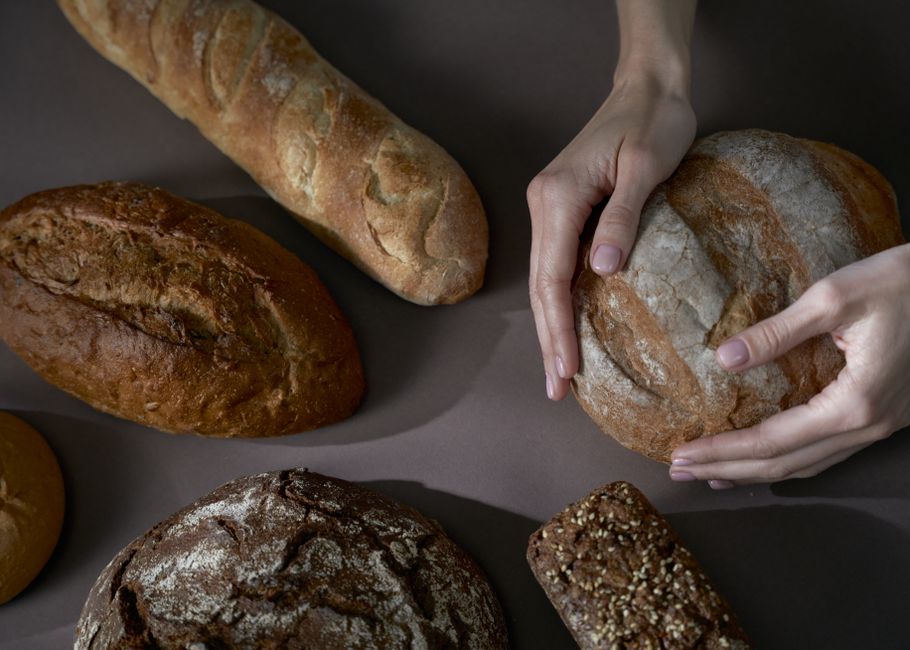
Yes — sourdough bread contains gluten. The fermentation process changes some of the proteins in wheat, rye, and barley, but it does not remove gluten. Anyone with celiac disease or a diagnosed gluten-related disorder should treat sourdough the same way they treat regular bread: as a source of gluten to avoid.
This surprises a lot of people. Sourdough has a reputation as the “gentler” bread, and for some people it genuinely is easier to digest. But easier to digest and gluten-free are two very different things. That distinction matters a great deal if you have celiac disease, and it matters somewhat less if you simply find commercial bread uncomfortable.
Here is what the science actually shows, and where the honest uncertainties lie.
Why Does Sourdough Bread Contain Gluten?
Gluten is not an added ingredient. It is a family of proteins that naturally occurs in wheat, barley, and rye. Sourdough is made from flour and water, so if the flour is wheat, the gluten is there from the start.
Sourdough differs from most commercial bread in how it rises. Instead of baker’s yeast, it uses a live culture of wild yeast and lactic acid bacteria. That culture ferments the dough slowly, often for many hours. During fermentation, the bacteria produce acids and enzymes that begin to break down proteins, including some of the gluten proteins.
This partial breakdown is real. It is also incomplete. The gluten network weakens, the dough becomes easier to digest for some people, and the flavor turns tangy. But a substantial amount of gluten remains in the finished loaf. Sourdough is a fermented wheat product, not a gluten-free one.
The starting flour is the deciding factor. Sourdough made from wheat flour contains gluten. Sourdough made from rye or barley flour contains different but related proteins that cause the same problems for people with celiac disease. Only sourdough made from naturally gluten-free flours — like rice, buckwheat, or sorghum — is genuinely gluten-free, and even then cross-contamination in the kitchen is a real concern.
Does Fermentation Reduce Gluten Enough to Matter?
Fermentation does reduce measurable gluten levels, but the reduction is not enough to make sourdough safe for someone with celiac disease. This is one of the most misunderstood points in the whole conversation.
Research on long-fermented sourdough has found that extended fermentation can lower the amount of certain gluten peptides. Some studies suggest that very long fermentation times, sometimes combined with specific bacterial strains, can degrade a meaningful fraction of the gluten. But “a meaningful fraction” is not “all of it.” The levels that remain are still far above what is considered safe for people with celiac disease.
There is no standard fermentation time, temperature, or starter culture that reliably removes gluten. Two bakers following the same recipe can end up with different gluten levels depending on their specific microbial culture, their flour, and how long they let the dough rest. That variability alone makes sourdough unreliable for anyone who needs strict gluten avoidance.
Some people with non-celiac gluten sensitivity report that they tolerate sourdough better than conventional bread. That is a real observation, and it may relate to the partially broken-down proteins or to other compounds in the bread. But it is not the same as the bread being gluten-free, and it does not apply to celiac disease.
Is Sourdough Safe If You Have Celiac Disease?
No. Sourdough is not safe for people with celiac disease, and this is not a close call.
Celiac disease is an autoimmune condition. When someone with celiac disease eats gluten, their immune system attacks the lining of the small intestine. This happens even at very small amounts of gluten — trace levels that would be invisible in a slice of bread. The damage can occur without obvious symptoms, which is part of why strict avoidance matters so much.
There is no fermentation method that has been shown to bring sourdough below the threshold considered safe for celiac disease. Regulatory bodies set that threshold for gluten-free labeling, and long-fermented wheat sourdough does not meet it.
The same caution applies to other gluten-related conditions where strict avoidance is medically necessary. If your doctor has told you to avoid gluten completely, sourdough belongs on the avoid list alongside regular bread, pasta, and crackers.





What About People Without Celiac Disease?
For people who do not have celiac disease or a diagnosed gluten-related disorder, sourdough may be easier on the gut than fast-risen commercial bread. That is a reasonable position supported by how the bread is made, though the evidence on symptoms is mixed and individual results vary widely.
Several factors could explain why some people feel better eating sourdough:
- The long fermentation partially breaks down proteins and carbohydrates, which may make the bread less likely to trigger bloating in some people.
- Sourdough has a lower glycemic index than many commercial white breads, meaning blood sugar rises more slowly after eating it. This is a well-documented difference.
- The acidic environment created by fermentation can slow how quickly the stomach empties, which some people experience as feeling fuller for longer.
- Commercial breads often contain added dough conditioners and preservatives that sourdough does not need.
None of these points mean sourdough is gluten-free. They mean it is a different kind of wheat bread with different digestive properties. If you feel better eating it, that is worth noticing. It is not evidence that your celiac disease has changed or that gluten is no longer a problem for you.
How Can You Tell If a Bread Is Gluten-Free?
The only reliable signal is a label that says “gluten-free.” In the United States, products carrying that claim must meet a defined standard for how little gluten they contain. That standard exists precisely because small amounts matter.
Do not rely on these cues, because none of them guarantee a gluten-free product:
- The word “sourdough” on the package
- A long fermentation time listed on the label
- The bread being artisan, homemade, or from a bakery
- The bread being made with “ancient grains” like spelt or einkorn — these still contain gluten
- Feeling fine after eating it
If you are buying from a bakery, ask directly whether the flour is gluten-free and whether it is made on shared equipment. Cross-contamination is common in kitchens that also handle wheat flour. Even a genuinely gluten-free sourdough starter can pick up wheat flour from the air, the bench, or a shared bowl.
For people with celiac disease, the safest approach is to buy certified gluten-free bread or bake at home with certified gluten-free flours in a kitchen that does not handle wheat. That is a practical burden, and it is the honest recommendation given what the evidence shows.
Does Sourdough Have Less Gluten Than Regular Bread?
It can have somewhat less, depending on how it is made, but not enough to change who can safely eat it. This is where a lot of confusion starts.
A long-fermented sourdough may show lower gluten levels in lab testing than a fast-risen commercial loaf. The difference is real but modest, and it varies enormously from loaf to loaf. It does not bring sourdough anywhere near the range considered safe for celiac disease.
Think of it this way. If a food contains a large amount of gluten and fermentation removes part of it, the food still contains gluten. The question is never “does it have less?” The question is “does it have little enough to be safe for someone who cannot tolerate any?” For wheat sourdough, the answer is no.
This is also why “low-gluten” is not a meaningful category for people with celiac disease. There is no safe middle ground. The condition requires avoiding gluten, not reducing it.
Can You Make Gluten-Free Sourdough?
Yes. Gluten-free sourdough is a real thing, and it works because the gluten was never there to begin with. You build a starter from gluten-free flours and ferment it the same way.
The catch is that gluten-free flours behave differently. Without gluten to form a stretchy network, the dough does not hold together the same way, and the final texture is usually denser. Bakers work around this with blends of rice flour, sorghum, buckwheat, tapioca starch, and binders like xanthan gum. Results vary, and gluten-free sourdough is generally harder to get right than wheat sourdough.
If you have celiac disease and want to try it, source certified gluten-free flours and keep your starter and your workspace completely separate from any wheat flour. A shared kitchen is a genuine risk, not a theoretical one.
Frequently Asked Questions
Does sourdough bread contain gluten?
Yes, if it is made from wheat, rye, or barley flour, it contains gluten. Fermentation changes some of the proteins but does not remove gluten.
Is sourdough bread safe for celiac disease?
No. Sourdough is not safe for anyone with celiac disease, because even small amounts of gluten can cause intestinal damage. No fermentation method has been shown to bring wheat sourdough below the level considered safe.
Does fermentation destroy gluten in sourdough?
Fermentation partially breaks down some gluten proteins, but it does not destroy gluten. A significant amount remains in the finished loaf.
Is sourdough lower in gluten than regular bread?
It may be somewhat lower, depending on fermentation time and the specific culture used, but the difference is not enough to make it safe for people who must avoid gluten.
